Search
-
- Glossary
Emotions
Neuroscientists understand "emotions" to be complex response patterns that include experiential, physiological, and behavioral components. They arise in response to personally relevant or significant events and generate a willingness to act, through which the individual attempts to deal with the situation. Emotions typically occur with subjective experience (feeling), but differ from pure feeling in that they involve conscious or implicit engagement with the environment. Emotions arise in the limbic system, among other places, which is a phylogenetically ancient part of the brain. Psychologist Paul Ekman has defined six cross-cultural basic emotions that are reflected in characteristic facial expressions: joy, anger, fear, surprise, sadness, and disgust.
-
- News
- Question to the brain
What is transgenerational trauma?
How are traumas passed on to subsequent generations? What happens in the brain during this process?
12.05.2024
-
- Basics
- The Developing Brain
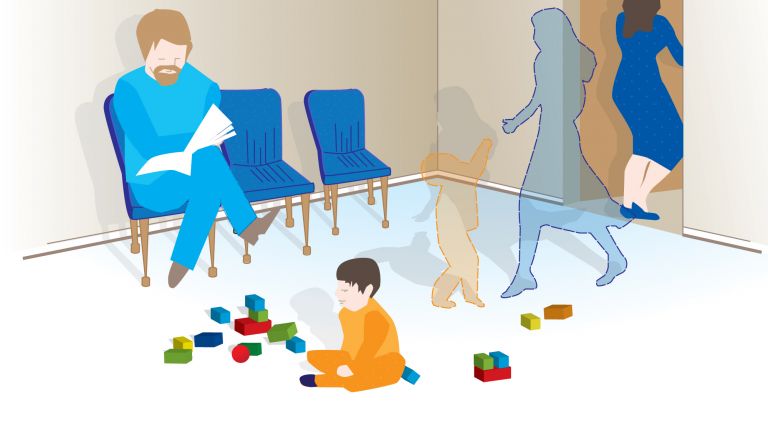
Children in the Lab
Brain research. It’s not easy to conduct. Especially when it comes to young children.
18.03.2026
-
- Percieve
- Smell & Taste
Fragrant Brands
Companies are focusing on the sense of smell in their marketing: fragrances are intended to bind customers to the brand.
03.07.2025
-
- Percieve
- Smell & Taste
Neurogastronomy – the New Science of Taste
Neurogastronomy explores how the brain makes humans gourmets.
02.09.2025
-
- Percieve
- Smell & Taste
Smell and Taste – often underestimated
The role that smells and tastes play in our everyday lives.
06.09.2025
-
- News
- Question to the brain
What does Heat do to the Brain?
I have read that heat waves can affect mental health. How so? Can this also affect healthy people?
22.07.2024
-
- Basics
- The Developing Brain
The invisible Bond
Emotional bond – the essential connection between children and parents.
18.03.2026
-
- Basics
- The Developing Brain
Where on Earth did She get that from?
Nature or nurture – which has a greater influence on our children?
18.03.2026
-
- News from the Institutes
How does our brain regulate generosity?
The “basolateral amygdala”, a part of the limbic system, plays an important role in this.
14.04.2025