Search
-
- Glossary
Basal nucleus
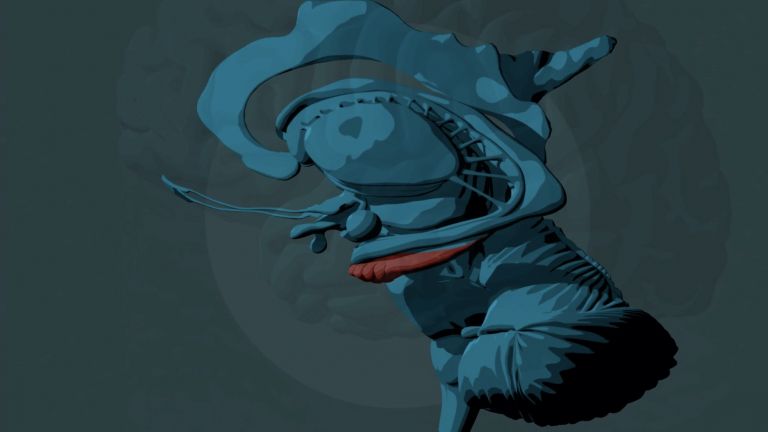
A collection of nerve cells in the basal region of the telencephalon. The basal ganglia are considered to be an important producer of the neurotransmitter acetylcholine. In Alzheimer's patients and, in some cases, Parkinson's patients, the basal ganglia degenerate. As a result, they produce less and less acetylcholine, which neurologists associate with some of the symptoms of these diseases.
-
- Act
- Motor Skills
Forced Right-Handedness
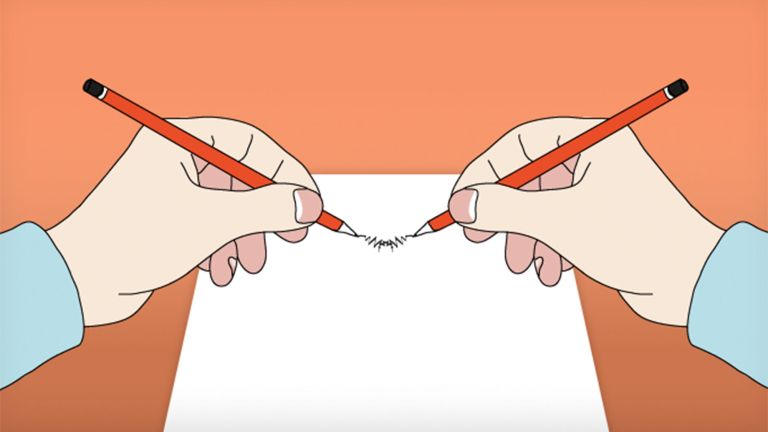
When left-handed people were retrained to use their right hand, their brains were also retrained.
25.10.2025
-
- Basics
- Anatomy
The Sheep Brain: Basal Ganglia
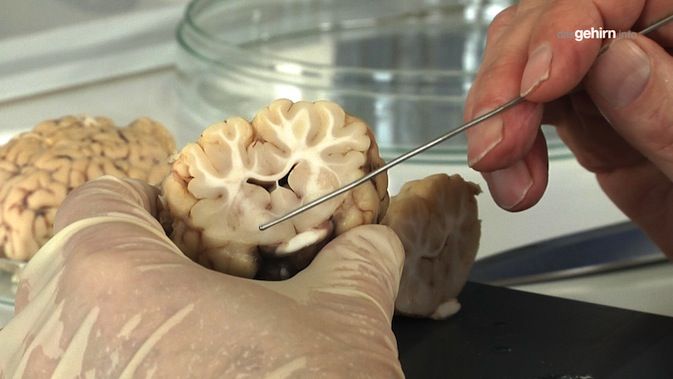
The basal ganglia control motor function and happiness – but in sheep, only unhappiness has been proven.
29.06.2013
-
- Basics
- The Developing Brain
Development of a Brain
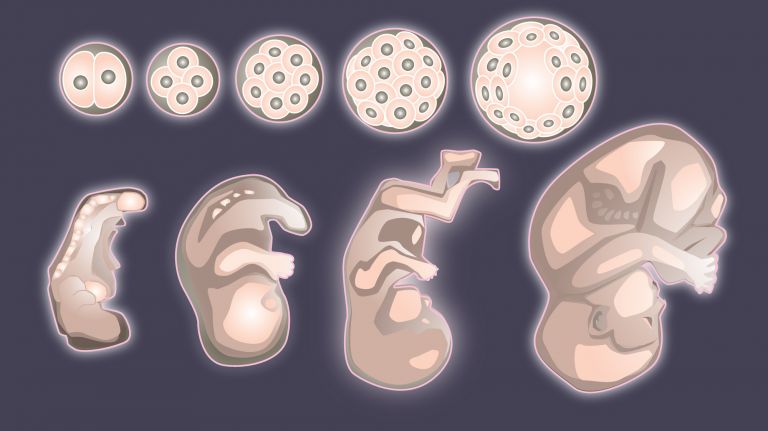
There is no process on Earth more complex than brain development
10.02.2026
-
- Glossary
Caudate nucleus
Part of the basal ganglia, it forms the striatum together with the putamen. Anatomically, the caudate nucleus is located frontally in the center of the brain and extends backward, forming a C shape. It consists of a head (caput nuclei caudati), a body (corpus nuclei caudati), and a tail (cauda nuclei caudati). In contrast to the more motor-related parts of the basal ganglia, this area is strongly connected to the prefrontal cortex in addition to its motor functions. As a result, this part of the striatum is also heavily involved in cognition, motivation, and emotion.
-
- Glossary
Striatum
The striatum is a central structure of the basal ganglia. It consists of the caudate nucleus and putamen; the nucleus accumbens is also functionally part of it as its ventral portion. As the most important input structure of the basal ganglia, the striatum plays an essential role in controlling movement sequences as well as in cognition, motivational processes, and the reward system.
-
- Glossary
Pallidum
The "pale nucleus" (pallidum = pale) is classified as part of the basal ganglia due to its functional integration and, in terms of evolutionary development, belongs to the telencephalon. It has an inner (medial) and an outer (lateral) segment, which mainly transmit inhibitory impulses to modulate the activity of other parts of the basal ganglia and thalamus.
-
- Think
- Consciousness
When Consciousness fails
A complex system of brain structures is necessary for the conscious perception of our surroundings.
13.06.2025
-
- Basics
- Structure and Function
Future Regeneration
The brain is amazing, but vulnerable – which makes effective treatments all the more important. In fact, there is hope: stem cell therapy works in mice.
30.04.2020
-
- Glossary
Subthalamus
The subthalamus is an area of the diencephalon located ventrally below the thalamus. It includes the subthalamic nucleus, which functionally belongs to the basal ganglia network. The subthalamus plays an important role in the regulation and inhibition of movement sequences and in impulse control.