Search
-
- Basics
- The Developing Brain
Where on Earth did She get that from?
Nature or nurture – which has a greater influence on our children?
18.03.2026
-
- Basics
- Structure and Function
Well-Connected
The brain functions based on neural networks that change and adapt throughout a person's lifetime
30.04.2020
-
- Page
The Advisors
20.03.2017
-
- Think
- Emotions
On the Trail of Emotions
How do feelings arise? Emotion theories provide different answers.
18.07.2018
-
- Basics
- Structure and Function
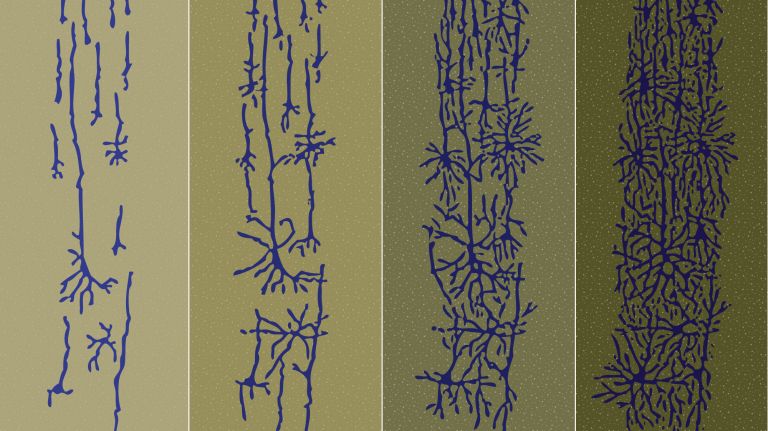
The Fate of a Cell
From egg to neuron, it’s a complex dance – but the choreography can be deciphered
30.04.2020
-
- News from the Institutes
Two Brain Areas Compete for Control
The locus coeruleus and the ventral tegmental area compete for control over the formation of memory content
14.03.2025
-
- Glossary
Plasticity
The term neuroplasticity describes the ability of synapses, nerve cells, and entire areas of the brain to change structurally and functionally depending on the degree to which they are used. Synaptic plasticity refers to the adaptation of the signal transmission strength of synapses to the frequency and intensity of incoming stimuli, for example in the form of long-term potentiation or depression. In addition, the size, interconnection, and activity patterns of different areas of the brain also change depending on their use. This phenomenon is referred to as cortical plasticity when it specifically affects the cortex.
-
- Glossary
Pupil
The opening in the eye through which light enters. The size of the pupil is determined by the iris and changes reflexively (pupillary reflex). This process of adjusting to the brightness of the environment is called adaptation.
-
- Topic
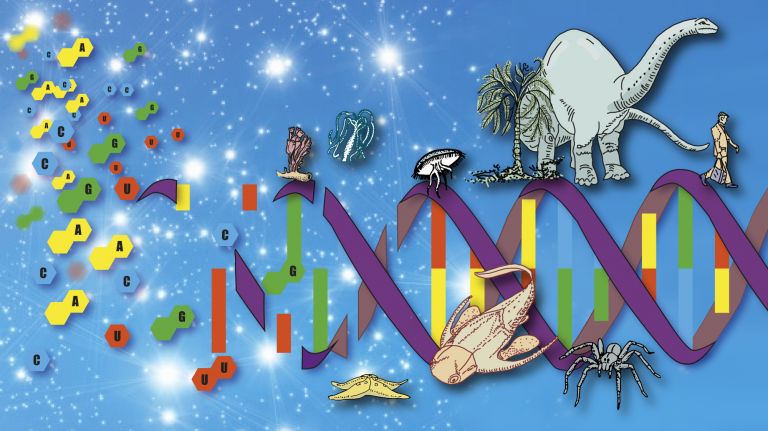
Evolution
Everyone started small, even life itself. It is still small, almost tiny. And everywhere.
-
- Basics
- Structure and Function
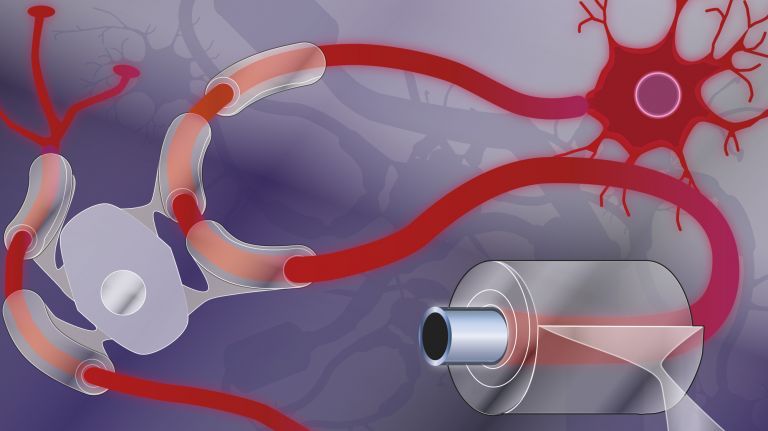
Myelin: High Speed
It is the white sheath that glial cells form around axons that makes high speed pathways in the brain possible.
01.12.2020