How the plaques typical of Alzheimer's disease develop
Published: 23.09.2013
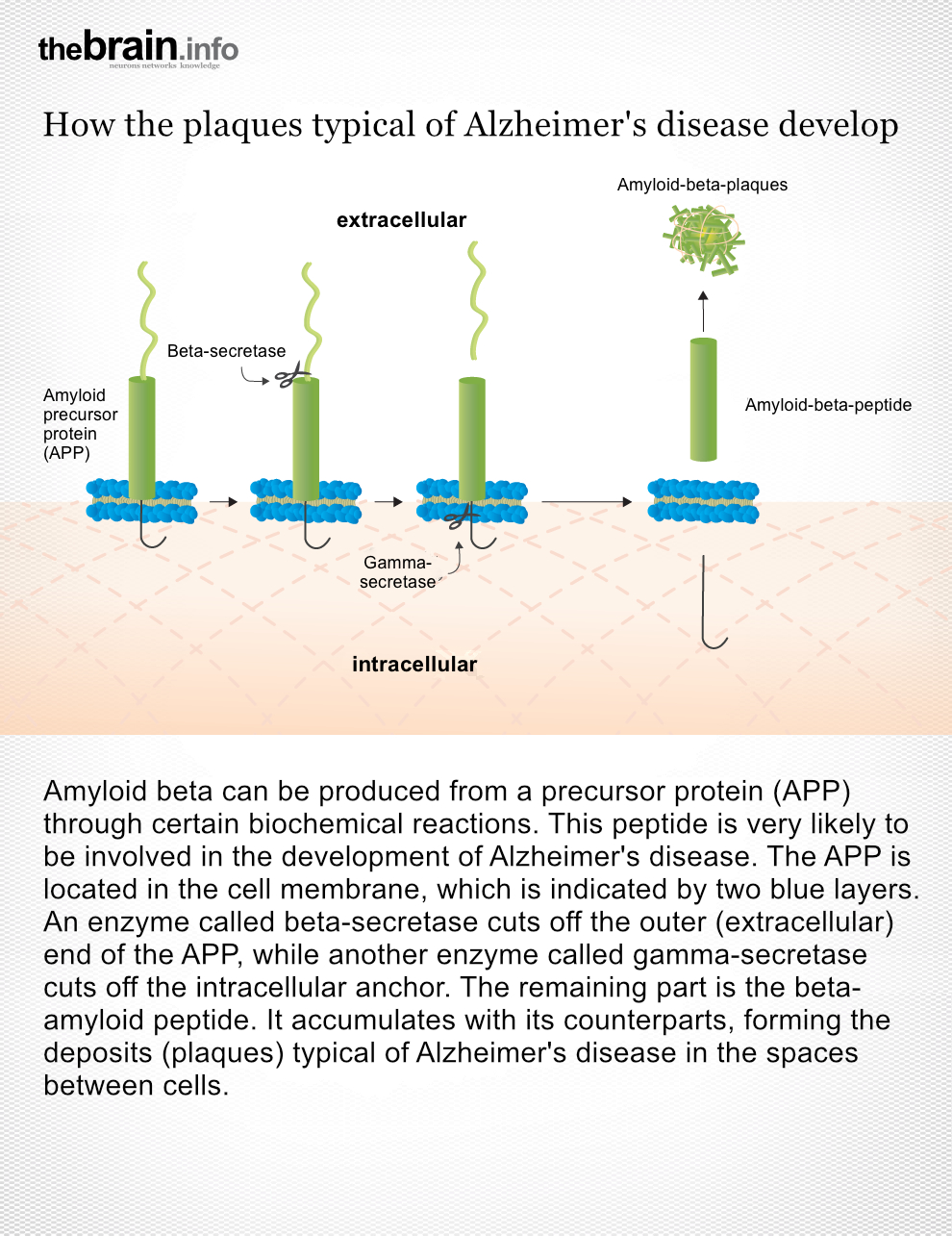
Two molecular scissors, called secretases, convert a harmless protein located in the cell membrane into a substance that can potentially damage nerves—the Beta-amyloid peptide. The peptides clump together and form typical deposits (plaques).
A peptide consisting of 36 to 42 amino acids that is considered the main component of senile plaques and is believed to be responsible for the development of Alzheimer's disease The starting product is the amyloid precursor protein (APP). Certain enzymes in the cell membrane cut the precursor protein into peptides of various sizes. Amyloids consisting of 40 and 42 amino acids are found in senile plaques, with the 42-amino-acid product forming aggregates particularly quickly, at least in the Petri dish. The normal function of beta-amyloid has not yet been conclusively clarified.
Plaques
Senile plaques
Senile plaques accumulate in the Gray matter of the brain when a protein – known as amyloid precursor protein – is not broken down correctly. Inflammation and disorders of fat or sugar metabolism can promote plaque formation. On average, the deposits reach a diameter of 50 micrometers. The appearance of plaques is one of several anatomical changes in the brain that pathologists can use to diagnose Alzheimer's disease after death.
Plaques
Senile plaques
Senile plaques accumulate in the gray matter of the brain when a protein – known as amyloid precursor protein – is not broken down correctly. Inflammation and disorders of fat or sugar metabolism can promote plaque formation. On average, the deposits reach a diameter of 50 micrometers. The appearance of plaques is one of several anatomical changes in the brain that pathologists can use to diagnose Alzheimer's disease after death.
Beta-amyloid
A peptide consisting of 36 to 42 amino acids that is considered the main component of senile plaques and is believed to be responsible for the development of Alzheimer's disease. The starting product is the amyloid precursor protein (APP). Certain enzymes in the cell membrane cut the precursor protein into peptides of various sizes. Amyloids consisting of 40 and 42 amino acids are found in senile plaques, with the 42-amino-acid product forming aggregates particularly quickly, at least in the Petri dish. The normal function of beta-amyloid has not yet been conclusively clarified.
Alzheimer's disease
Morbus Alzheimer
Alzheimer's disease is a progressive neurodegenerative disorder characterized by cortical atrophy, nerve cell loss, synapse loss, and deposits of amyloid plaques and neurofibrillary tangles, leading to dementia and loss of function. Early symptoms include memory problems, speech disorders, executive deficits, depressive moods, and subtle personality changes. As the disease progresses, global cognitive impairment, aphasia, agnosia, apraxia, and behavioral abnormalities such as apathy, restlessness, and sleep disorders occur. The disease was first described in 1907 by Alois Alzheimer.
Gray matter
Grey matter refers to a collection of nerve cell bodies, such as those found in nuclei or in the cortex.