Herophilus and Erasistratus: Discoverers of the Nerves
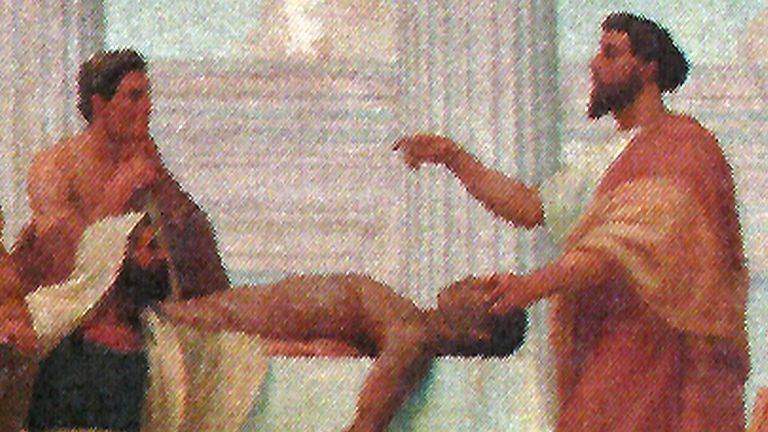
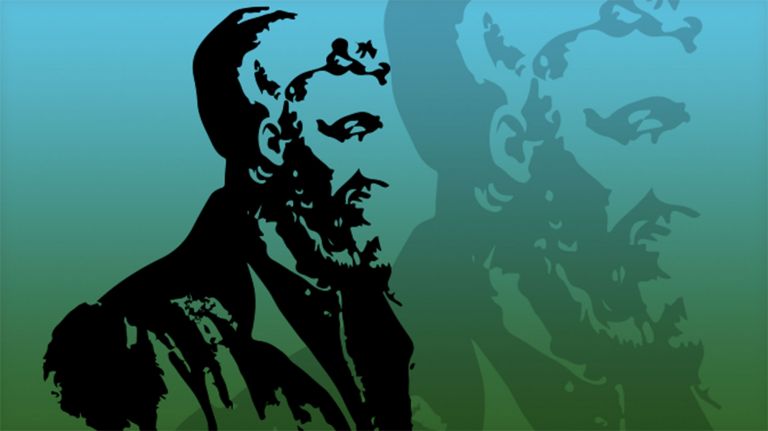
Herophilus of Chalcedon and Erasistratus are credited with a number of important anatomical discoveries. Among other things, they are considered to be the discoverers of the nerves. Others probably paid a high price for these discoveries.
Scientific support: Prof. Dr. Georg W. Kreutzberg
Published: 18.09.2014
Difficulty: intermediate
- Together, the ancient researchers Herophilus of Chalcedon and Erasistratus founded a school of anatomy in Alexandria, Egypt.
- They were obviously not squeamish in their anatomical research: they are believed to have dissected humans while they were still alive.
- The two researchers made several groundbreaking discoveries during their studies. They discovered the nerves and were the first to distinguish between sensory and motor nerves.
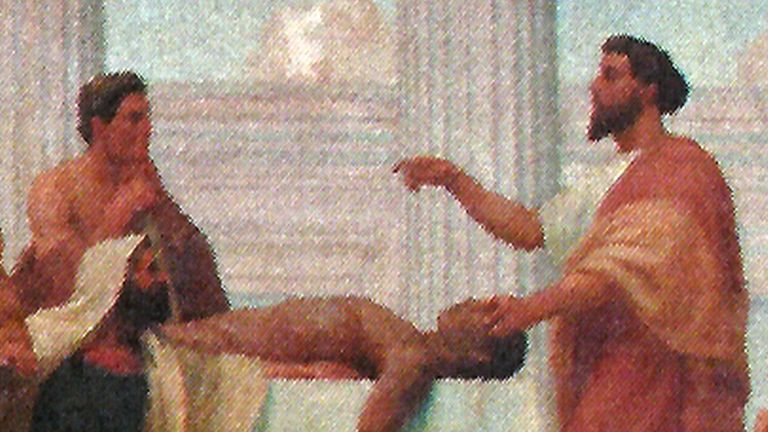
Herophilus of Chalcedon and Erasistratus must have had nerves of steel when they made these discoveries. To arrive at their findings, they did not shy away from dissecting living humans. At least, that is what the Roman encyclopedist Aulus Cornelius Celsus, who lived a good 200 years after the two Greeks, claimed. According to Celsus, the unfortunate subjects of their studies were prisoners who were “handed over to them from the prisons and whom they examined while they were still breathing.” At that time, brain dissections on humans were only possible without restriction and in unlimited numbers in Egypt. This was because medicine was particularly promoted there, and vivisection, which was taboo elsewhere, was considered the only way to gain knowledge. Of course, one needed good contacts with the powerful. However, Herophilos had these contacts.
Far ahead of his time
Herophilus was born around 330 BC in a district of what is now Istanbul. He later studied medicine on the Greek island of Kos. As a practicing physician, now in Alexandria, Egypt, Herophilus was far ahead of his time in terms of diagnostics. When visiting patients, he always carried a portable water clock with him, so he did not have to compare the patient's pulse with his own, as other doctors did. He simply reached for the water clock, measured the exact time, and then calculated the heart rate. But his own heart beat less for medicine than for research.
Far less is known about the life of Erasistratos. He was probably born around 305 BC in Iulis on the Aegean island of Keos – now known as Kea. He devoted himself to studying medicine in Athens. Eventually, probably at an advanced age, he settled in Alexandria. Together with Herophilus, he founded a school of anatomy there.
For their anatomical studies, the two needed human bodies as objects of dissection – preferably still alive. The rulers of Alexandria saw nothing wrong with this and supported Herophilus and Erasistratos in their research. And the fact that the two early anatomists actually used living humans for their studies, as Celsus claims, is suggested by at least some of their findings. Herophilus was the first to correctly describe the pulmonary veins and arteries. However, he could only achieve this scientific coup if, among other things, he knew the direction of blood flow – and for that, the blood had to still be flowing.

Discovery of the nerves
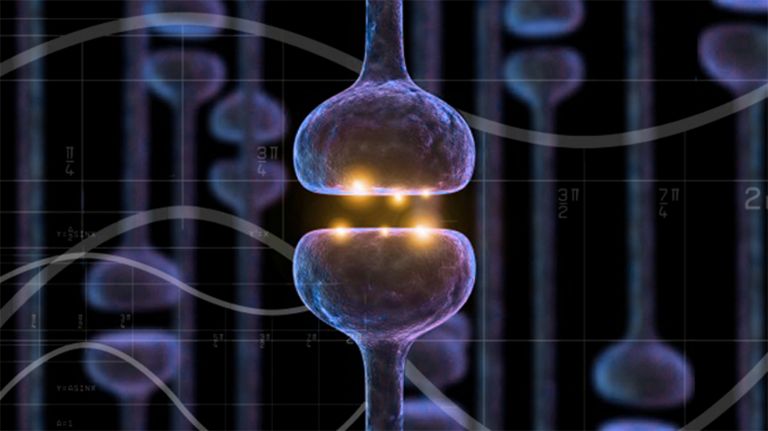
Herophilus and Erasistratos were also the first to distinguish between motor and sensory nerves. The easiest way to determine whether a nerve is sensory or motor is by examining functional failures – and for this, too, the object of study must still be alive. In addition, the two anatomists were probably the first to discover the motor and sensory nerves, as motor functions had previously been attributed to the arteries. And with regard to sensory nerves, the philosopher ▸ Alcmaeon had already established that there were connections between the eyes and the brain. But it was probably Herophilus who first described these connections as “nerves of sensation.”
The list of achievements by the research duo goes on: Herophilus and Erasistratos were the first to describe the Cerebrum and cerebellum, the meninges, and the ventricles in great detail. And they attributed the degree of Intelligence of a living being to the number of convolutions in the cerebrum. The merits of Herophilus and Erasistratus as the most important descriptive anatomists of antiquity, alongside ▸ Galen, are undisputed. However, the price paid for this by their subjects was extreme.
Cerebrum
telencephalon
The cerebrum comprises the cerebral cortex (gray matter), the nerve fibers (white matter), and the basal ganglia. It is the largest part of the brain. The cortex can be divided into four cortical areas: the temporal lobe, frontal lobe, occipital lobe, and parietal lobe.
Its functions include the coordination of perception, motivation, learning, and thinking.
Intelligence
Intelligence
Collective term for human cognitive performance. According to British psychologist Charles Spearman, cognitive performance in different areas correlates with a general factor (g factor) of intelligence. This means that intelligence can be expressed as a single value. American psychologist Howard Gardner, among others, has developed a counter-concept to this, known as the "theory of multiple intelligences." According to this theory, intelligence develops independently in the following eight areas: linguistic, logical-mathematical, musical-rhythmic, visual-spatial, bodily-kinesthetic, naturalistic, intrapersonal, and interpersonal.