Search
-
- Think
- Consciousness
The Night Side of Consciousness
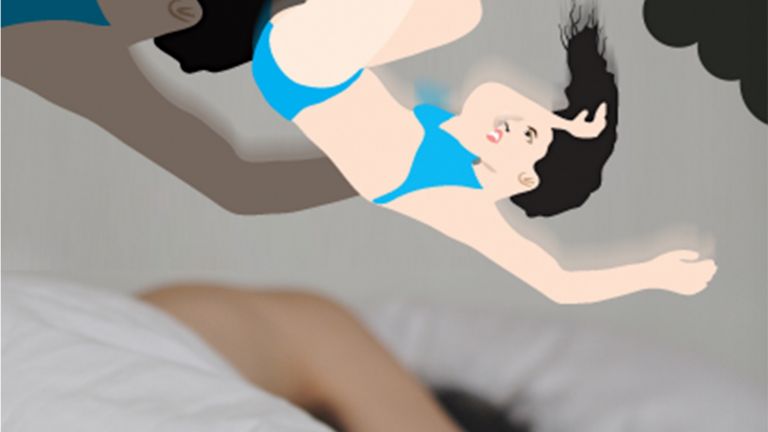
Our brain goes through different stages of consciousness during the night.
03.09.2025
-
- Glossary
REM sleep
"REM" stands for "rapid eye movement" – and rapid eye movements are also characteristic of REM sleep. During the course of a night, we go through several such REM phases, which are interrupted by non-REM phases. REM sleep is characterized by rapid eye movements, low-amplitude brain activity of mixed frequencies, and reduced muscle tone. Pulse and respiratory rate, on the other hand, are increased. In addition, we dream particularly vividly and intensely during these phases. People who are awakened from REM sleep often report vivid, concrete, and emotional dreams, while those awakened from non-REM sleep tend to report more abstract dreams that resemble thoughts.
-
- Glossary
Sleep phases
During sleep, we go through several non-REM/REM cycles, each lasting around 90 minutes. The non-REM phases consist of stages N1, N2, and N3, with slow delta waves with frequencies of 0.5–2 Hz dominating in N3 (deep sleep). REM sleep is characterized by rapid eye movements, low-amplitude, mixed-frequency brain activity, and greatly reduced muscle tone. Deep sleep predominates at the beginning of the night, while the proportion of REM sleep increases in later cycles.
-
- Basics
- Communication of Cells
Neurons got Rhythm
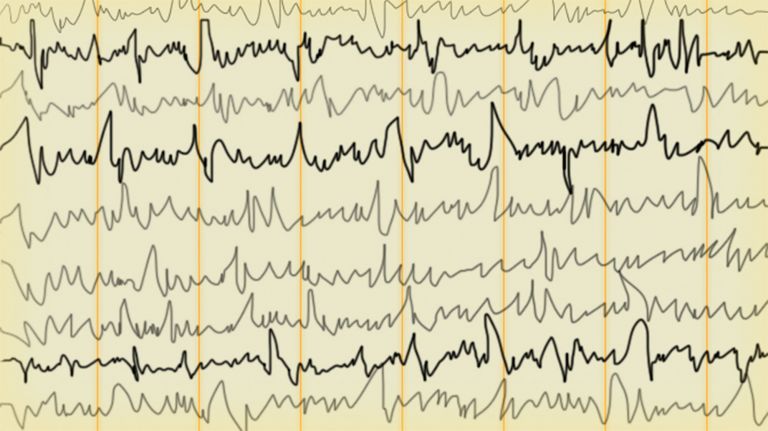
Many areas of the brain often fire in unison – scientists are trying to find out why.
09.10.2025
-
- Glossary
Lucid dream
During a lucid dream, the dreamer is aware of their state and able to control their actions. Although Aristotle reported on this phenomenon and up to 80 percent of all people say they have had lucid dreams, sleep researchers doubted the existence of this phenomenon until the end of the 1960s. Most observations of lucid dreams originate from the REM sleep phase. Scientists have found that lucid dreams are associated with altered activity in the prefrontal cortex, which is responsible for the critical evaluation of events. Lucid dreaming can be learned and is now also used in therapy, for example in the treatment of nightmares.
-
- Basics
- Time
Perfect Timing
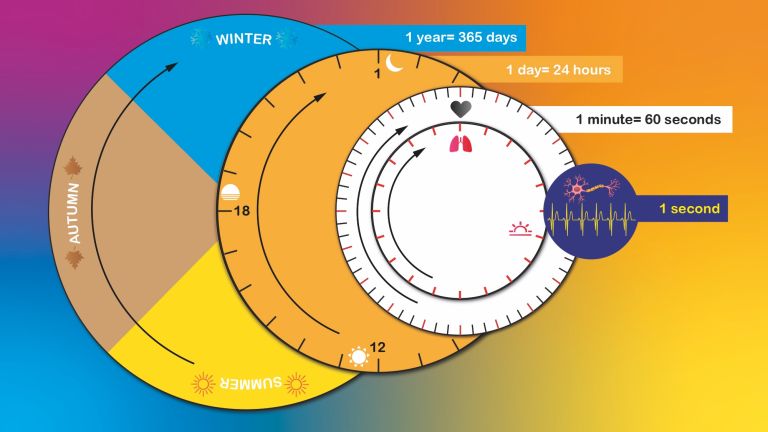
Chronobiology: from firing neurons to the nature of time
02.05.2024
-
- Basics
- Anatomy
The Pons
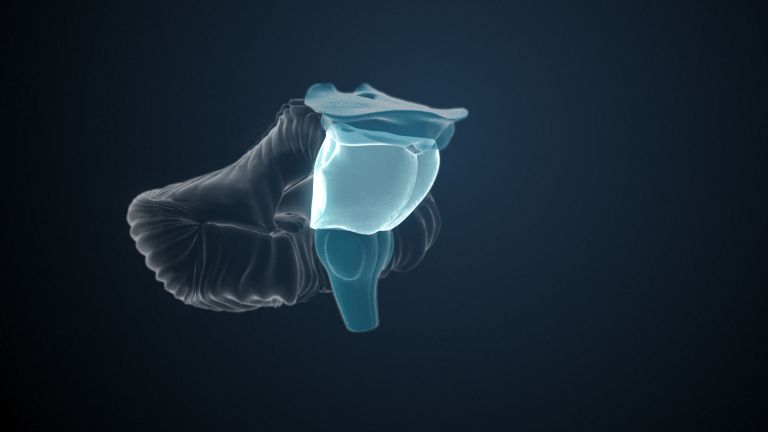
The name is not correct, but it is involved in motor function, taste, and important vegetative functions.
20.09.2025
-
- Page
Glossary
15.03.2017