Search
-
- Glossary
Frontotemporal dementia
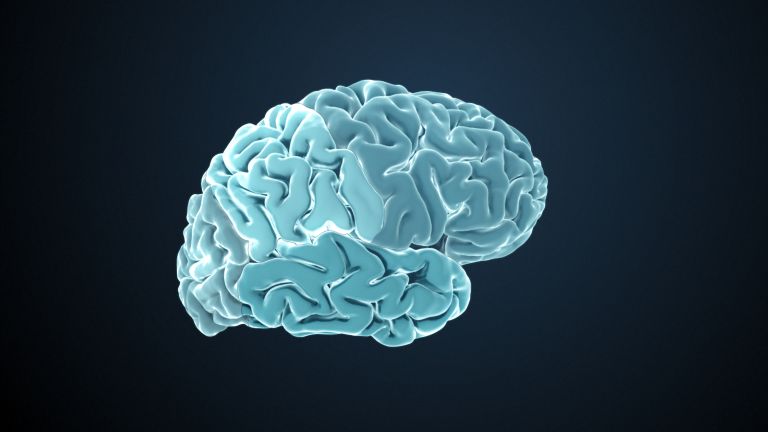
Frontotemporal dementia is a neurodegenerative disease. Unlike Alzheimer's dementia, Pick's disease usually begins before the age of 60 and initially manifests itself through changes in personality and social behavior. There are also variants that begin with speech disorders. In advanced stages, memory performance is also impaired. The physiological cause is degeneration of nerve cells in the frontal and temporal lobes of the brain. Similar to Alzheimer's disease, the aggregation of certain proteins appears to play a role in pathogenesis. However, doctors do not yet understand exactly what happens in this process and what other factors contribute to the development of Pick's disease. Today, classic Pick's disease is only a subtype of FTD in which characteristic Pick bodies can be detected in the brain.
-
- Glossary
Cingulate gyrus
The cingulate gyrus is an important part of the limbic system in the cerebrum. This strip of cortex runs medially in the cerebrum, directly above the corpus callosum. Among other things, it is involved in emotions and memory. Through its connections to limbic and autonomic centers, it can also influence autonomic responses (e.g., heart rate, blood pressure). The anterior (front) region in particular is also associated with attention, motivation, error monitoring, and emotion regulation.
-
- Glossary
Parahippocampal gyrus
The parahippocampal gyrus runs along the hippocampus in the lower, inner temporal lobe. Its anterior part is covered by the entorhinal cortex. It is connected to numerous areas of the cerebral cortex and projects to the hippocampus, which it also acts as a gateway to. This means that it is involved in the consolidation of explicit memory content, among other things. In addition, the posterior part of the parahippocampal gyrus contains the parahippocampal place area (PPA), which responds particularly to complex visual scenes such as rooms, landscapes, or streets and thus plays an important role in spatial orientation and location recognition.
-
- Glossary
Hebbian theory
Hebbian theory is the hypothesis postulated in 1949 by Canadian psychologist Donald Hebb that the synaptic connection between two neurons is strengthened when both are active at the same time. This principle forms a cellular basis for learning and memory. "Neurons that fire together, wire together" – they form a common connection.
-
- Glossary
Hippocampus
The hippocampus is the largest part of the archicortex and an area in the temporal lobe. It is also an important part of the limbic system. Functionally, it is involved in memory processes, but also in spatial orientation and learning. It comprises the subiculum, the dentate gyrus, and the Ammon's horn with its four fields CA1-CA4. Changes in the structure of the hippocampus due to stress are associated with chronic pain. The hippocampus also plays an important role in the amplification of pain through anxiety.
-
- Glossary
Savant syndrome
Savant syndrome is a rare phenomenon in which people with cognitive deficits in one or more very limited areas possess astonishing abilities – for example, reciting six-digit prime numbers or drawing a city correctly from memory in detail after flying over it. Probably the best-known savant was Kim Peek, the inspiration for the film Rain Man.
-
- Glossary
Confabulation
Confabulation refers to a memory or explanation that the person concerned is completely convinced is true, but which is objectively false. There is no conscious intent to deceive behind this. The cause is usually medical, such as damage to the orbitofrontal or other frontal brain areas, amnestic syndrome (e.g., Korsakoff's syndrome), traumatic brain injury, or dementia.
-
- Glossary
Long-term potentiation
Long-term potentiation is a central mechanism for learning and memory formation. It is based on improved communication between two cells, referred to as strengthening the connection. This strengthening can occur, for example, through an enlargement of the connection point, the installation of new channels, or an increased release of transmitters (messenger substances).
-
- Glossary
Limbic system
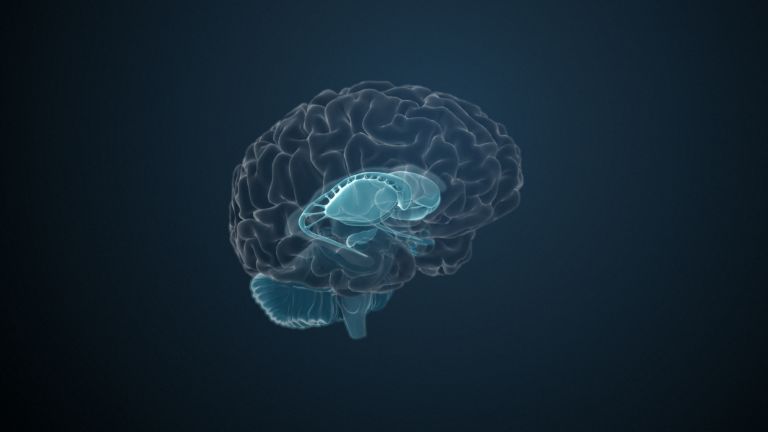
The limbic system is a functional unit in the brain. It consists of interconnected structures, primarily in the cerebrum and diencephalon. The structures assigned to the system vary depending on the source, but the most important components are the hippocampus, amygdala, cingulate gyrus, septum, and mammillary bodies. The limbic system is involved in autonomic and visceral processes as well as in mechanisms of emotion, memory, and learning. Some authors mistakenly reduce the limbic system to the emotional world by referring to it as the "emotional brain."
-
- Glossary
Medial temporal lobe
The medial part of the temporal lobe contains the hippocampus and a number of other anatomically related structures: the entorhinal, perirhinal, and parahippocampal cortex. Together, they enable us to consciously remember facts and events. This region of the brain is also important for the formation of long-term memory. Deep inside the medial temporal lobe is the amygdala, which is involved in emotion processing, emotional salience, and emotional reinforcement of memories.