1. Home
  2. Glossary
  3. 3D-Brain
  4. Search
  5. DE
theBrain
  • Topics
  • Community
  • Media
  • About us
  • Topics

    • Start

    • Basics

      • Anatomy
      • Communication of Cells
      • Structure and Function
      • The Glymphatic System
      • Heart
      • Time
    • Percieve

      • Hearing
      • Smell & Taste
    • Think

      • Consciousness
      • Emotions
    • Act

      • Motor Skills
      • Sports
      • Meditation
    • Discover

      • The Fly
      • Milestones
    • Diseases

      • Successful aging
      • Intruders
      • Multiple sclerosis
      • Alzheimer's disease
  • Community

    • News from the Institutes

    • Question to the Brain

  • Media

    • Video

    • Interactive

    • Graphics & Photo

    • Audio

  • About us

    • Idea

    • Team

    • Advisors

    • thebrain.info Association

Search

    1. Glossary

    Hypothalamus

    The hypothalamus is considered the center of the autonomic nervous system, meaning it controls many motivational states and regulates vegetative aspects such as hunger, thirst, and sexual behavior. As an endocrine gland (which, unlike an exocrine gland, releases its hormones directly into the blood without a duct), it produces numerous hormones, some of which inhibit or stimulate the pituitary gland to release hormones into the blood.In this function, it also plays an important role in the response to pain and is involved in pain modulation.

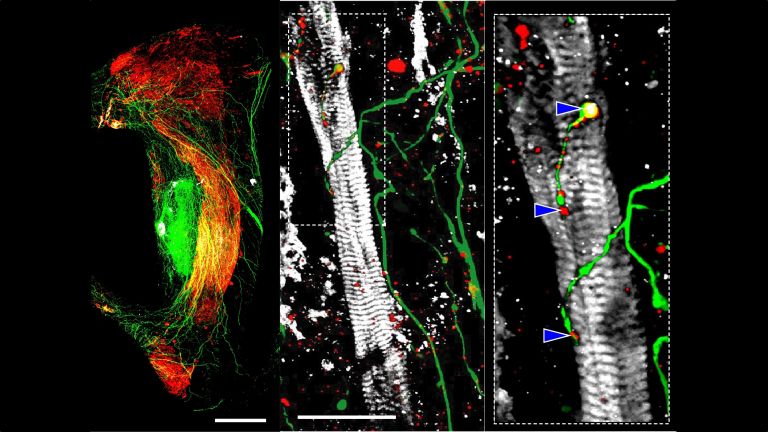
  • Herzmuskelgewebe mit Nervenverbindungen im 3D-Modell: Die linke Aufnahme zeigt das gesamte Gewebe mit Nervenfasern (grün), Herzmuskelzellen (rot), sympathischen Nervenzellen (grau) und Zellkernen (blau). In der mittleren Aufnahme sind Nervenfasern (grün) und Bereiche, die auf Kontaktstellen zwischen Nervenzellen und Herzmuskelzellen hinweisen (rot), zu sehen. Rechts sind diese Kontaktstellen auf der Oberfläche der Herzmuskelzellen vergrößert dargestellt (blaue Pfeilspitzen).
    1. News from the Institutes

    When Nerve Cells Throw the Heart Off Rhythm

    New findings on the interaction between heart muscle cells and sympathetic nerve cells in a hereditary heart rhythm disorder

    23.10.2026

    Herzmuskelgewebe mit Nervenverbindungen im 3D-Modell: Die linke Aufnahme zeigt das gesamte Gewebe mit Nervenfasern (grün), Herzmuskelzellen (rot), sympathischen Nervenzellen (grau) und Zellkernen (blau). In der mittleren Aufnahme sind Nervenfasern (grün) und Bereiche, die auf Kontaktstellen zwischen Nervenzellen und Herzmuskelzellen hinweisen (rot), zu sehen. Rechts sind diese Kontaktstellen auf der Oberfläche der Herzmuskelzellen vergrößert dargestellt (blaue Pfeilspitzen).

Pagination

  • First page « Start
  • Previous page ‹ Back
  • Page 1
  • Page 2
  • Page 3
  • Current page 4
  • Home
  • thebrain.info
    • 3D-Brain
    • Glossary
    • Search
  • Topics
    • Start
    • Basics
    • Percieve
    • Think
    • Act
    • Discover
    • Diseases
  • Media
    • Video
    • Interactive
    • Graphics & Photo
  • About us
    • The Idea
    • The Team
    • The Advisors
    • thebrain.info Association
  • Community
    • Question to the Brain
    • News from the Institutes
  • Contact
  • Terms of use
  • Imprint
  • Data privacy
© 2026 theBrain.info