Search
-
- Basics
- Anatomy
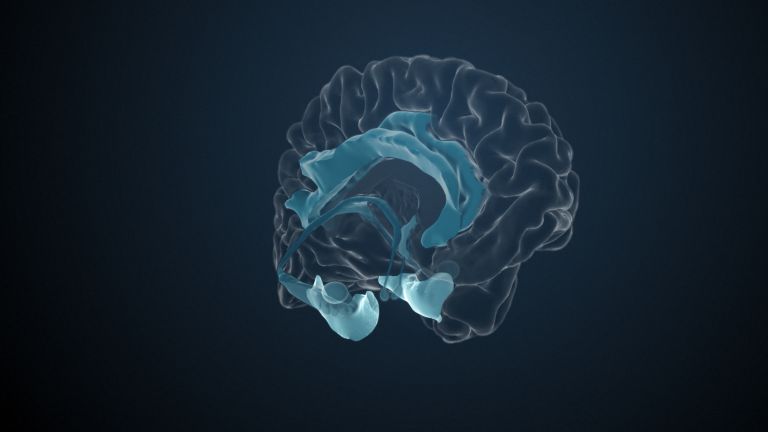
The Parahippocampal Gyrus
The parahippocampal gyrus can rightly be described as the gateway to the hippocampus.
28.11.2025
-
- Glossary
Neurodegeneration
Collective term for diseases in which nerve cells gradually lose their structure or function until they eventually die. In many cases, misfolded proteins are the trigger – such as certain forms of the proteins beta-amyloid and tau in the case of Alzheimer's disease. In other diseases, such as Parkinson's disease or Huntington's disease, proteins within the neurons are not broken down properly. As a result, toxic aggregates are deposited there, leading to the respective disease symptoms. While Huntington's disease is clearly genetic, in Parkinson's and Alzheimer's there appear to be certain gene variants that promote their development. None of these neurodegenerative diseases can be cured at present.
-
- Glossary
Pre-dementia
Alzheimer's disease typically progresses through several clinical stages, preceded by an early phase with initial cognitive impairments. This phase, formerly known as pre-dementia, is now usually referred to as mild cognitive impairment (MCI) due to Alzheimer's disease. It can manifest itself through symptoms such as declining short-term memory. With modern imaging techniques, especially amyloid PET, characteristic amyloid deposits in the brain can already be detected in this early phase. Laboratory chemical analyses of blood or cerebrospinal fluid can also provide indications of changes in protein concentrations typical of Alzheimer's disease. Although the clinical diagnosis of dementia is only made in later stages, the underlying Alzheimer's pathology can often be detected in advance today.
-
- Diseases
- Successful aging
The Secret of Neural Reserve
From the hippocampus to the synapse: A research consortium is investigating which factors protect our thinking in old age
01.02.2026
-
- Page
Home
24.02.2017
-
- Glossary
Lewy body dementia
A neurodegenerative disease that resembles Alzheimer's disease, but also Parkinson's disease in its symptoms. The Lewy bodies that give the disease its name are caused by protein deposits in the nerve cells of the cerebral cortex and brain stem, which impair the function of the corresponding neurons. In addition to cognitive impairment, Lewy body dementia often causes hallucinations or depression, as well as changes in mobility similar to those seen in Parkinson's disease.
-
- Basics
- Communication of Cells
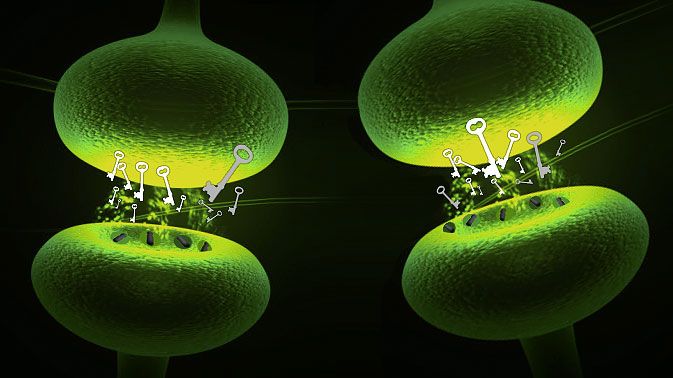
Neurotransmitters: Messenger Molecules in the Brain
“Happy hormone” & Co.: Without neurotransmitters, nerve cells would not be able to communicate.
05.08.2025
-
- Page
The Topic Partners
27.02.2024
-
- Basics
- The Glymphatic System
The Brain’s Cleanup Crew
The glymphatic system is the brain's cleanup crew, flushing away waste products.
06.11.2024
-
- News from the Institutes
How Stress Disrupts the Brain’s Navigational System
Persons under stress may have a harder time spatially orienting themselves. Researchers in Bochum have discovered why.
13.03.2026