Search
-
- Percieve
- Hearing
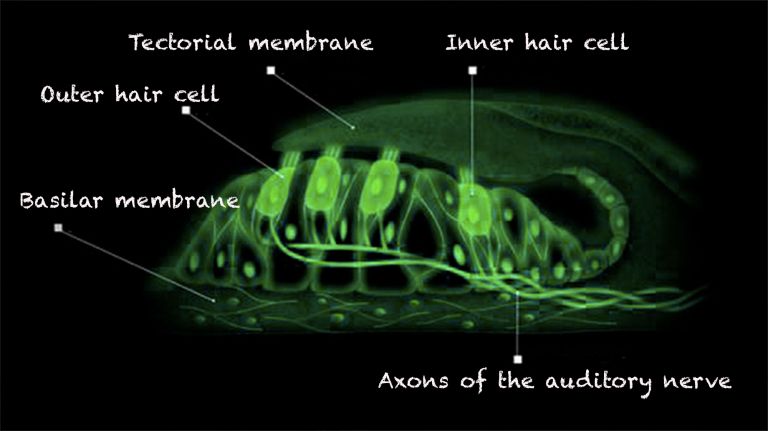
From Wiggling to the wonderful Variety of Sounds
It is a long way from purely mechanical vibrations to the world of sounds and tones.
17.10.2025
-
- Act
- Motor Skills
Forced Right-Handedness
When left-handed people were retrained to use their right hand, their brains were also retrained.
25.10.2025
-
- Basics
- Anatomy
The Mesencephalon
Important neurotransmitters, an astonishing array of colors, and a water pipe – that's the midbrain.
20.09.2025
-
- Diseases
- Multiple sclerosis
Multiple Sclerosis – a Medical Challenge
Multiple sclerosis is incurable, but there are a variety of treatment options available.
20.02.2026
-
- Basics
- Heart
How Mental Stress Harms the Heart
The heart-brain connection: When under stress, the heart and brain are both subjected to harmful pressure
11.10.2022
-
- Glossary
Nucleus
In cell biology, the nucleus in a cell is the cell nucleus, which contains the chromosomes, among other things. In neuroanatomy, the nucleus in the nervous system refers to a collection of cell bodies – known as gray matter in the central nervous system and ganglia in the peripheral nervous system.
-
- Glossary
Spinal nerves
Spinal nerves are the nerves that emerge from the spinal cord. The cell bodies of their neurons are located in the gray matter of the spinal cord.
-
- Glossary
Plaques
Senile plaques accumulate in the gray matter of the brain when a protein – known as amyloid precursor protein – is not broken down correctly. Inflammation and disorders of fat or sugar metabolism can promote plaque formation. On average, the deposits reach a diameter of 50 micrometers. The appearance of plaques is one of several anatomical changes in the brain that pathologists can use to diagnose Alzheimer's disease after death.
-