Search
-
- Diseases
- Alzheimer's disease
Dementia worry: The Bogeyman of old Age
The fear of developing dementia oneself is widespread.
11.11.2025
-
- Basics
- The Glymphatic System
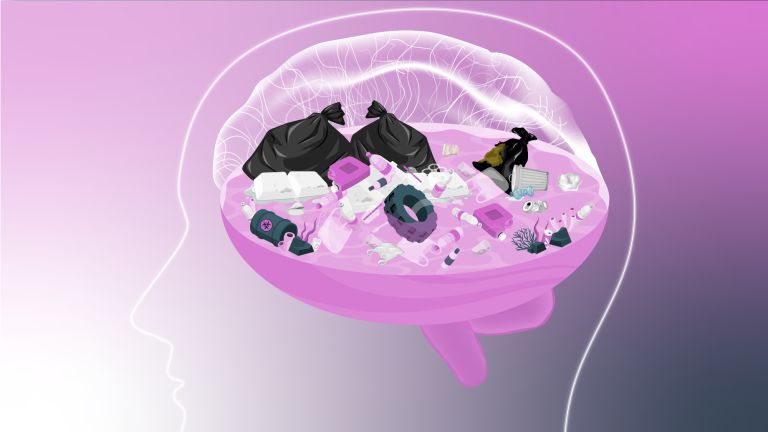
When the Brain gets clogged with Waste
Not even a coffee cup full of “nerve water” can flush out the brain at night – but woe betide you if you don't.
06.11.2024
-
- News from the Institutes
Combating loss of function in small vessels of the brain
A new study identifies molecular factors that promote small vessel disease – and an active drug that can restore impaired vascular functions.
15.12.2025
-
- News from the Institutes
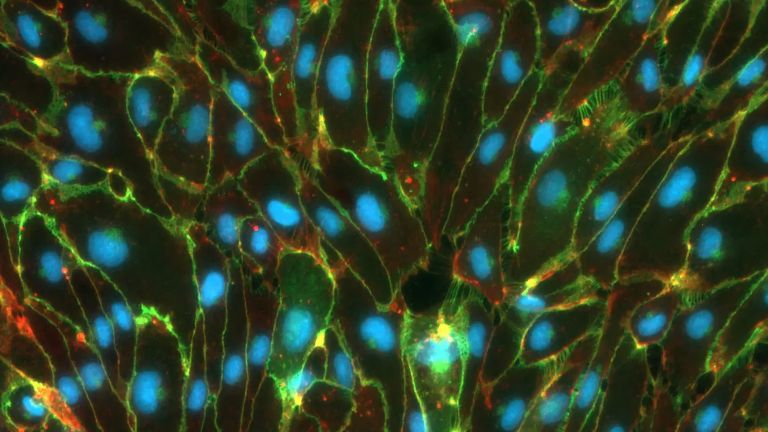
A human model of the blood-brain barrier
Disruptions to the protective barrier contribute to the development of serious brain diseases such as stroke and Alzheimer's.
16.12.2025
-
- Glossary
Alzheimer's disease
Alzheimer's disease is a progressive neurodegenerative disorder characterized by cortical atrophy, nerve cell loss, synapse loss, and deposits of amyloid plaques and neurofibrillary tangles, leading to dementia and loss of function. Early symptoms include memory problems, speech disorders, executive deficits, depressive moods, and subtle personality changes. As the disease progresses, global cognitive impairment, aphasia, agnosia, apraxia, and behavioral abnormalities such as apathy, restlessness, and sleep disorders occur. The disease was first described in 1907 by Alois Alzheimer.
-
- Glossary
Frontotemporal dementia
Frontotemporal dementia is a neurodegenerative disease. Unlike Alzheimer's dementia, Pick's disease usually begins before the age of 60 and initially manifests itself through changes in personality and social behavior. There are also variants that begin with speech disorders. In advanced stages, memory performance is also impaired. The physiological cause is degeneration of nerve cells in the frontal and temporal lobes of the brain. Similar to Alzheimer's disease, the aggregation of certain proteins appears to play a role in pathogenesis. However, doctors do not yet understand exactly what happens in this process and what other factors contribute to the development of Pick's disease. Today, classic Pick's disease is only a subtype of FTD in which characteristic Pick bodies can be detected in the brain.
-
- Discover
- Milestones
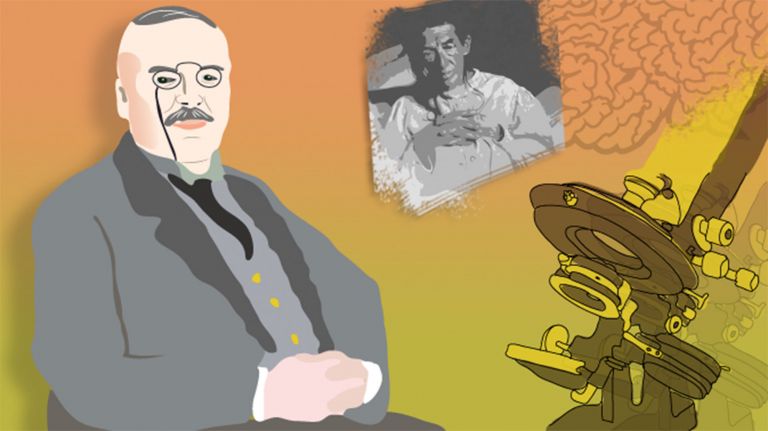
Alois Alzheimer: Mad-Doctor with a Microscope
Alzheimer's is one of the most well-known diseases of our time. But initially, it – along with its discoverer – was largely ignored.
18.09.2013
-
- News from the Institutes
Insight into schizophrenia disease mechanisms found in the eye
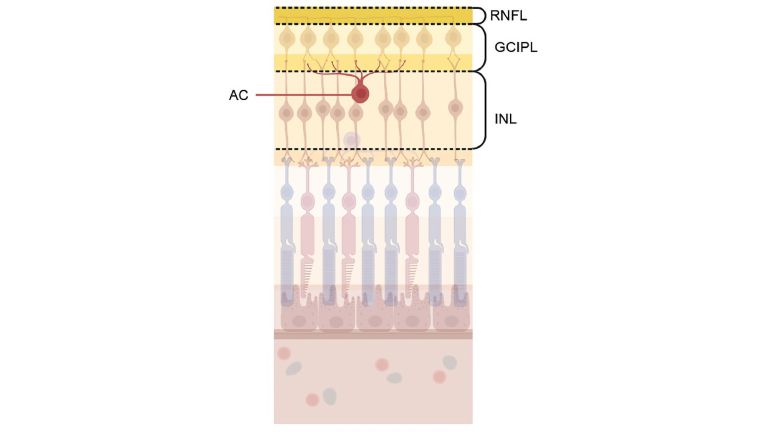
Impaired neuronal connectivity in the retina
17.02.2025
-
- Diseases
- Alzheimer's disease
Alzheimer's
The number of patients is steadily rising, but that’s just a statistic. But Alzheimer’s affects the human being.
29.09.2013
-
- Diseases
- Alzheimer's disease
Language fades – Music remains
People with dementia can sing and use music to communicate, even as other abilities fade.
12.03.2026