Search
-
- Basics
- Anatomy
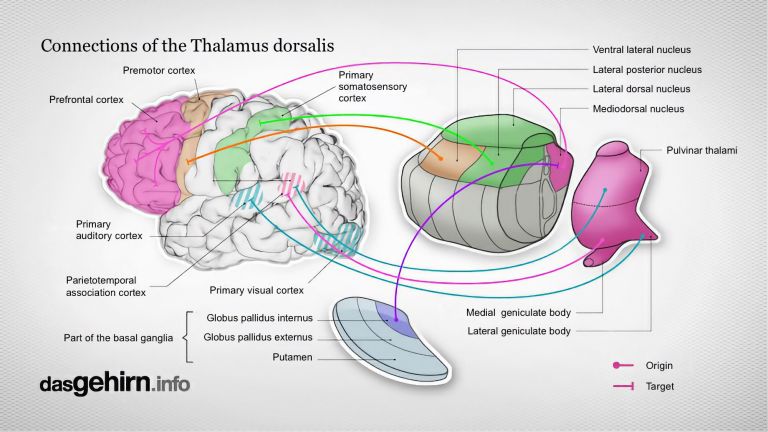
Connections of the Dorsal Thalamus
As the “gateway to consciousness,” the thalamus is particularly strongly connected to the cerebral cortex.
13.07.2015
-
- Glossary
Medial orbitofrontal cortex
The ventral (in humans, "lower") middle part of the frontal lobe. This part of the cortex influences complex mental processes such as planning, reward evaluation, and decision-making. Patients with lesions in the frontal lobe show personality changes and are often no longer able to control their impulses.
-
- Glossary
Paralimbic cortex
Collective term for all areas of the brain that are closely connected to the limbic system. Anatomically, the orbitofrontal cortex, cingulate gyrus, and insula belong to the paralimbic system, which plays a crucial role in mediating intense emotions. This is particularly true for feelings of fear. Neurologists often find abnormalities in the paralimbic system in the brains of psychopaths.
-
- Glossary
Parahippocampal cortex
The parahippocampal cortex is located next to the hippocampus and is part of the temporal lobe. It processes spatial-visual memory content and appears to be involved in the consolidation of memory content. It receives inputs from numerous polymodal cortical areas, and its outputs go to the hippocampus, amygdala, and striatum.
-
- Basics
- Anatomy
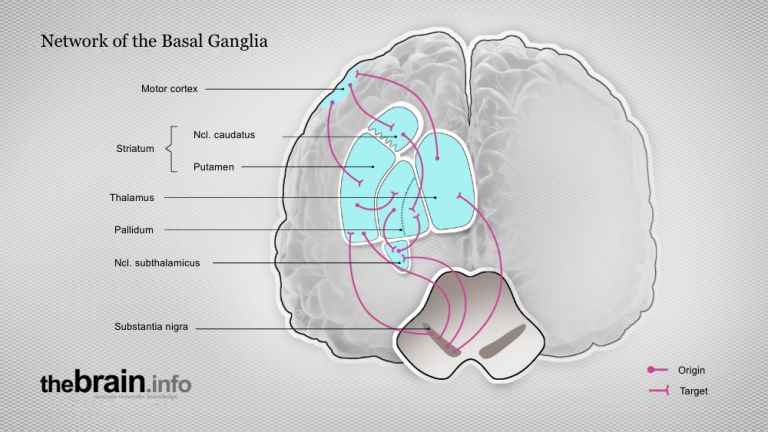
Network of the Basal Ganglia
One nucleus inhibits the other, only so that the cortex can ultimately be stimulated.
13.07.2015
-
- Glossary
Granule cell
Relatively small nerve cells found in the cortex (cerebral cortex), hippocampus, olfactory bulb, and cerebellum. In the cortex, they are primarily located in layer IV and are predominantly excitatory. In the cortex of the cerebellum, they constitute 99% of the cells and form the parallel fibers.
-
- Discover
- Milestones
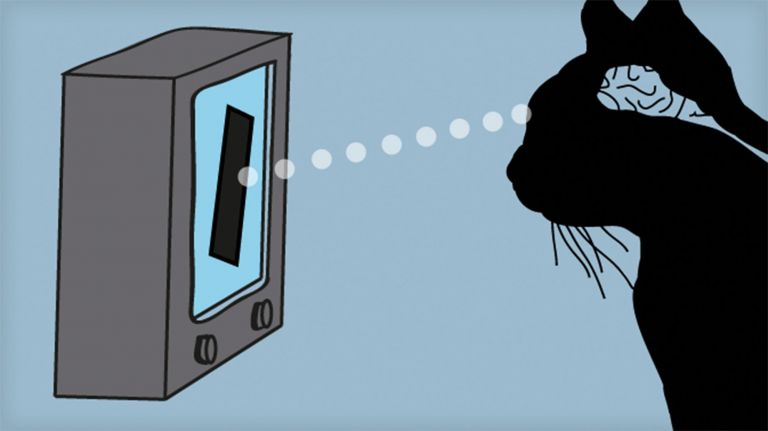
Hubel and Wiesel: Cutting the Lawn with Nail Scissors
Hubel and Wiesel worked diligently to establish fundamental knowledge about visual information processing.
26.09.2012
-
- Think
- Consciousness
In Search of the Mind in the Brain
Nowadays, consciousness is assumed to reside in the head. But that hardly helps with the question of where and how.
16.12.2025
-
- Basics
- Anatomy
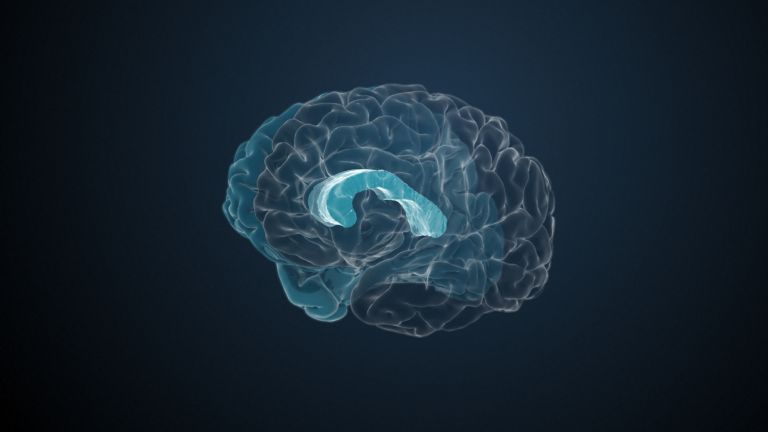
The Corpus Callosum
The corpus callosum allows information to flow between the two hemispheres of the cerebrum. This is urgently needed.
01.07.2025
-
- Page
The Advisors
20.03.2017