Search
-
- Basics
- Structure and Function
Future Regeneration
The brain is amazing, but vulnerable – which makes effective treatments all the more important. In fact, there is hope: stem cell therapy works in mice.
30.04.2020
-
- Glossary
Beta-amyloid
A peptide consisting of 36 to 42 amino acids that is considered the main component of senile plaques and is believed to be responsible for the development of Alzheimer's disease. The starting product is the amyloid precursor protein (APP). Certain enzymes in the cell membrane cut the precursor protein into peptides of various sizes. Amyloids consisting of 40 and 42 amino acids are found in senile plaques, with the 42-amino-acid product forming aggregates particularly quickly, at least in the Petri dish. The normal function of beta-amyloid has not yet been conclusively clarified.
-
- Basics
- The Glymphatic System
When the Brain gets clogged with Waste
Not even a coffee cup full of “nerve water” can flush out the brain at night – but woe betide you if you don't.
06.11.2024
-
- Basics
- The Glymphatic System
The Brain’s Cleanup Crew
The glymphatic system is the brain's cleanup crew, flushing away waste products.
06.11.2024
-
- Diseases
- Alzheimer's disease
“And now he has Alzheimer's...” – A Guide for Relatives
Alzheimer's diagnosis: Find out what to expect and don't forget about yourself.
11.11.2025
-
- Diseases
- Alzheimer's disease
“It's nerve-wracking”
Care at home or in a nursing home? For some dementia patients, shared accommodation can also be an alternative.
20.09.2013
-
- Discover
- Milestones
Alois Alzheimer: Mad-Doctor with a Microscope
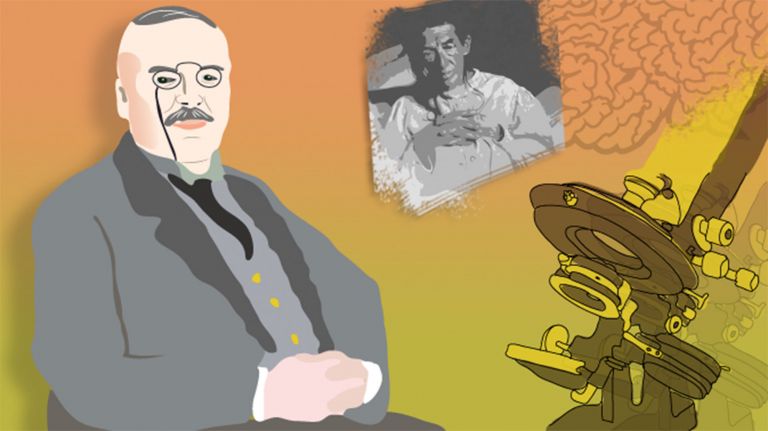
Alzheimer's is one of the most well-known diseases of our time. But initially, it – along with its discoverer – was largely ignored.
18.09.2013
-
- Page
Current: News from the Institutes
09.12.2019
-
- Topic
Alzheimer's disease
Research has not yet produced a cure. What is the next step?
-
- Glossary
Alzheimer's disease
Alzheimer's disease is a progressive neurodegenerative disorder characterized by cortical atrophy, nerve cell loss, synapse loss, and deposits of amyloid plaques and neurofibrillary tangles, leading to dementia and loss of function. Early symptoms include memory problems, speech disorders, executive deficits, depressive moods, and subtle personality changes. As the disease progresses, global cognitive impairment, aphasia, agnosia, apraxia, and behavioral abnormalities such as apathy, restlessness, and sleep disorders occur. The disease was first described in 1907 by Alois Alzheimer.