Search
-
- Diseases
- Intruders
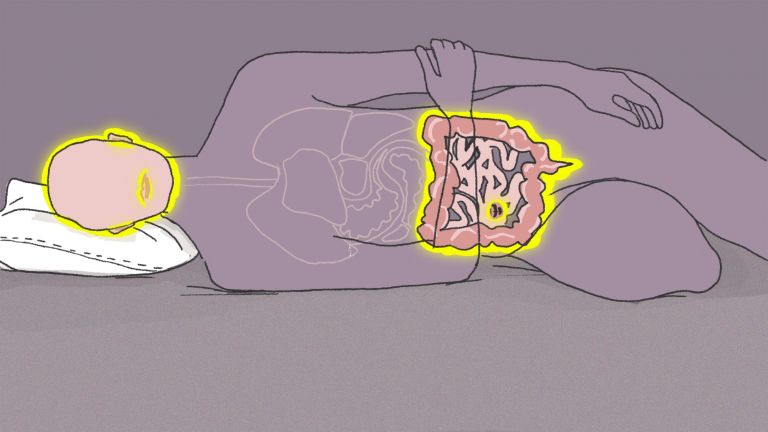
It Takes More than Guts
Microbiome: How gut bacteria can make the brain sick
02.05.2023
-
- Basics
- Structure and Function
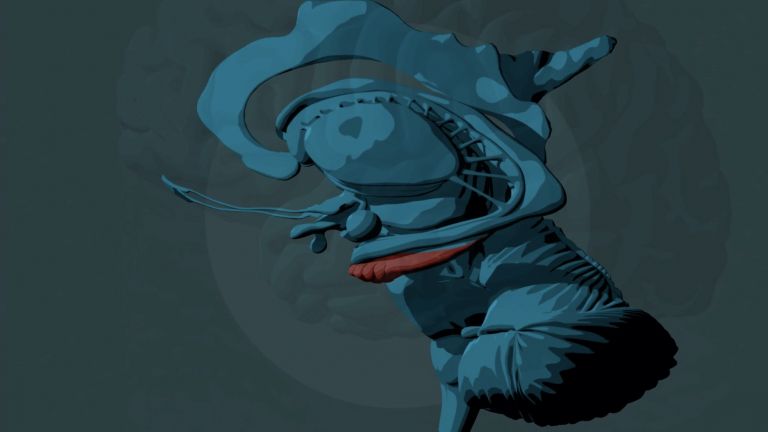
Future Regeneration
The brain is amazing, but vulnerable – which makes effective treatments all the more important. In fact, there is hope: stem cell therapy works in mice.
30.04.2020
-
- Glossary
Parkinson's disease
Parkinson's disease is one of the most common neurological disorders, caused by the death of dopamine-producing neurons in the substantia nigra, leading to a neurotransmitter imbalance in the basal ganglia. Symptoms usually begin late in life with mild tremors (resting tremor), increasing stiffness of the limbs, and slowed voluntary movements (bradykinesia). Later, postural instability, balance disorders, and difficulty walking occur. Other typical features include rigid facial expressions (hypomimia), a shuffling gait, and muscle stiffness (rigor). The disease is incurable, but its symptoms can be treated with medication (e.g., L-dopa, dopamine agonists) or surgery involving deep brain stimulation (brain pacemaker).
-
- Basics
- Anatomy
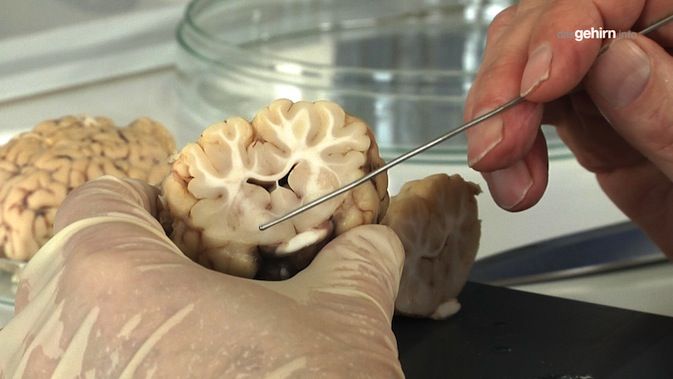
The Sheep Brain: Basal Ganglia
The basal ganglia control motor function and happiness – but in sheep, only unhappiness has been proven.
29.06.2013
-
- Page
Glossary
15.03.2017