Senile Plaques bei Alzheimer
Published: 24.05.2013
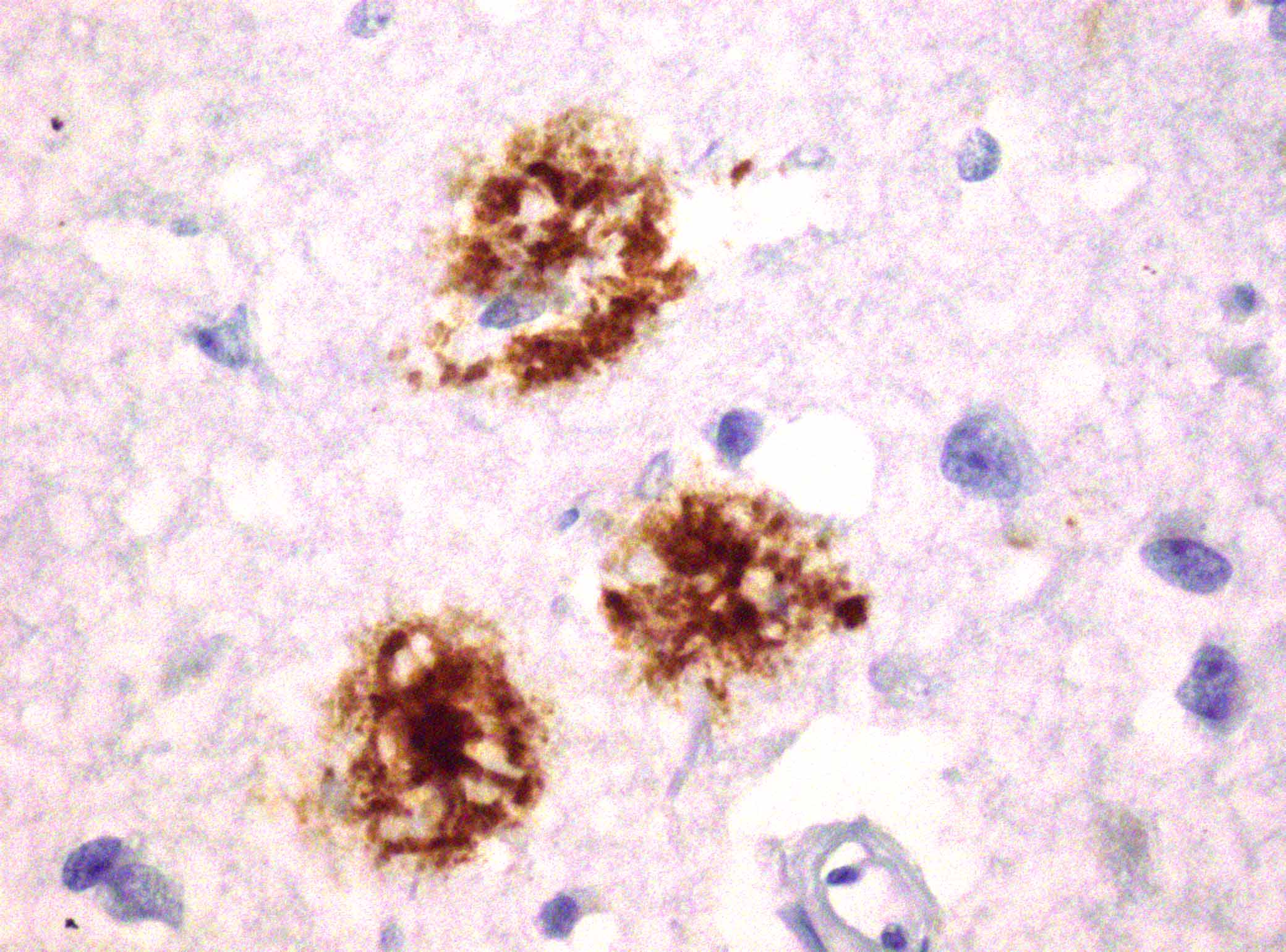
Bei Alzheimer-Patienten bilden sich Ablagerungen aus verklumpten Aβ-Peptiden in Form der so genannten senilen Plaques. Hier werden sie sichtbar durch Immunhistochemie. Mehr über die biochemischen Veränderungen im Gehirn erfahren Sie in den Artikeln Altern – (nicht nur) eine Frage der Biologie und Das Gehirn in seinen reifen Jahren.
Bild von Dr. Jakob Matschke, Leiter AG forensische Neuropathologie, Universitätsklinikum Hamburg-Eppendorf
Senile plaques
Senile plaques accumulate in the Gray matter of the brain when a protein – known as amyloid precursor protein – is not broken down correctly. Inflammation and disorders of fat or sugar metabolism can promote plaque formation. On average, the deposits reach a diameter of 50 micrometers. The appearance of plaques is one of several anatomical changes in the brain that pathologists can use to diagnose Alzheimer's disease after death.
Plaques
Senile plaques
Senile plaques accumulate in the gray matter of the brain when a protein – known as amyloid precursor protein – is not broken down correctly. Inflammation and disorders of fat or sugar metabolism can promote plaque formation. On average, the deposits reach a diameter of 50 micrometers. The appearance of plaques is one of several anatomical changes in the brain that pathologists can use to diagnose Alzheimer's disease after death.
Gray matter
Grey matter refers to a collection of nerve cell bodies, such as those found in nuclei or in the cortex.
Alzheimer's disease
Morbus Alzheimer
Alzheimer's disease is a progressive neurodegenerative disorder characterized by cortical atrophy, nerve cell loss, synapse loss, and deposits of amyloid plaques and neurofibrillary tangles, leading to dementia and loss of function. Early symptoms include memory problems, speech disorders, executive deficits, depressive moods, and subtle personality changes. As the disease progresses, global cognitive impairment, aphasia, agnosia, apraxia, and behavioral abnormalities such as apathy, restlessness, and sleep disorders occur. The disease was first described in 1907 by Alois Alzheimer.