As I Said… How Intonation Influences our Perception
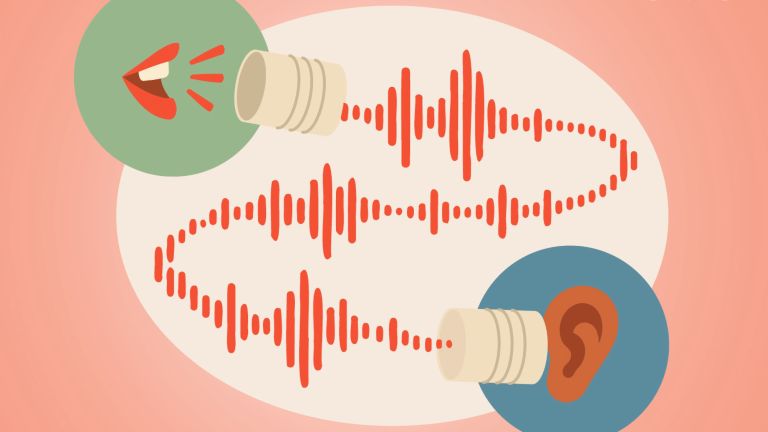
“Between the lines”—that’s how we describe unspoken messages that the actual text may omit but that are conveyed, for example, through word choice or tone of voice. A research team led by the Max Planck Institute for Empirical Aesthetics (MPIEA) in Frankfurt am Main, Germany, has investigated how we convey meaning through speech intonation and identified different listener profiles. The results have been recently published in Cognition.
Published: 30.09.2026
Prosody—the melody of speech—conveys meaning to what is said beyond the spoken words. Intonation, or changes in pitch, plays an important role in this process. However, it is unclear which intonation features are crucial and if everyone perceives them the same way. To address these questions, the interdisciplinary research team conducted a multi-stage study.
First, 41 native German speakers heard pairs of the German word for “beer,” where the pitch had been randomly generated in each version. In one session, participants selected which version of each word pair sounded more like criticism to them, in another session, they decided which version sounded more like a suggestion. The sum of these decisions revealed patterns showing how the participants imagined the sound of criticism or a suggestion, respectively.
Using these reconstructed pitch patterns, the researchers ran a second study, asking a new group of 177 people to rate how much each pattern actually sounded like criticism or suggestion. This allowed the researchers to test which features of the pitch contour mattered most. The results showed that pitch dynamics—that is, how spiky or flat the curve is, and whether it trends upward or downward—were the main drivers of listeners’ judgments. Furthermore, it became apparent that not everyone interpreted the features in the same way.
“Perhaps the most striking finding is how differently people use pitch information—sometimes even in opposite ways from each other,” reports lead author Larrouy-Maestri of the MPIEA. “This variability may be a previously underestimated source of the miscommunication that shows up so often in everyday conversation: how you say something may land completely differently depending on who’s listening.”
Together, these findings offer new insights into how we make sense of sounds more broadly, well beyond speech itself. Furthermore, they offer a more nuanced picture of how intonation conveys meaning: as a flexible, listener-dependent inference, which can bring people together in shared understanding—or pull them apart.
Original publication
Larrouy-Maestri, P., Ringer, H., Poeppel, D., & Sammler, D. (2027). The Role of Pitch in the Vocal Communication of Intentions. Cognition, 278, 106714. https://doi.org/10.1016/j.cognition.2026.106714