1. Home
  2. Glossary
  3. 3D-Brain
  4. Search
  5. DE
theBrain
  • Topics
  • Community
  • Media
  • About us
  • Topics

    • Start

    • Basics

      • Anatomy
      • Communication of Cells
    • Percieve

      • Hearing
      • Smell & Taste
    • Think

      • Consciousness
      • Emotions
    • Act

      • Motor Skills
      • Sports
    • Discover

      • The Fly
      • Milestones
    • Diseases

      • Successful aging
      • Multiple sclerosis
      • Alzheimer's disease
  • Community

    • News from the Institutes

    • Question to the Brain

  • Media

    • Video

    • Interactive

    • Graphics & Photo

    • Audio

  • About us

    • Idea

    • Team

    • Advisors

    • thebrain.info Association

Search

    1. Glossary

    Sensory transduction

    In the process of transduction, a sensory stimulus – such as light or touch – is converted into a nerve impulse.

    1. Percieve
    2. Hearing

    From Wiggling to the wonderful Variety of Sounds

    It is a long way from purely mechanical vibrations to the world of sounds and tones.

    17.10.2025

  • Das Klingeln im Ohr
    1. Percieve
    2. Hearing

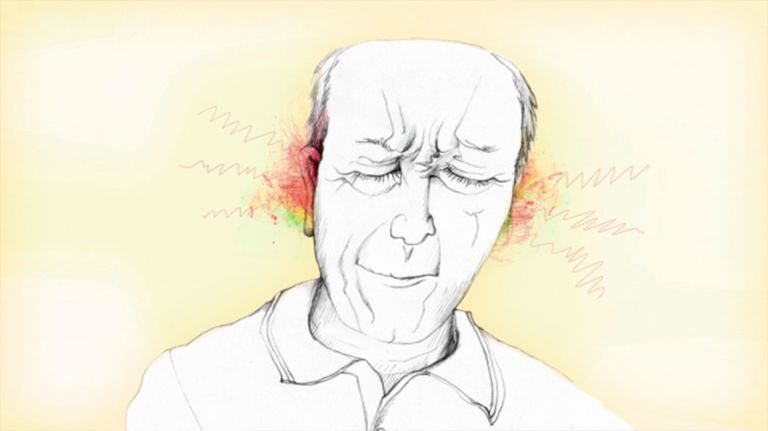
    Ringing in the Ears

    Tinnitus: The annoying whistling and buzzing does not originate in the ear, but in the brain.

    28.10.2025

    Das Klingeln im Ohr
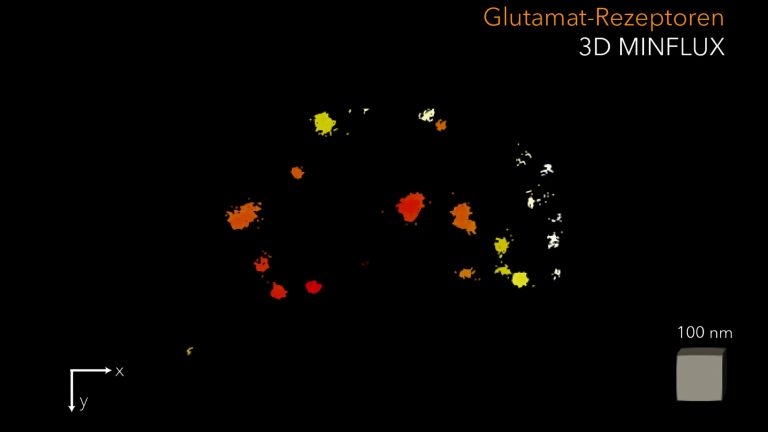
  • 3D MINFLUX image: Each colored “dot” is an arrangement of messenger substance receptors (nanoclusters) that together form a ring-shaped structure on the auditory nerve cells.
    1. News from the Institutes

    Teamwork in the inner ear

    Our hearing is based on the organized grouping of proteins

    06.11.2025

    3D MINFLUX image: Each colored “dot” is an arrangement of messenger substance receptors (nanoclusters) that together form a ring-shaped structure on the auditory nerve cells.
    1. Glossary

    Hair cells

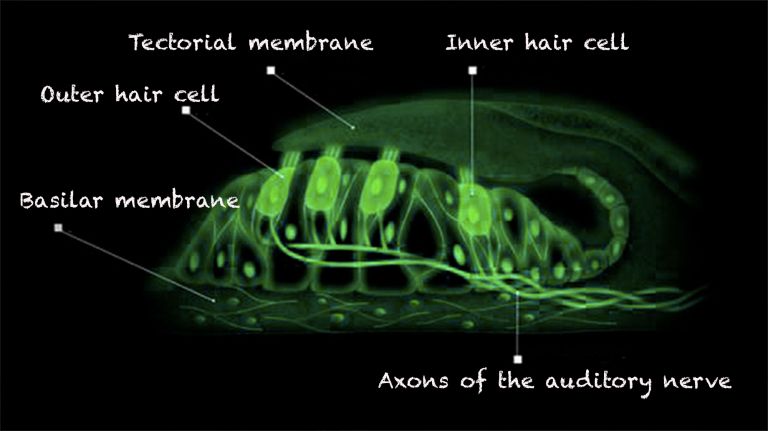
    Sensory cells in the inner ear located in the organ of Corti and the semicircular canals. The hair cells in the organ of Corti are responsible for transducing (converting) the vibrations into electrical potentials. Each of these sensory cells has hair-like protrusions of varying lengths, called stereocilia. These are interconnected. The movement of these stereocilia caused by the vibrations is the key to signal transduction in the hair cells.

  • Home
  • thebrain.info
    • 3D-Brain
    • Glossary
    • Search
  • Topics
    • Start
    • Basics
    • Percieve
    • Think
    • Act
    • Discover
    • Diseases
  • Media
    • Video
    • Interactive
    • Graphics & Photo
  • About us
    • The Idea
    • The Team
    • The Advisors
    • thebrain.info Association
  • Community
    • Question to the Brain
    • News from the Institutes
  • Contact
  • Terms of use
  • Imprint
  • Data privacy
© 2026 theBrain.info