Search
-
- Glossary
Positron emission tomography
An imaging technique that helps doctors visualize metabolic processes in the body. The patient is injected with a weakly radioactive substance that emits positrons, i.e., beta radiation. When the positrons encounter electrons in the body, energy is released in the form of two photons. These photons travel in opposite directions. Detectors are arranged around the patient in the PET scanner to register the photons that strike them. This makes it possible to track whether the radioactive substance accumulates in certain areas of the body, which can indicate the presence of a tumor, for example. Positron emission tomography is also used in the early diagnosis of dementia. The radiation exposure is low and acceptable in a medical context.
-
- News from the Institutes
Insights into Smelling Problems Associated with Alzheimer’s
Tests of the sense of smell could help identify people who are developing Alzheimer’s at an earlier stage
15.08.2025
-
- News from the Institutes
Insights into Smelling Problems Associated with Alzheimer’s
Tests of the sense of smell could help identify people who are developing Alzheimer’s at an earlier stage
15.08.2025
-
- News from the Institutes
Insights into Smelling Problems Associated with Alzheimer’s
Tests of the sense of smell could help identify people who are developing Alzheimer’s at an earlier stage
15.08.2025
-
- Diseases
- Alzheimer's disease
A Slow Descent into Forgetfulness
After a long asymptomatic phase, Alzheimer's disease progresses through three stages
18.03.2026
-
- Think
- Consciousness
Playing Tennis in a vegetative State
Adrian Owen and colleagues use brain scans to search for the hidden minds of coma patients.
12.06.2025
-
- Diseases
- Intruders
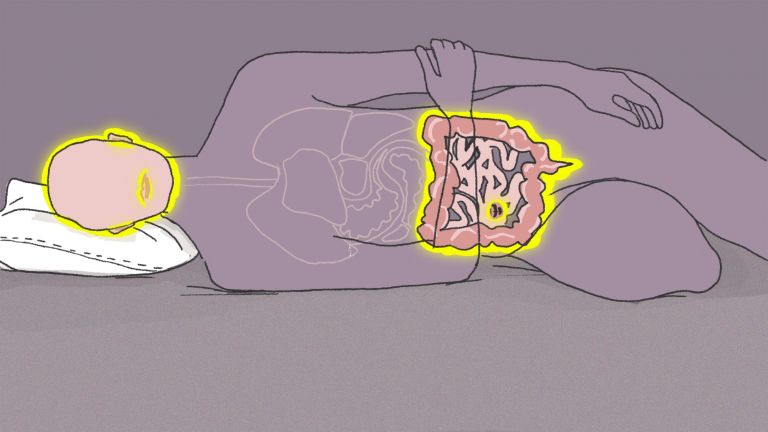
It Takes More than Guts
Microbiome: How gut bacteria can make the brain sick
02.05.2023
-
- Diseases
- Successful aging
The Secret of Neural Reserve
From the hippocampus to the synapse: A research consortium is investigating which factors protect our thinking in old age
01.02.2026
-
- Diseases
- Alzheimer's disease
Alzheimer's – a Disease makes History
After more than 100 years, Alzheimer's disease is still incurable. Possible causes are emerging.
20.10.2025