Search
-
- Basics
- Anatomy
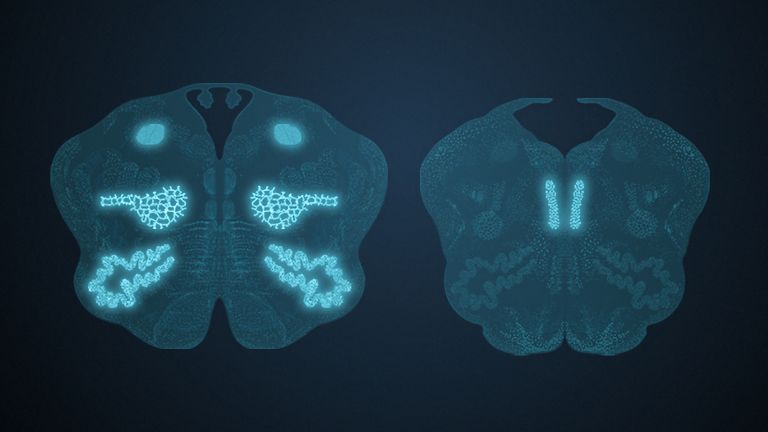
The Medulla Oblongata
Fibers and nuclei – and important nuclei at that. The medulla oblongata is where the brain begins.
01.10.2025
-
- Basics
- Anatomy
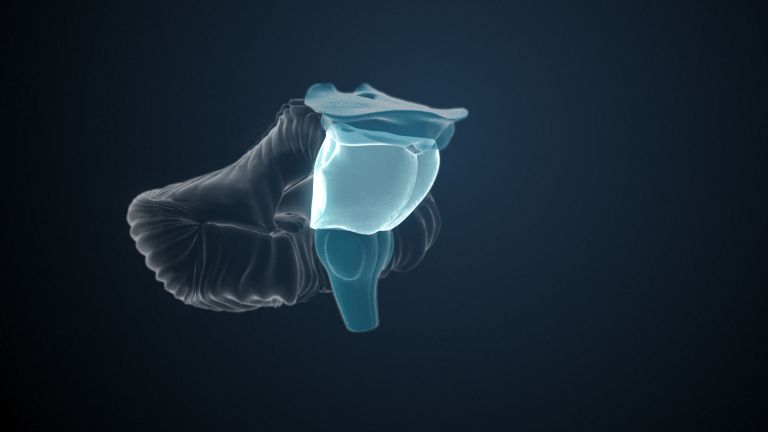
The Pons
The name is not correct, but it is involved in motor function, taste, and important vegetative functions.
20.09.2025
-
- Glossary
Medulla oblongata
Area of the brain that transitions into the spinal cord. The medulla oblongata comprises nerve pathways between the spinal cord and higher brain regions, as well as numerous core areas with functions that are in some cases vital, such as breathing, heartbeat, and certain reflexes.
-
- Basics
- Anatomy
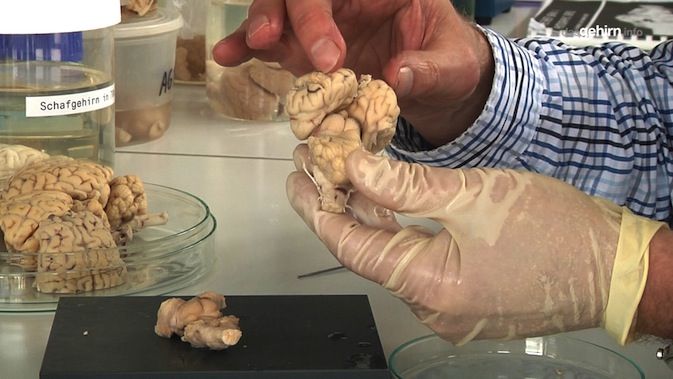
The Sheep Brain: Brain Stem
It fulfills central tasks. And has adult-only structures. And colorful nuclei.
29.06.2013
-
- Diseases
- Multiple sclerosis
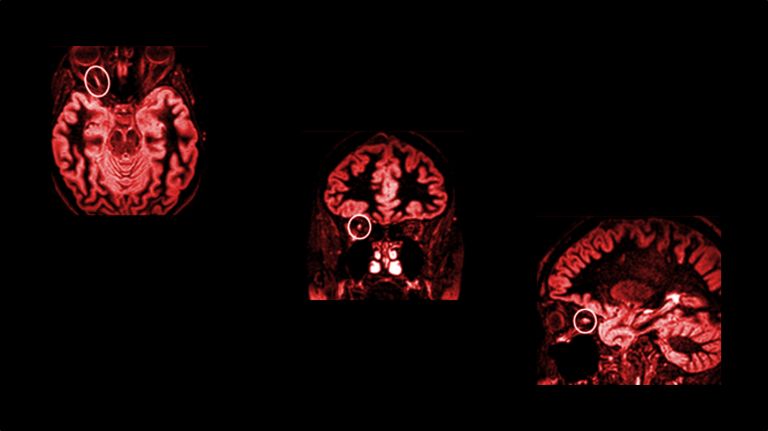
MS under the microscope
MS: Damage to the axon causes a wide variety of symptoms
15.08.2025
-
- Glossary
Pyramidal pathway
The pyramidal pathway is a system of axons (long fiber-like extensions of nerve cells) that run from the motor cortex to the spinal cord. 80 percent of all fibers cross to the opposite side in the medulla oblongata. In the medulla, it runs past the pyramids, from which it gets its name. It is involved in fine and voluntary motor skills.
-
- Glossary
Brain stem
The "trunk" of the brain, to which all other brain structures are "attached," so to speak. From bottom to top, it comprises the medulla oblongata, the pons, and the mesencephalon. It transitions into the spinal cord below. It is a center for vital functions such as breathing and heartbeat and contains ascending and descending pathways between the cerebrum, cerebellum, and spinal cord.
-
- Glossary
Pons
Area in the brain stem between the medulla oblongata and the mesencephalon. It acts as a switching station for many nerve pathways between the brain and spinal cord and contains numerous nuclei, including cranial nerves and those involved in controlling motor function in cooperation with the cerebellum.
-
- Glossary
Nucleus tractus solitarius
A nucleus in the medulla oblongata that serves as an important integration center for visceral information. Among other things, it processes taste stimuli (via nerves VII, IX, and X) and transmits them via the thalamus (ventral posteromedial nucleus, VPM) to the primary gustatory cortex. The NTS is also involved in the motor functions of swallowing, coughing, and respiratory control by transmitting signals to motor nuclei such as the nucleus ambiguus. These reflexes serve to protect the respiratory tract and facilitate food intake.
-
- Basics
- The Developing Brain
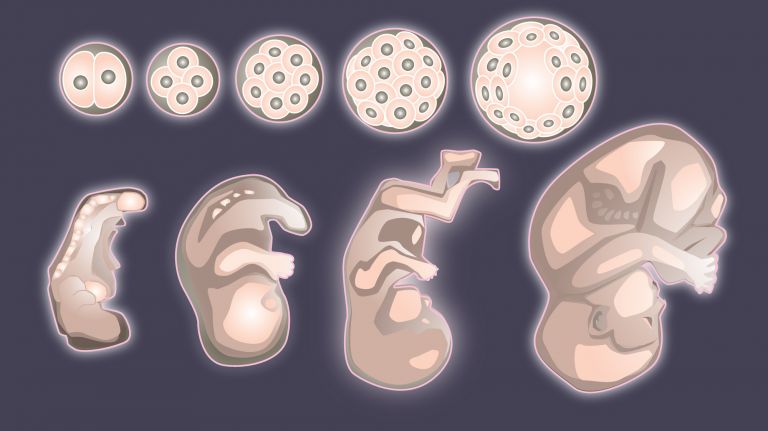
Development of a Brain
There is no process on Earth more complex than brain development
10.02.2026