1. Home
  2. Glossary
  3. 3D-Brain
  4. Search
  5. DE
theBrain
  • Topics
  • Community
  • Media
  • About us
  • Topics

    • Start

    • Basics

      • Anatomy
      • Communication of Cells
    • Percieve

      • Hearing
      • Smell & Taste
    • Think

      • Consciousness
      • Emotions
    • Act

      • Motor Skills
      • Sports
    • Discover

      • The Fly
      • Milestones
    • Diseases

      • Successful aging
      • Multiple sclerosis
      • Alzheimer's disease
  • Community

    • News from the Institutes

    • Question to the Brain

  • Media

    • Video

    • Interactive

    • Graphics & Photo

    • Audio

  • About us

    • Idea

    • Team

    • Advisors

    • thebrain.info Association

Search

    1. Glossary

    Lateral geniculate body

    The lateral geniculate nucleus is the section of the thalamus (the largest part of the diencephalon) where around 90% of the optic nerve axons terminate. It has a characteristic stratification into six cell layers. The nerve cells of the lateral geniculate nucleus send their projections to the visual cortex. Together with the medial geniculate nucleus, it forms the metathalamus.

    1. Glossary

    Medial geniculate body

    The medial geniculate body (medial geniculate nucleus) is a nucleus of the thalamus (the largest part of the diencephalon). As the central switching point of the auditory pathway, it transmits impulses from the inferior colliculus to the auditory radiation. Together with the lateral geniculate body, it forms the metathalamus.

    1. Percieve
    2. Hearing

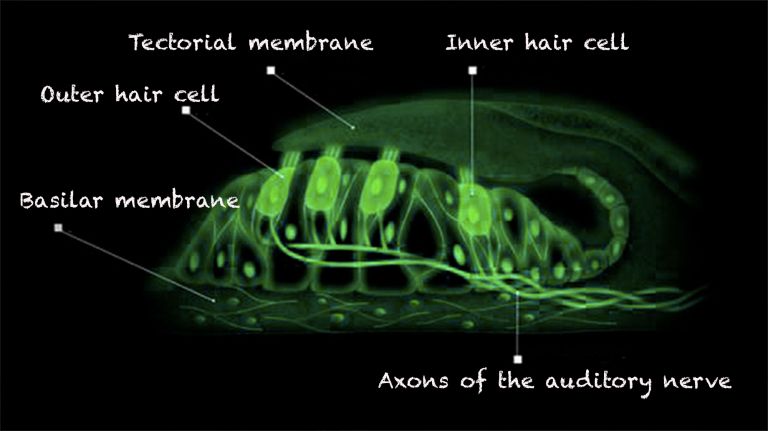
    From Wiggling to the wonderful Variety of Sounds

    It is a long way from purely mechanical vibrations to the world of sounds and tones.

    17.10.2025

    1. Basics
    2. Anatomy

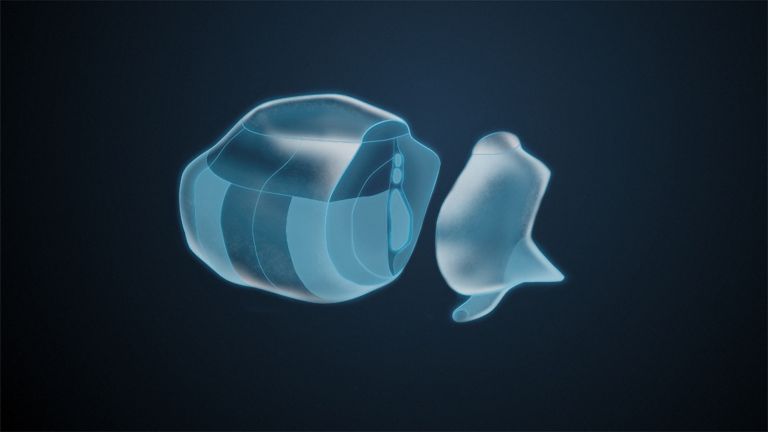
    The Thalamus dorsalis

    The structure is complex, the tasks are varied. It supports the senses, motor skills, and psyche.

    28.11.2025

  • Das Bild zeigt mehr als 1.000 der 120.000 Gehirnzellen (Neuronen + Glia), die im Rahmen des MICRONS-Projekts rekonstruiert wurden. Jedes rekonstruierte Neuron hat eine andere zufällige Farbe. Es handelt sich um eine symbolische Darstellung, aber nicht um die tatsächliche Wiedergabe des Datensatzes – es gibt weitaus mehr aufgezeichnete Neuronen als die eingezeichneten.
    1. News from the Institutes

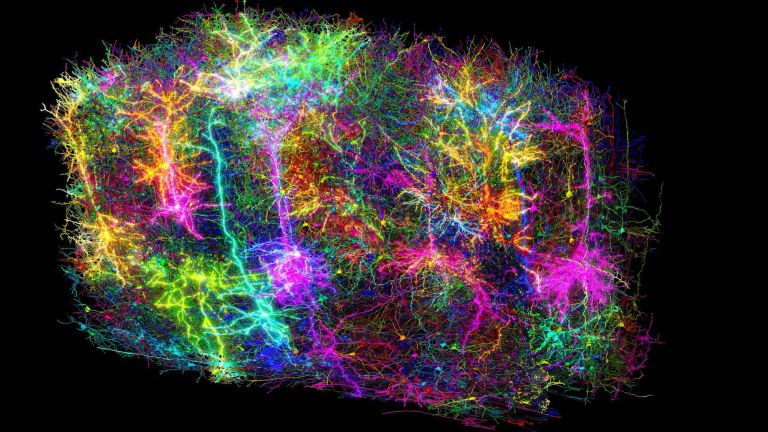
    AI looks deeper into visual system

    Artificial intelligence models provide insights to understand the processing of visual stimuli in the brain

    10.04.2025

    Das Bild zeigt mehr als 1.000 der 120.000 Gehirnzellen (Neuronen + Glia), die im Rahmen des MICRONS-Projekts rekonstruiert wurden. Jedes rekonstruierte Neuron hat eine andere zufällige Farbe. Es handelt sich um eine symbolische Darstellung, aber nicht um die tatsächliche Wiedergabe des Datensatzes – es gibt weitaus mehr aufgezeichnete Neuronen als die eingezeichneten.
    1. Page

    Glossary

    15.03.2017

  • Home
  • thebrain.info
    • 3D-Brain
    • Glossary
    • Search
  • Topics
    • Start
    • Basics
    • Percieve
    • Think
    • Act
    • Discover
    • Diseases
  • Media
    • Video
    • Interactive
    • Graphics & Photo
  • About us
    • The Idea
    • The Team
    • The Advisors
    • thebrain.info Association
  • Community
    • Question to the Brain
    • News from the Institutes
  • Contact
  • Terms of use
  • Imprint
  • Data privacy
© 2026 theBrain.info