Search
-
- Basics
- Structure and Function
Future Regeneration
The brain is amazing, but vulnerable – which makes effective treatments all the more important. In fact, there is hope: stem cell therapy works in mice.
30.04.2020
-
- Diseases
- Multiple sclerosis
Multiple Sclerosis – a Medical Challenge
Multiple sclerosis is incurable, but there are a variety of treatment options available.
20.02.2026
-
- Diseases
- Intruders
Prions: Proteins That Drive You Crazy
On cannibalism, riddled brains, and contagious madness
02.05.2023
-
- Glossary
Huntington's disease
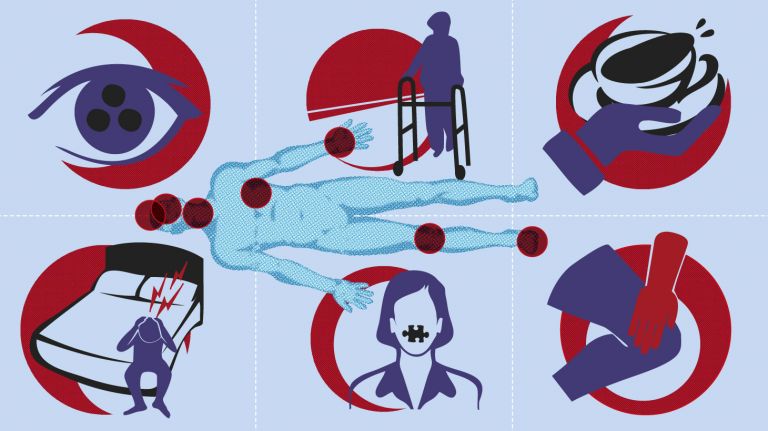
Huntington's disease is a progressive and fatal hereditary disease that manifests itself in the brain. It is characterized by dyskinesia, dementia, and behavioral and psychological changes. To date, there is no cure, although scientists have a relatively good understanding of its molecular causes. The Huntington's gene of those affected contains up to 200 copies of a specific base triplet (group of three bases). This causes the cells to produce a defective protein, which primarily forms deposits in the striatum of the brain. This leads to degeneration of the neurons in the basal ganglia and the cortex.
-
- Basics
- The Glymphatic System
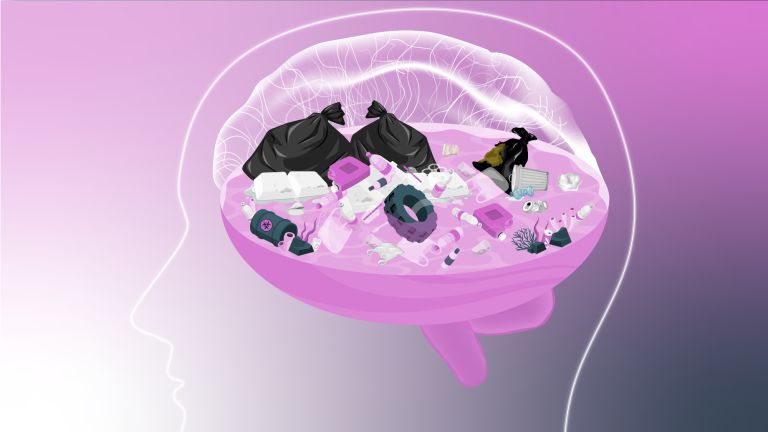
When the Brain gets clogged with Waste
Not even a coffee cup full of “nerve water” can flush out the brain at night – but woe betide you if you don't.
06.11.2024
-
- Glossary
Neurodegeneration
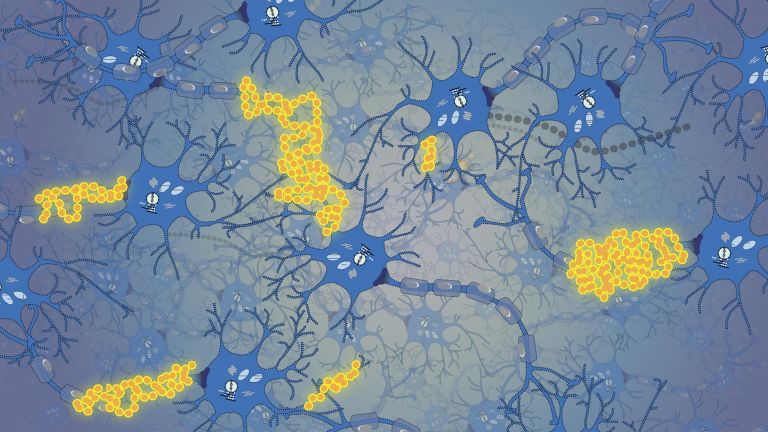
Collective term for diseases in which nerve cells gradually lose their structure or function until they eventually die. In many cases, misfolded proteins are the trigger – such as certain forms of the proteins beta-amyloid and tau in the case of Alzheimer's disease. In other diseases, such as Parkinson's disease or Huntington's disease, proteins within the neurons are not broken down properly. As a result, toxic aggregates are deposited there, leading to the respective disease symptoms. While Huntington's disease is clearly genetic, in Parkinson's and Alzheimer's there appear to be certain gene variants that promote their development. None of these neurodegenerative diseases can be cured at present.
-
- Basics
- Anatomy
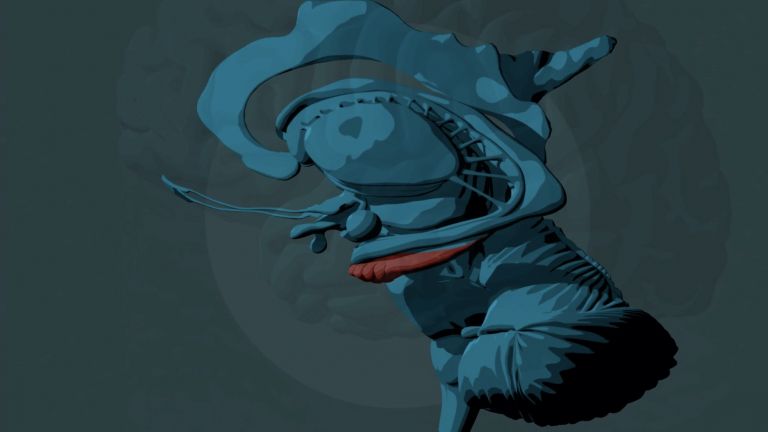
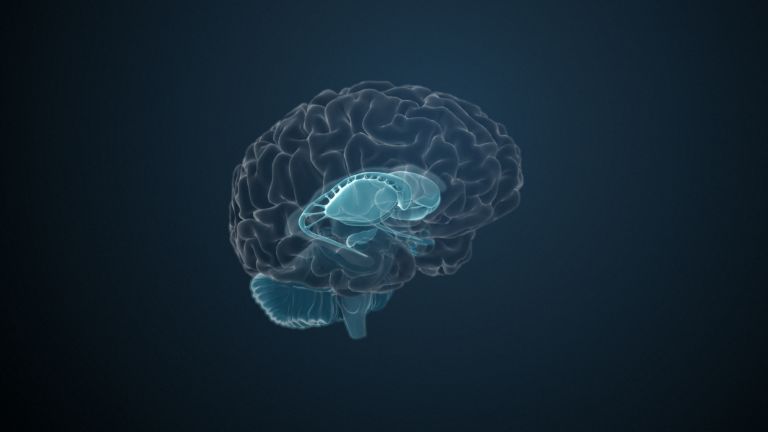
The Basal Ganglia
Whenever we perform a deliberate movement, core areas deep within the brain are involved.
23.08.2011
-
- Think
- Emotions
Researching Disgust
Does disgust protect us from pathogens, or is it the most malicious of all emotions?
25.10.2025
-
- Act
- Motor Skills
Motor Fine Tuning: the Modulation of Movements
The cerebellum and basal ganglia are responsible for the precise execution of movements.
01.12.2025