Search
-
- Glossary
Cerebellar cortex
The cortex of the cerebellum, which, like that of the cerebrum, is composed of gray matter, or nerve cells. It consists of three layers and is highly folded, creating what are known as foliae, or leaves.
-
- Glossary
Primary auditory cortex
The first processing station in the cerebral cortex for auditory information. The primary auditory cortex is located in the Heschl's gyrus and receives inputs from the medial geniculate nucleus of the thalamus. It is organized tonotopically – its neurons are arranged continuously according to frequency.
-
- Glossary
Premotor cortex
Part of the motor cortex in the frontal lobe. It is connected to the primary motor cortex and numerous other brain regions and is involved in the planning, preparation, and coordination of complex, voluntary movements. Examples of its functions include reaching for an object or the sequence of movements involved in targeted actions.
-
- Glossary
Auditory cortex
The auditory cortex is a part of the temporal lobe that is involved in processing acoustic signals. It is divided into the primary and secondary auditory cortex.
-
- Glossary
Frontal lobe
The frontal cortex is the largest of the four lobes of the cerebral cortex and its functions are correspondingly comprehensive. The front area, known as the prefrontal cortex, is responsible for complex action planning (known as executive functions), which also shapes our personality. Its development (myelination) takes up to 30 years and even then is not yet complete. Other important components of the frontal cortex are Broca's area, which controls our ability to express ourselves linguistically, and the primary motor cortex, which sends movement impulses throughout the body.
-
- Glossary
Limbic cortex
The limbic cortex primarily comprises the cingulate gyrus and adjacent structures such as the entorhinal cortex. It is part of the limbic system, which also includes regions such as the hippocampus and the amygdala. The limbic system plays a central role in processing emotions, motivation, and instinctive behavior.
-
- Glossary
Primary somatosensory cortex
Area of the cerebrum where haptic stimuli are processed centrally. Anatomically, the somatosensory cortex is located on the first cerebral gyri behind the central sulcus. This is where afferents from sensory cells throughout the body converge. Neurons that evaluate information from neighboring areas of the body are also located next to each other in the somatosensory cortex. Neuroscientists refer to this as somatotopy.S1 is an important station in pain processing – this is where we become aware of the pain stimulus.
-
- Basics
- Time
The Double-Edged Sword of Boredom
It's a bummer when nothing happens. To make sure it doesn't stay that way, there's a feeling called boredom.
01.05.2024
-
- Discover
- Milestones
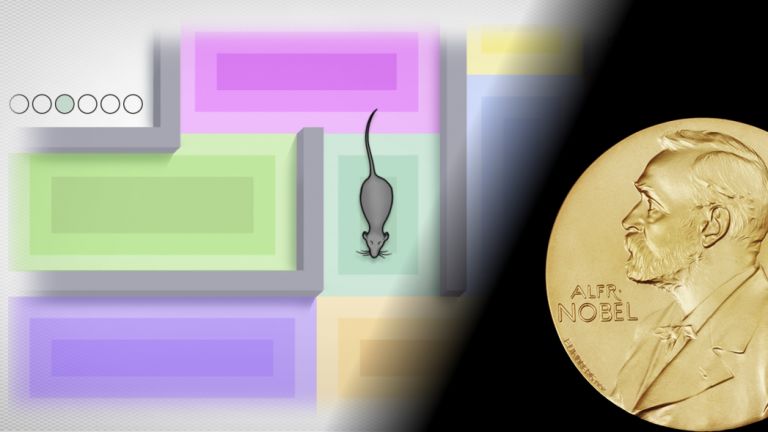
John O’Keefe and the Moser Couple: Place Cells
The discoverers of orientation cells was awarded the Nobel Prize in Medicine in 2014.
31.10.2014
-
- Basics
- Anatomy
The Amygdala
Without the amygdala, humans lose their sense of fear. With the amygdala, they also recognize the fear of others.
22.12.2023