Search
-
- Percieve
- Smell & Taste
The Secret of Taste Perception
We don't just taste with our tongues. Many senses work together to create the taste experience.
02.09.2025
-
- News
- Question to the brain
What happens when you fall asleep?
Why don't we notice when we fall asleep?
14.01.2024
-
- News from the Institutes
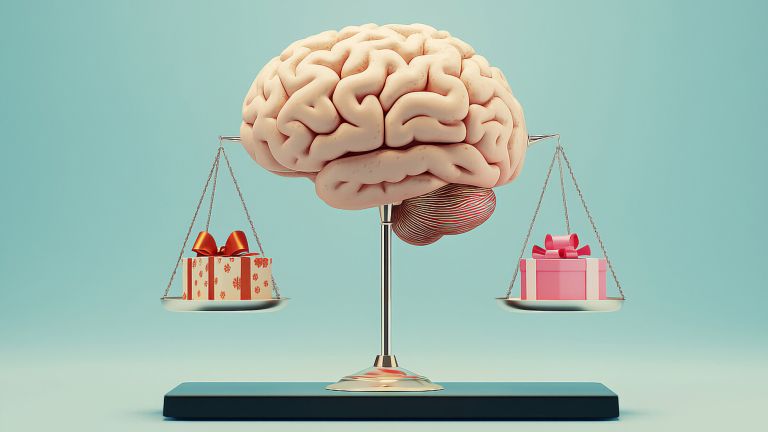
How does our brain regulate generosity?
The “basolateral amygdala”, a part of the limbic system, plays an important role in this.
14.04.2025
-
- Basics
- Anatomy
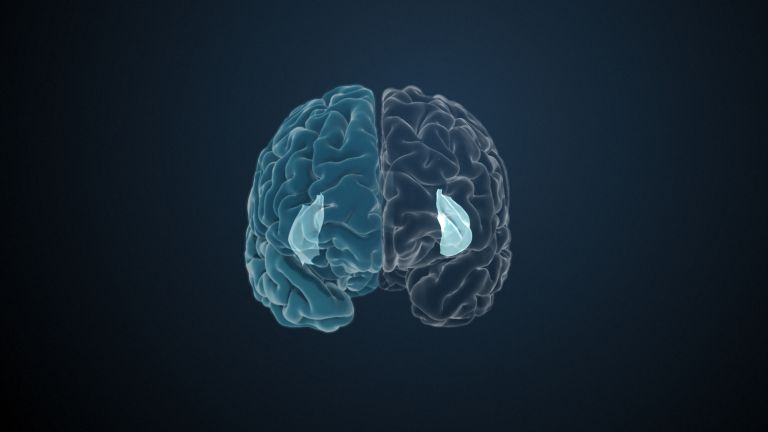
The Insular Lobe
Deeply hidden in the temporal lobe lies the insular cortex: ancient, versatile, and full of surprises.
08.07.2025
-
- Diseases
- Intruders
Constant Stress on the Brain
Stress, inflammation, cell death – how environmental toxins damage the brain.
02.05.2023
-
- News from the Institutes
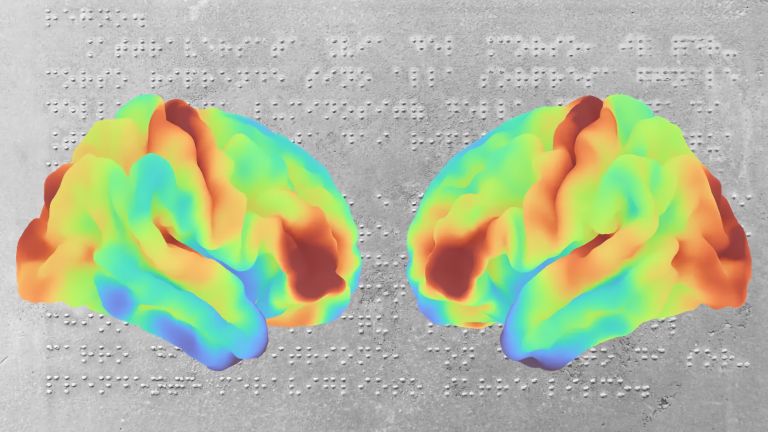
The brains of blind people reorganize differently than previously thought
The brain's microstructure was imaged at the submillimeter scale, revealing several important patterns.
13.07.2026
-
- Glossary
Amygdala
An important core area in the temporal lobe that is associated with emotions: it evaluates the emotional content of a situation and reacts particularly to threats. In this context, it is also activated by pain stimuli and plays an important role in the emotional evaluation of sensory stimuli. Inaddition, it is involved in linking emotions with memories, emotional learning ability, and social behavior. The amygdala is part of the limbic system.
-
- Glossary
Anterior cingulate cortex
The anterior cingulate cortex (cingulate gyrus) plays a role not only in autonomic functions such as blood pressure and heart rate regulation, but also in rational processes such as decision-making. This area of the brain is also involved in emotional processes, such as impulse control. Anatomically, the anterior cingulate cortex (ACC) is characterized by a large number of spindle neurons (Von Economo neurons). These special nerve cells have a long, spindle-shaped structure and have so far only been found in mammals such as primates, elephants, and some whale and dolphin species. Spindle neurons contribute to higher social and emotional processes such as self-awareness, empathy, and quick emotional decisions. In pain perception, it is particularly associated with the affective component of pain – including social pain, such as that experienced through exclusion.
-
- Glossary
Betz giant cells
Betz giant cells are particularly large pyramidal cells in the primary motor cortex (area 4). They have very large cell bodies with a diameter of 100 µm and heavily myelinated axons that project directly into the spinal cord. This makes them part of the corticospinal neurons of the pyramidal tract. Although they make up only a small portion of the fibers of the pyramidal tract, they are functionally important for the control of voluntary movements, especially fine motor skills.
-
- Glossary
Brain-computer interface
A direct interface between the brain and a computer. There are various approaches to developing brain-computer interfaces: invasive – via an electrode in the brain – as well as non-invasive – via EEG. They enable locked-in patients, for example, to communicate again. Another area of application is the control of arm or leg prostheses via peripheral nerves.