Search
-
- Topic
Structure and Function
Miraculous things happen deep within the brain
-
- Basics
- Anatomy
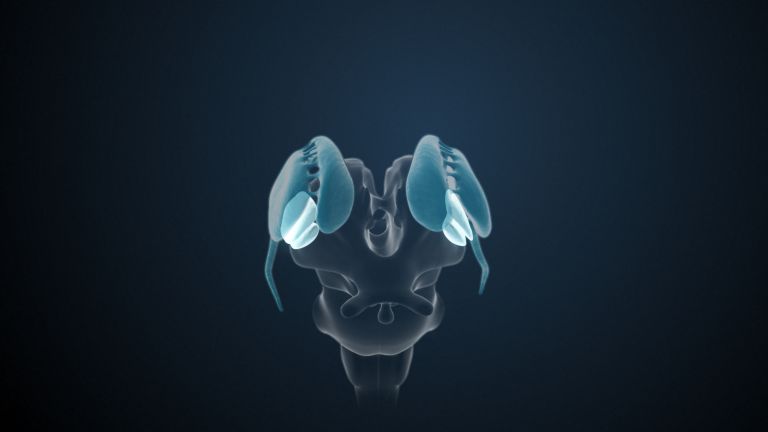
The Pallidum
The palladium provides a prime example of a highly complex feedback loop.
23.11.2025
-
- News from the Institutes
How disturbed signaling pathways could promote epileptic seizures
For the first time, a research team in Bonn is systematically investigating the role of the dopamine system in a common form of therapy-resistant epilepsy.
15.04.2025
-
- News
- Question to the brain
What happens when you fall asleep?
Why don't we notice when we fall asleep?
14.01.2024
-
- Act
- Motor Skills
Highway through the Spinal Cord
Thanks to motor pathways from the brain to the spinal cord, we can move at lightning speed.
01.12.2025
-
- News
- Question to the brain
How does visualization work?
How does visualization work in the brain? And how can this be utilized?
07.09.2025
-
- News from the Institutes
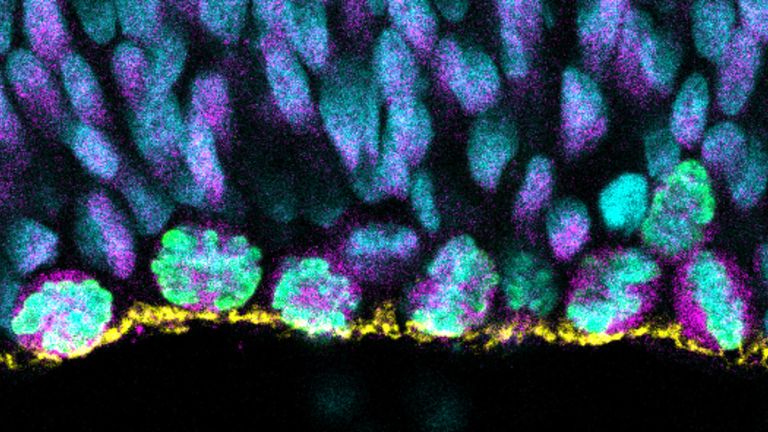
Smooth Instead of Folded—Brain Development in Primates
Researchers at the German Primate Center identify cellular processes that, using common marmosets as an example, demonstrate how differently brains develop
24.09.2026
-
- News from the Institutes
How Psychedelic Drugs Affect the Brain
Research findings reinforce new approaches in psychology, using psychedelic substances under medical supervision to treat certain clinical conditions.
13.02.2026
-
- Glossary
Primary somatosensory cortex
Area of the cerebrum where haptic stimuli are processed centrally. Anatomically, the somatosensory cortex is located on the first cerebral gyri behind the central sulcus. This is where afferents from sensory cells throughout the body converge. Neurons that evaluate information from neighboring areas of the body are also located next to each other in the somatosensory cortex. Neuroscientists refer to this as somatotopy.S1 is an important station in pain processing – this is where we become aware of the pain stimulus.
-
- Glossary
Anterior cingulate cortex
Like the entire cingulate cortex, the anterior region of the limbic system regulates drive-controlled behavior. In the perception of pain, it is particularly associated with the affective pain component - including social pain as experienced through exclusion.