Search
-
- Act
- Meditation
Perceiving and Accepting – How Meditation Heals
Meditation alleviates many ailments. But scientists still know very little about why this is the case.
15.04.2014
-
- Think
- Emotions
Addicted to Love
They say love is blind. Neurobiologists have discovered that this is true. What's more, it's also addictive.
20.12.2011
-
- Basics
- Anatomy
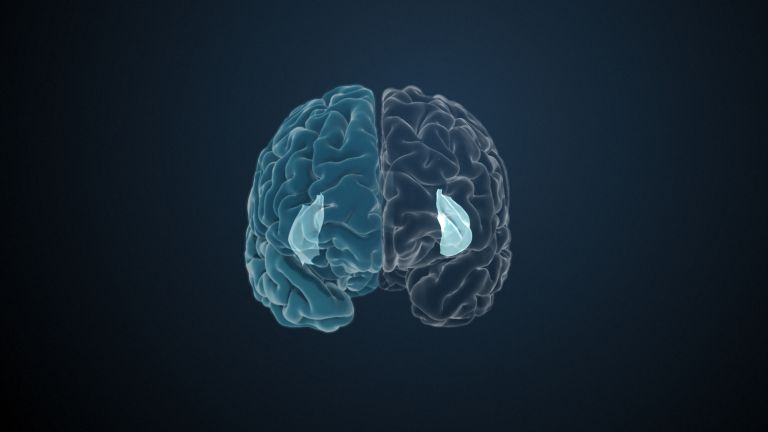
The Insular Lobe
Deeply hidden in the temporal lobe lies the insular cortex: ancient, versatile, and full of surprises.
08.07.2025
-
- Basics
- Anatomy
The Parahippocampal Gyrus
The parahippocampal gyrus can rightly be described as the gateway to the hippocampus.
28.11.2025
-
- News from the Institutes
How Psychedelic Drugs Affect the Brain
Research findings reinforce new approaches in psychology, using psychedelic substances under medical supervision to treat certain clinical conditions.
13.02.2026
-
- Topic
Vision
About 80 percent of the information about the environment comes from our eyes. A good quarter of the brain is involved in processing this input.
-
- Topic
Feeling
Uneven ground, the heat of the oven, a gentle caress on the arm – our body perceives a variety of stimuli, which it transmits to the brain.
-
- Glossary
Agnosia
The term agnosia comes from Latin and means "not knowing." It is a disorder of recognition caused by damage or dysfunction of the brain, without deficits in sensory perception. Agnosia is usually very specific, such as prosopagnosia, the inability to recognize a person by their face.
-
- Glossary
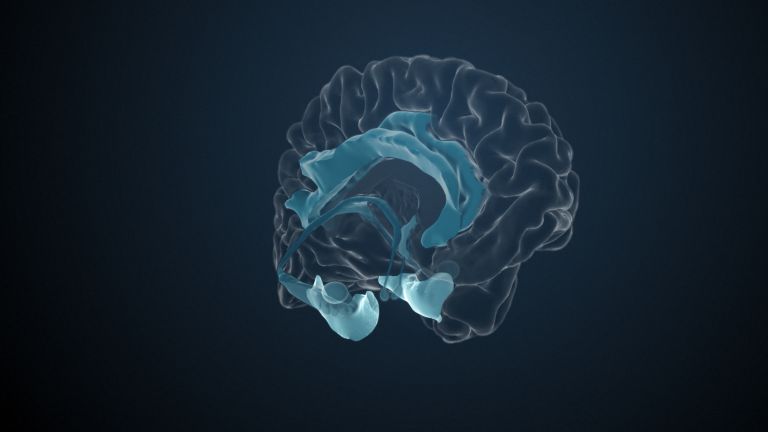
Anterior cingulate cortex
The anterior cingulate cortex (cingulate gyrus) plays a role not only in autonomic functions such as blood pressure and heart rate regulation, but also in rational processes such as decision-making. This area of the brain is also involved in emotional processes, such as impulse control. Anatomically, the anterior cingulate cortex (ACC) is characterized by a large number of spindle neurons (Von Economo neurons). These special nerve cells have a long, spindle-shaped structure and have so far only been found in mammals such as primates, elephants, and some whale and dolphin species. Spindle neurons contribute to higher social and emotional processes such as self-awareness, empathy, and quick emotional decisions. In pain perception, it is particularly associated with the affective component of pain – including social pain, such as that experienced through exclusion.
-
- Glossary
Asomatognosia
Asomatognosia literally means "not knowing" one's own body. The term refers to the loss of perception or feeling of belonging to one's own body parts. Asomatognosia is usually caused by damage to the right parietal lobe, which means that the left side of the body is usually affected.