Search
-
- News
- Question to the brain
How does EMDR work?
Trauma therapy with EMDR: How does it work and what happens in the brain?
14.04.2024
-
- Basics
- Anatomy
The Parahippocampal Gyrus
The parahippocampal gyrus can rightly be described as the gateway to the hippocampus.
28.11.2025
-
- Discover
- Milestones
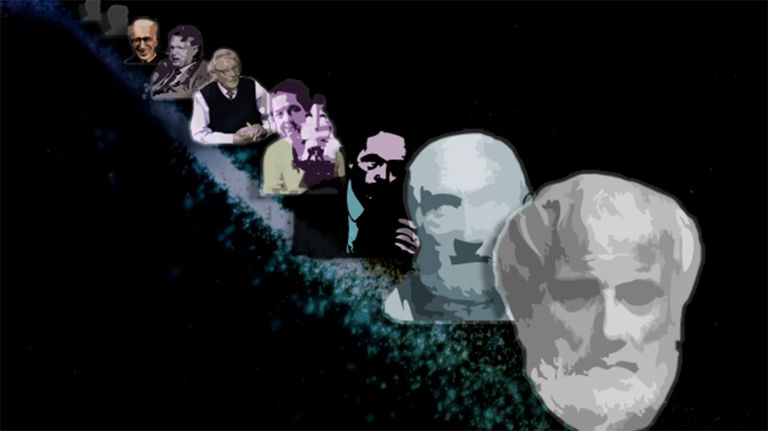
Minds and Ideas
Science is made by people – people with histories, dreams, and mistakes.
26.09.2012
-
- Page
Home
24.02.2017
-
- Topic
Start
There is an infinite amount to discover about the brain. These texts offer an initial introduction: they deal with perceptions and perceptual illusions, thinking and errors in thinking, and action in all its facets.
-
- Topic
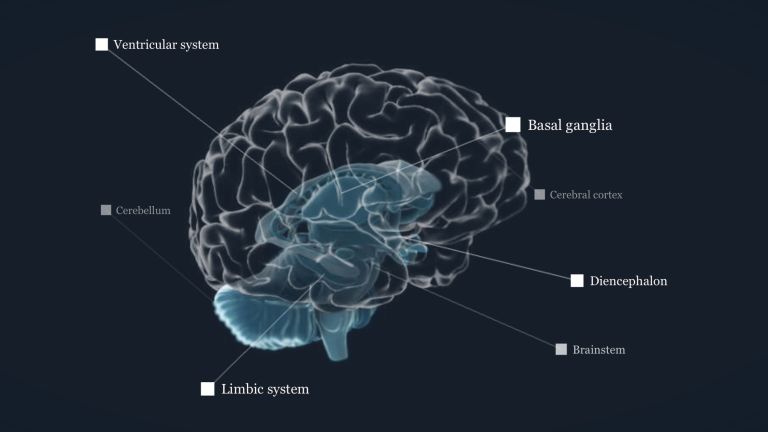
Anatomy
The brain is the basis of our entire being. It is not uncommon for damage to the brain to lead to personality changes.
-
- Glossary
Cannon-Bard theory
An emotion theory developed by Walter Cannon and Philip Bard in 1927/1928 which, in contrast to the James-Lange theory of 1884/85, assumes that emotions are independent of emotional expression and arise through the thalamus. This means that when there is a loud bang, the subjective feeling of fear occurs in parallel with trembling or a racing heart, not as a result of each other. It is also known as the "thalamic theory of emotion."
-
- Glossary
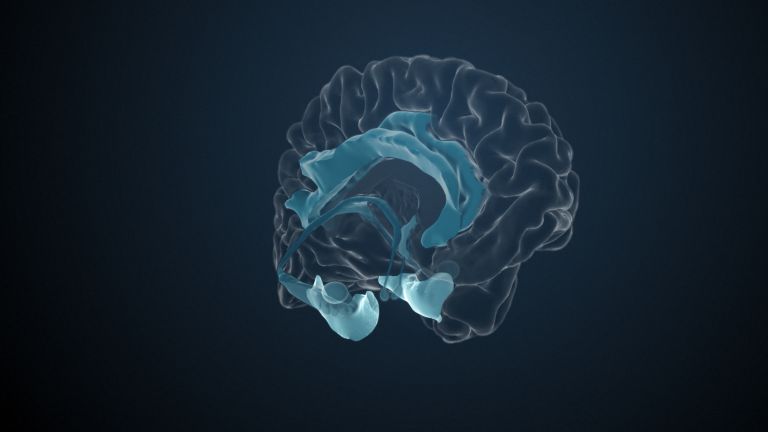
Cingulate gyrus
The cingulate gyrus is an important part of the limbic system in the cerebrum. This strip of cortex runs medially in the cerebrum, directly above the corpus callosum. Among other things, it is involved in emotions and memory. Through its connections to limbic and autonomic centers, it can also influence autonomic responses (e.g., heart rate, blood pressure). The anterior (front) region in particular is also associated with attention, motivation, error monitoring, and emotion regulation.
-
- Glossary
James-Lange theory
A theory of emotion developed by William James and (independently) Carl Lange in 1884, which assumes that emotions go through a kind of loop before they become conscious: the brain processes sensory signals, to which it responds by causing changes in the organism. It is only on the basis of these physical processes that the emotion becomes conscious. For example, the heart beats faster, which promotes the emotion of fear.
-
- Glossary
Limbic cortex
The limbic cortex primarily comprises the cingulate gyrus and adjacent structures such as the entorhinal cortex. It is part of the limbic system, which also includes regions such as the hippocampus and the amygdala. The limbic system plays a central role in processing emotions, motivation, and instinctive behavior.