Search
-
- Glossary
Brain stem
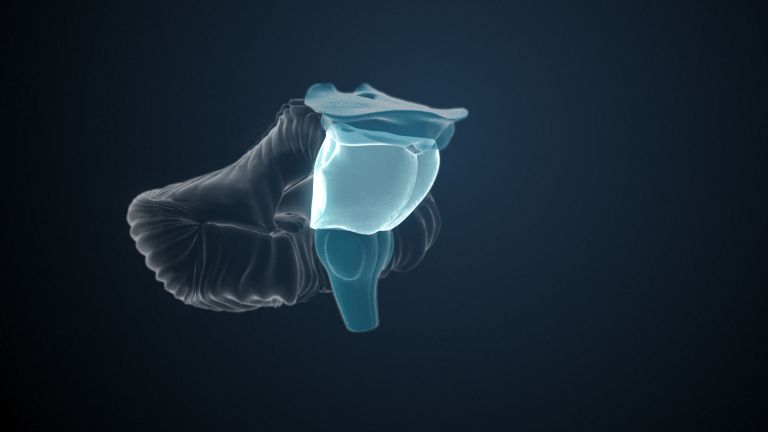
The "trunk" of the brain, to which all other brain structures are "attached," so to speak. From bottom to top, it comprises the medulla oblongata, the pons, and the mesencephalon. It transitions into the spinal cord below. It is a center for vital functions such as breathing and heartbeat and contains ascending and descending pathways between the cerebrum, cerebellum, and spinal cord.
-
- Basics
- Anatomy
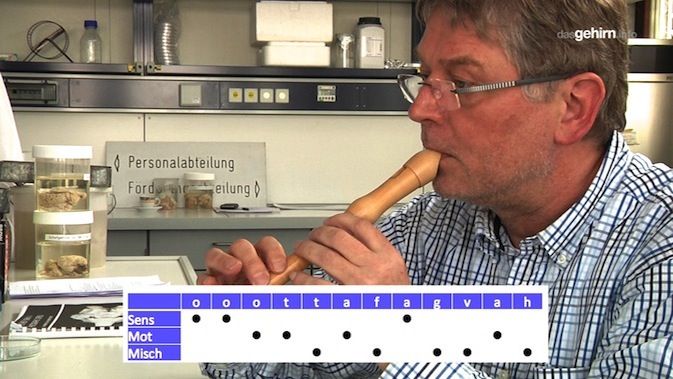
The Sheep Brain: Cranial Nerves
There are twelve cranial nerves that plague students. Here is a musical mnemonic device.
29.06.2013
-
- Glossary
Primary motor cortex
An area of the frontal lobe in the anterior wall of the central sulcus. It is considered to be the higher-level control unit responsible for voluntary and fine motor skills. This is where the cell bodies of the central motor neurons are located, whose axons primarily extend to the spinal cord (via the corticospinal tract). Only in the primary motor cortex do Betz giant cells occur, which are particularly large motor neurons whose axons extend directly to the motor neurons in the anterior horn of the spinal cord without prior synaptic switching.
-
- News
- Question to the brain
Why do we get Headaches?
The brain has no pain receptors. So why do we still get headaches?
14.10.2025
-
- Discover
- The Fly
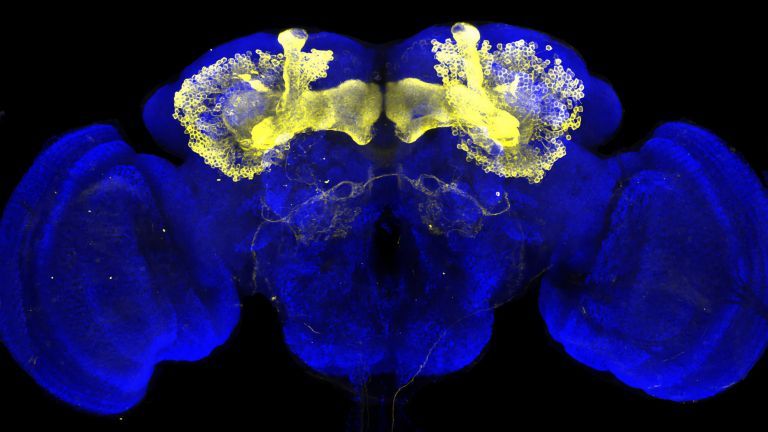
Miniature Brains
Fly brain, my foot! With just a few cells, Drosophila achieves amazing things.
24.01.2026
-
- Glossary
Dermatome
Describes an area of skin that is connected to exactly one spinal nerve (a nerve originating in the spinal cord).
-
- Act
- Motor Skills
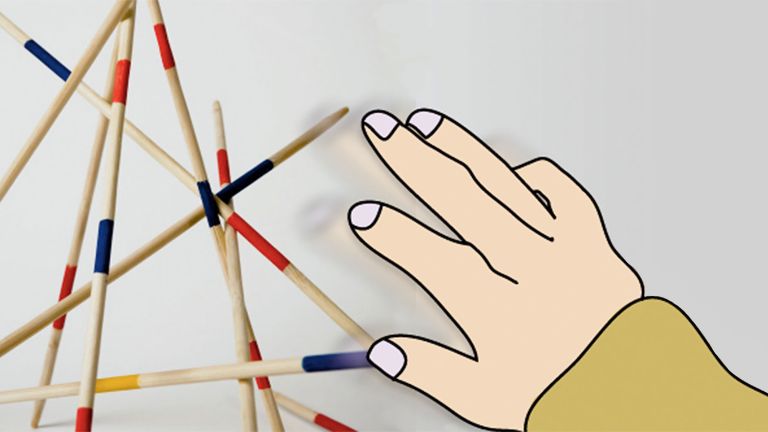
Motor Fine Tuning: the Modulation of Movements
The cerebellum and basal ganglia are responsible for the precise execution of movements.
01.12.2025
-
- Diseases
- Multiple sclerosis
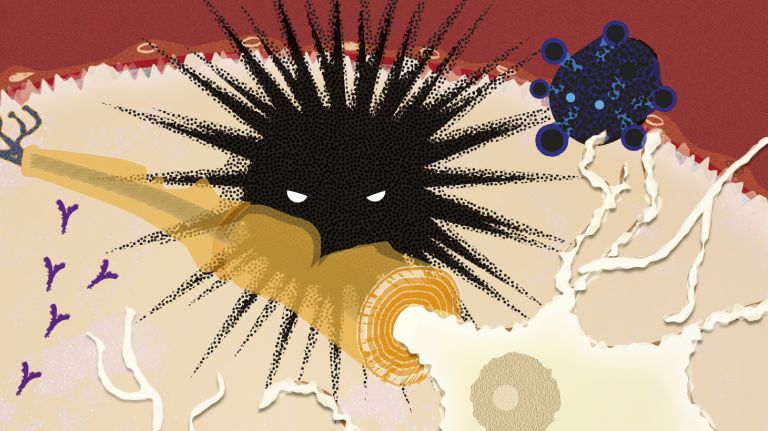
Immune System out of Control
Multiple sclerosis causes a fatal chain reaction in the immune system and brain.
08.12.2025
-
- Basics
- Anatomy
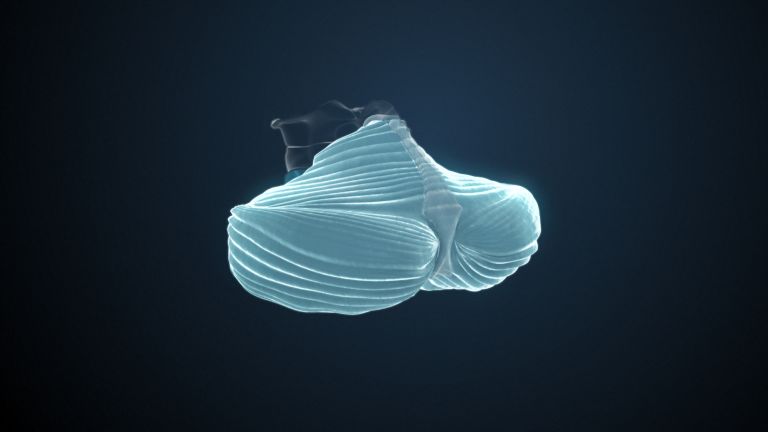
The Cerebellar Hemispheres
Enormous interconnection density in a small space ensures coordination of voluntary movements.
20.09.2025
-
- Basics
- Anatomy
The Pons
The name is not correct, but it is involved in motor function, taste, and important vegetative functions.
20.09.2025