Search
-
- Thinking
- Emotions
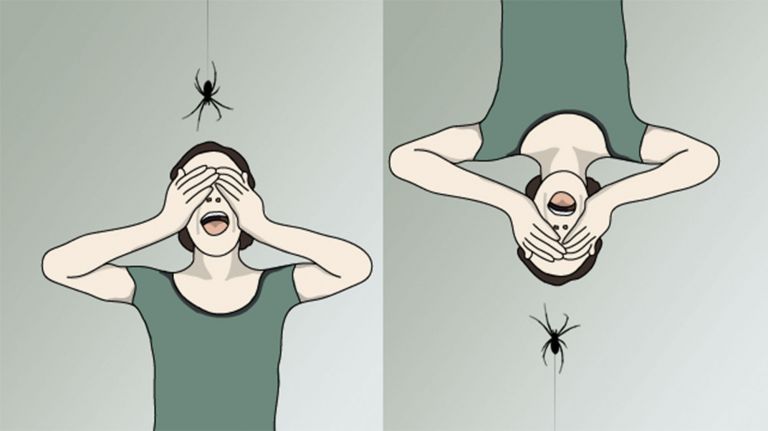
“Fear ensures our Survival”
Anxiety researcher Hans-Christian Pape on rats, Rottweilers, and the positive aspects of fear.
25.07.2011
-
- News from the Institutes
Rethinking Consciousness
When Science Puts Itself to the Test
30.04.2025

-
- Acting
- Motor Skills
Man on the Move
Even simple movements require complex interaction between the brain, spinal cord, and muscles.
01.12.2025
-
- Glossary
Dorsolateral PFC
The dorsolateral prefrontal cortex is the upper (dorsal) and lateral part of the frontal lobe. It is involved in the planning and regulation of complex motor and intellectual actions. According to one experiment, this also seems to include lying. The dorsolateral PFC regulates these and other abilities in coordination with many other areas of the brain with which it is closely linked.
-
- Glossary
Broca's area
An area of the prefrontal cortex (cerebral cortex) that is usually located in the left hemisphere. Plays a key role in the motor production of speech. First described by French neurologist Paul Pierre Broca in 1861.
-
- Acting
- Sports
Dancing keeps you young
Exercise is beneficial for the brain: it improves cognitive performance and protects against age-related decline.
01.09.2021
-
- Glossary
Lucid dream
During a lucid dream, the dreamer is aware of their state and able to control their actions. Although Aristotle reported on this phenomenon and up to 80 percent of all people say they have had lucid dreams, sleep researchers doubted the existence of this phenomenon until the end of the 1960s. Most observations of lucid dreams originate from the REM sleep phase. Scientists have found that lucid dreams are associated with altered activity in the prefrontal cortex, which is responsible for the critical evaluation of events. Lucid dreaming can be learned and is now also used in therapy, for example in the treatment of nightmares.
-
- Glossary
Caudate nucleus
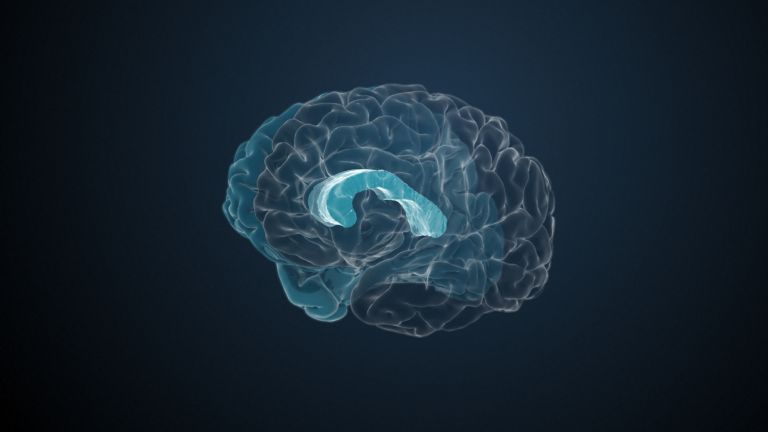
Part of the basal ganglia, it forms the striatum together with the putamen. Anatomically, the caudate nucleus is located frontally in the center of the brain and extends backward, forming a C shape. It consists of a head (caput nuclei caudati), a body (corpus nuclei caudati), and a tail (cauda nuclei caudati). In contrast to the more motor-related parts of the basal ganglia, this area is strongly connected to the prefrontal cortex in addition to its motor functions. As a result, this part of the striatum is also heavily involved in cognition, motivation, and emotion.
-
- Glossary
Ventral tegmental area
Located in the midbrain, the uppermost section of the brain stem, is the ventral tegmental area (VTA) – a central component of the reward system. The area itself is not particularly large, but its influence is immense: the neurons of the VTA send their axons to the nucleus accumbens and widely into the prefrontal cortex (PFC), where they release the neuromodulator dopamine. In this way, they enhance learning processes, but can also contribute to the development of addictions.
-
- Glossary
Medial nuclei
The medial thalamic nuclei, especially the mediodorsal nucleus, are located in the medial thalamus and are closely connected to the prefrontal cortex and the limbic system. They are primarily responsible for higher cognitive functions such as planning, attention, and working memory, but are also involved in processing emotions and motivation. In addition, they integrate complex information from different areas of the brain.