Search
-
- Percieve
- Hearing
From Sound to Word
Widely distributed brain regions make the miracle of language possible.
13.10.2023
-
- Percieve
- Hearing
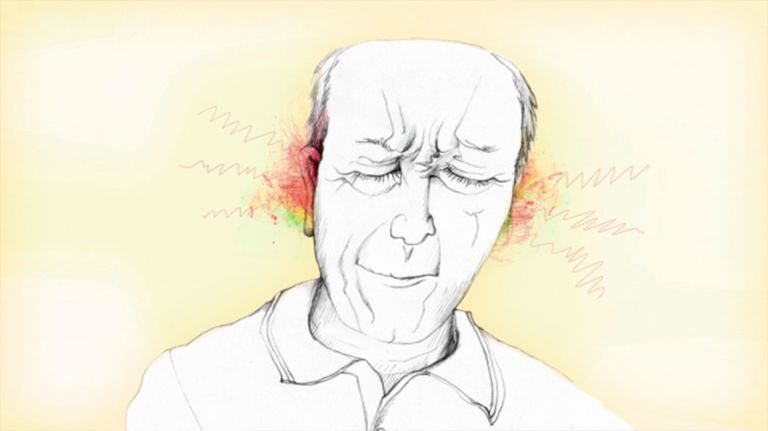
Ringing in the Ears
Tinnitus: The annoying whistling and buzzing does not originate in the ear, but in the brain.
28.10.2025
-
- Basics
- Anatomy
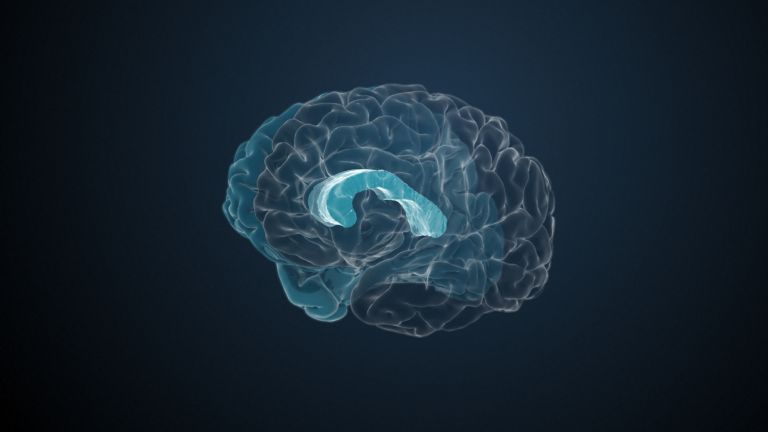
The Corpus Callosum
The corpus callosum allows information to flow between the two hemispheres of the cerebrum. This is urgently needed.
01.07.2025
-
- Basics
- Anatomy
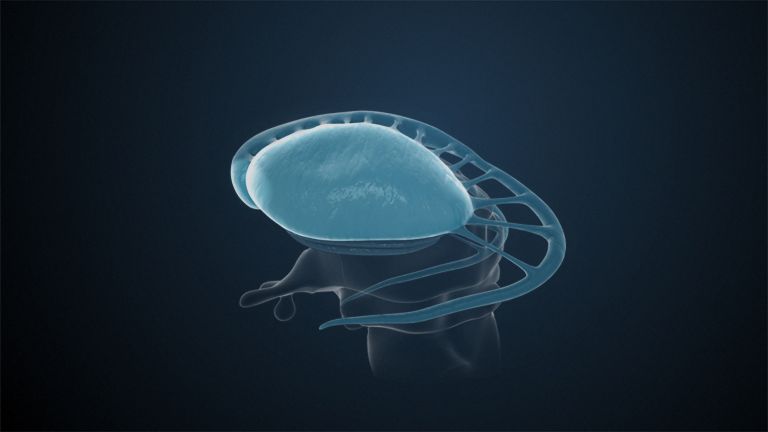
The Striatum
The striatum is not only about complex motor skills, but also about happiness.
28.11.2025
-
- Act
- Motor Skills
Command Center for Movement
The primary motor cortex triggers movements – how this happens remains a mystery to researchers to this day.
01.12.2025
-
- Glossary
Area F5
A part of the ventral premotor cortex located in the frontal lobe of the mammalian brain. The nerve cells in this region of the brain are involved in planning and organizing purposeful movements, especially of the mouth and hand/grasping movements. Area F5 also has historical significance: it was here that researchers first discovered mirror neurons in macaques – the nerve cells in the brains of primates that fire just as strongly when their owners observe an action as when they perform it themselves.
-
- Glossary
Dorsolateral PFC
The dorsolateral prefrontal cortex is the upper (dorsal) and lateral part of the frontal lobe. It is involved in the planning and regulation of complex motor and intellectual actions. According to one experiment, this also seems to include lying. The dorsolateral PFC regulates these and other abilities in coordination with many other areas of the brain with which it is closely linked.
-
- Glossary
Fissure
The strong folding of the cortex (cerebral cortex) creates fissures – from the Latin: cleft. These clefts can be used to describe individual brain structures. For example, the fissura sylvii separates the temporal lobe from the frontal lobe. Less deep clefts are often referred to as sulci.
-
- Glossary
Frontotemporal dementia
Frontotemporal dementia is a neurodegenerative disease. Unlike Alzheimer's dementia, Pick's disease usually begins before the age of 60 and initially manifests itself through changes in personality and social behavior. There are also variants that begin with speech disorders. In advanced stages, memory performance is also impaired. The physiological cause is degeneration of nerve cells in the frontal and temporal lobes of the brain. Similar to Alzheimer's disease, the aggregation of certain proteins appears to play a role in pathogenesis. However, doctors do not yet understand exactly what happens in this process and what other factors contribute to the development of Pick's disease. Today, classic Pick's disease is only a subtype of FTD in which characteristic Pick bodies can be detected in the brain.
-
- Glossary
Cerebrum
The cerebrum comprises the cerebral cortex (gray matter), the nerve fibers (white matter), and the basal ganglia. It is the largest part of the brain. The cortex can be divided into four cortical areas: the temporal lobe, frontal lobe, occipital lobe, and parietal lobe.Its functions include the coordination of perception, motivation, learning, and thinking.