Search
-
- Topic
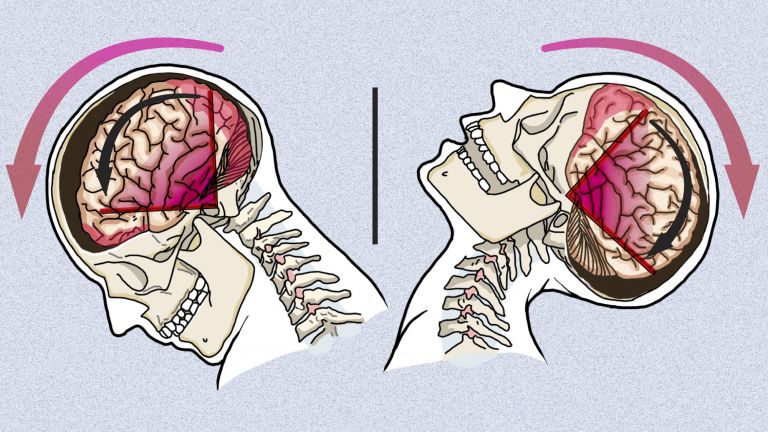
Traumatic Brain Injury
From concussions and traumatic brain injuries to chronic traumatic encephalopathy (CTE), also known as boxer's syndrome.
-
- News from the Institutes
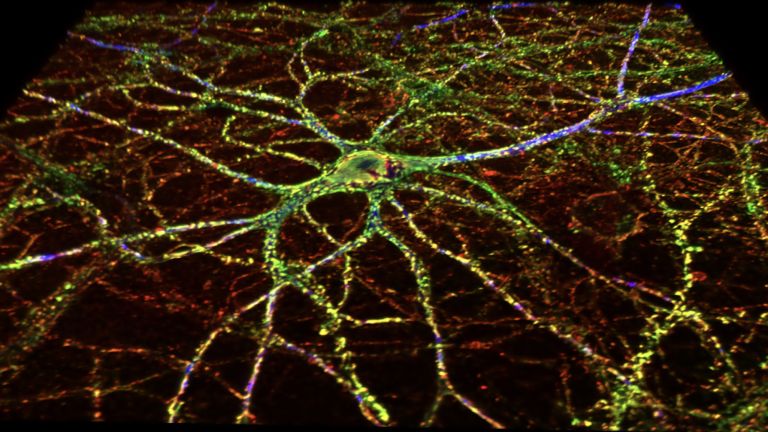
New insights into immune cells in the context of neurodegeneration
Lab Findings Support the Concept that Reducing Neuroinflammation Could Help Fight Alzheimer’s
04.02.2025
-
- Krankheiten
- Successful aging
Molecular Detectives
We are our memories. But neural firing alone cannot unravel the traces of memory.
01.02.2026
-
- Percipience
- Hearing
Full Blast to the Ears
Noise not only makes you ill, it also damages your brain.
18.11.2025
-
- Glossary
Huntington's disease
Huntington's disease is a progressive and fatal hereditary disease that manifests itself in the brain. It is characterized by dyskinesia, dementia, and behavioral and psychological changes. To date, there is no cure, although scientists have a relatively good understanding of its molecular causes. The Huntington's gene of those affected contains up to 200 copies of a specific base triplet (group of three bases). This causes the cells to produce a defective protein, which primarily forms deposits in the striatum of the brain. This leads to degeneration of the neurons in the basal ganglia and the cortex.
-
- Glossary
Confabulation
Confabulation refers to a memory or explanation that the person concerned is completely convinced is true, but which is objectively false. There is no conscious intent to deceive behind this. The cause is usually medical, such as damage to the orbitofrontal or other frontal brain areas, amnestic syndrome (e.g., Korsakoff's syndrome), traumatic brain injury, or dementia.
-
- Glossary
Microtubules
Microtubules are one of the main components of the cytoskeleton, which gives cells stability and support. They consist of many copies of the proteins alpha- and beta-tubulin, which pair up to form tubes with a diameter of 20 to 30 nanometers. In addition to their supporting function, microtubules play an important role in transporting messenger substances through the cell. In neurons, for example, vesicles filled with neurotransmitters move along them to the synapses. In the nerve cells of the brains of Alzheimer's patients, a protein called tau can no longer stabilize the microtubules properly. As a result, they disintegrate, which contributes significantly to the development of dementia.
-
- Glossary
Alzheimer's disease
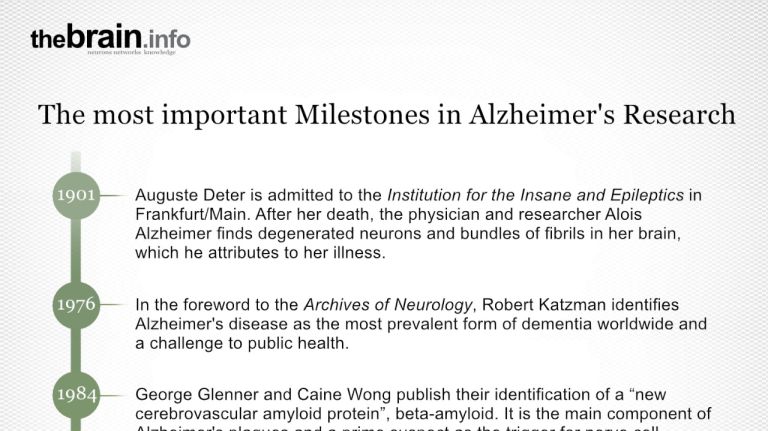
Alzheimer's disease is a progressive neurodegenerative disorder characterized by cortical atrophy, nerve cell loss, synapse loss, and deposits of amyloid plaques and neurofibrillary tangles, leading to dementia and loss of function. Early symptoms include memory problems, speech disorders, executive deficits, depressive moods, and subtle personality changes. As the disease progresses, global cognitive impairment, aphasia, agnosia, apraxia, and behavioral abnormalities such as apathy, restlessness, and sleep disorders occur. The disease was first described in 1907 by Alois Alzheimer.
-
- Glossary
Neuroenhancement
Neuroenhancement is about improving cognitive performance. To this end, drugs used to treat dementia, hyperactivity, or narcolepsy are taken by healthy individuals with the aim of improving their learning abilities, increasing their alertness, or staying awake and active for longer. In addition to the ethical questions this raises, there is also medical controversy as to whether this self-medication actually works and what the long-term consequences might be.
-
- Glossary
Positron emission tomography
An imaging technique that helps doctors visualize metabolic processes in the body. The patient is injected with a weakly radioactive substance that emits positrons, i.e., beta radiation. When the positrons encounter electrons in the body, energy is released in the form of two photons. These photons travel in opposite directions. Detectors are arranged around the patient in the PET scanner to register the photons that strike them. This makes it possible to track whether the radioactive substance accumulates in certain areas of the body, which can indicate the presence of a tumor, for example. Positron emission tomography is also used in the early diagnosis of dementia. The radiation exposure is low and acceptable in a medical context.