Search
-
- Glossary
Dorsolateral PFC
The dorsolateral prefrontal cortex is the upper (dorsal) and lateral part of the frontal lobe. It is involved in the planning and regulation of complex motor and intellectual actions. According to one experiment, this also seems to include lying. The dorsolateral PFC regulates these and other abilities in coordination with many other areas of the brain with which it is closely linked.
-
- Basics
- The Developing Brain
How Thinking develops
Rapid development: how the brain and mind develop in early childhood
18.03.2026
-
- Basics
- Anatomy
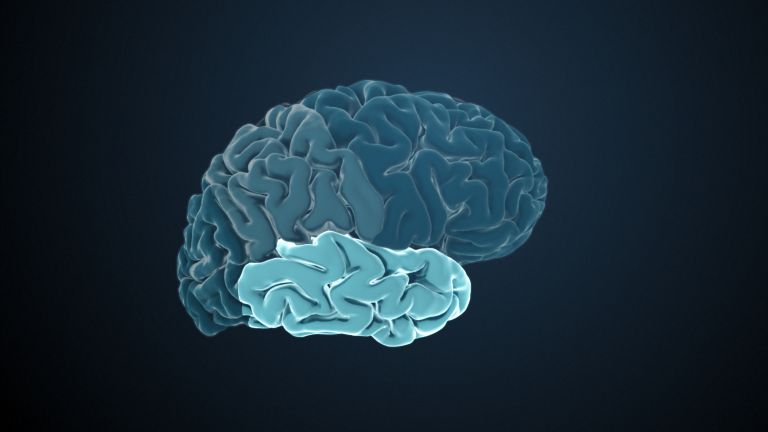
The Temporal Lobe
The lateral lobe of the cortex is responsible for tasks such as hearing, speaking, memory – and several others.
28.11.2025
-
- Basics
- Anatomy
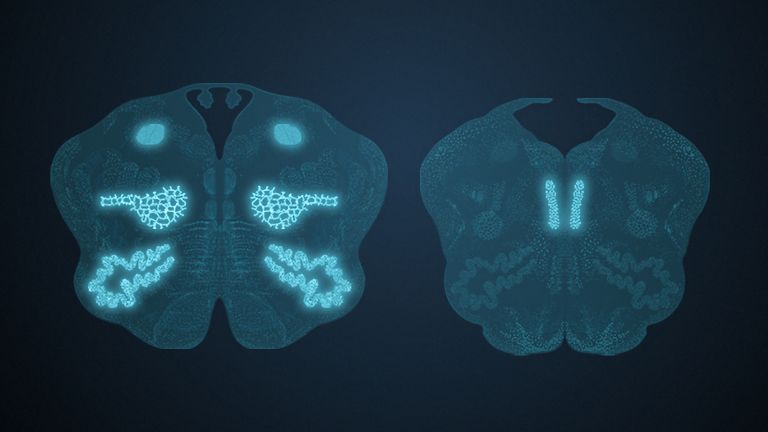
The Medulla Oblongata
Fibers and nuclei – and important nuclei at that. The medulla oblongata is where the brain begins.
01.10.2025
-
- Basics
- Anatomy
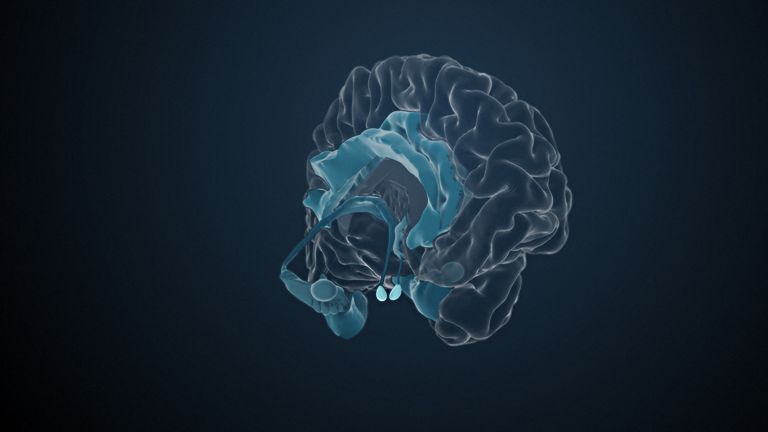
The Corpora Mamillaria
Mammillary bodies located between the cerebral peduncles – play an important role in memory formation.
28.11.2025
-
- News from the Institutes
Stress during early pregnancy affects offspring into adulthood
Long-term study on wild monkeys in Thailand reveals health risks and opportunities for intervention
22.01.2025
-
- News from the Institutes
New Insights into the Molecular Basis of Ataxia
Receptor responsible for stress-induced motor incoordination in people with ataxia identified.
10.10.2025
-
- News from the Institutes
Rethinking Consciousness
When Science Puts Itself to the Test
30.04.2025
-
- Think
- Emotions
Signals from Within
Emotions shape our lives. That's why we're so good at recognizing and empathizing with them.
18.12.2025
-
- Basics
- Anatomy
The Subthalamus
A pale nucleus and an excitatory lens, and the zone of uncertainty – that is the subthalamus.
01.10.2025