Search
-
- Basics
- Anatomy
The Cerebellum
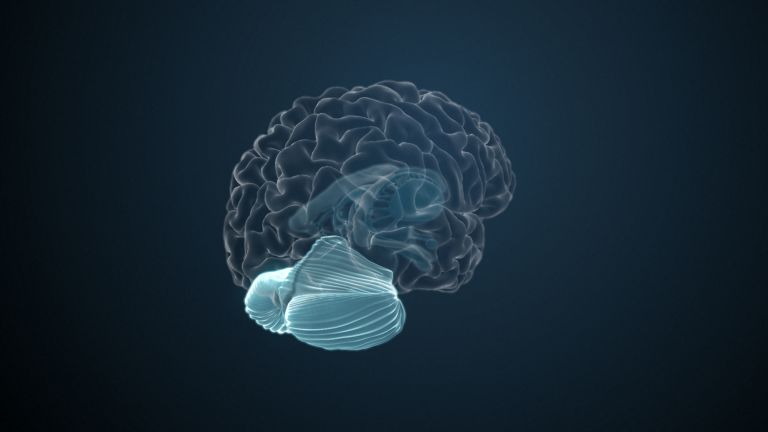
Highly aesthetic, but long underestimated: the cerebellum does more than just coordinate movements.
05.08.2025
-
- Think
- Emotions
What are Emotions?
What we feel shapes our emotional life – and helps us react correctly and quickly.
11.09.2025
-
- Basics
- Anatomy
The Pons
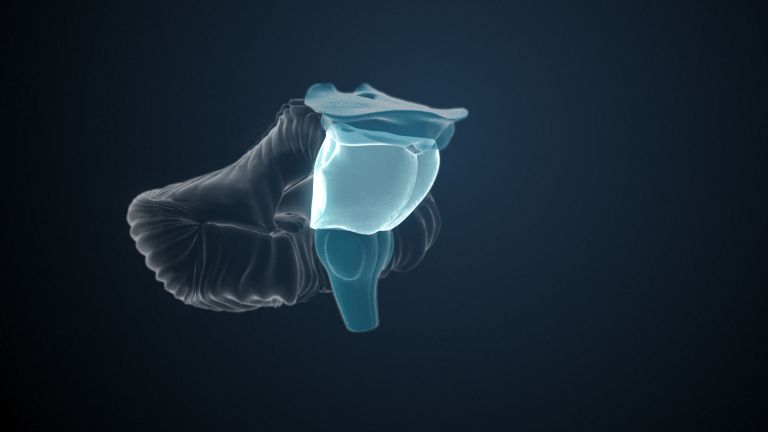
The name is not correct, but it is involved in motor function, taste, and important vegetative functions.
20.09.2025
-
- News
- Question to the brain
Why is it soothing to pet Animals?
Many people find petting an animal soothing. Is there a neurobiological explanation for this?
08.12.2024
-
- Glossary
Insula
The insula is a recessed part of the cortex (cerebral cortex) that is covered by the frontal, temporal, and parietal lobes. This overlay is called the opercula (lid). The insula influences the motor and sensory functions of the intestines and is considered to be the link between cognitive and emotional elements in pain processing. It is also involved in processes such as taste and physical self-awareness.
-
- Glossary
Parahippocampal gyrus
The parahippocampal gyrus runs along the hippocampus in the lower, inner temporal lobe. Its anterior part is covered by the entorhinal cortex. It is connected to numerous areas of the cerebral cortex and projects to the hippocampus, which it also acts as a gateway to. This means that it is involved in the consolidation of explicit memory content, among other things. In addition, the posterior part of the parahippocampal gyrus contains the parahippocampal place area (PPA), which responds particularly to complex visual scenes such as rooms, landscapes, or streets and thus plays an important role in spatial orientation and location recognition.
-
- Glossary
Cortical cell layers
The cortical cell layers form the structure of the cerebral cortex and cerebellar cortex. In the cerebral cortex, the number of layers varies, reaching a maximum of six in the neocortex. These six layers differ in terms of cell types and interconnections.
-
- Glossary
Occipital lobe
One of the four large lobes of the cerebral cortex. The occipital lobe lies above the cerebellum. It borders the parietal and temporal lobes at the front. The calcarine sulcus divides the occipital lobe into an upper and lower half, the cuneus and the lingual gyrus. Functionally, this area of the brain is responsible for the central processing of visual information – both the primary and secondary visual cortex are located in the occipital lobe.
-
- Glossary
Dentate gyrus
The dentate gyrus is part of the hippocampus and acts as its "input station." It receives various sensory inputs from the cortex (cerebral cortex) via the entorhinal cortex. Its densely packed granule cells, which are found in the so-called granular layer, project almost exclusively to the CA3 region of the hippocampus.
-
- Think
- Consciousness
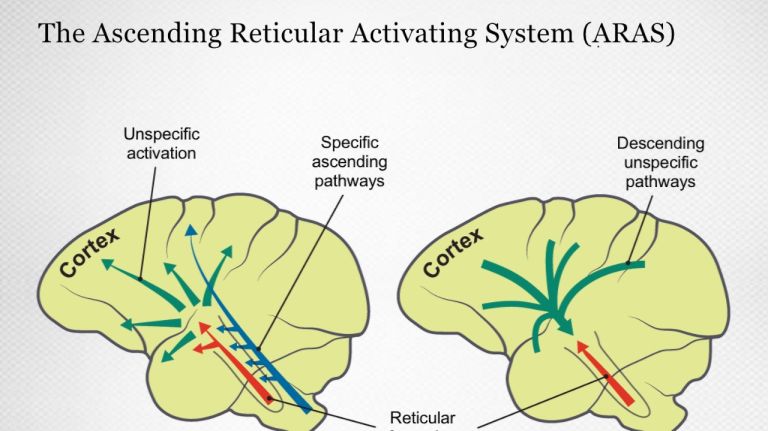
Consciousness: The Ascending Reticular Activating System (ARAS)
Formation reticularis switching center: This region controls alertness and attention.
30.08.2013