Search
-
- Page
Graphics & photos
10.03.2017
-
- Think
- Emotions
“Fear ensures our Survival”
Anxiety researcher Hans-Christian Pape on rats, Rottweilers, and the positive aspects of fear.
25.07.2011
-
- Percieve
- Smell & Taste
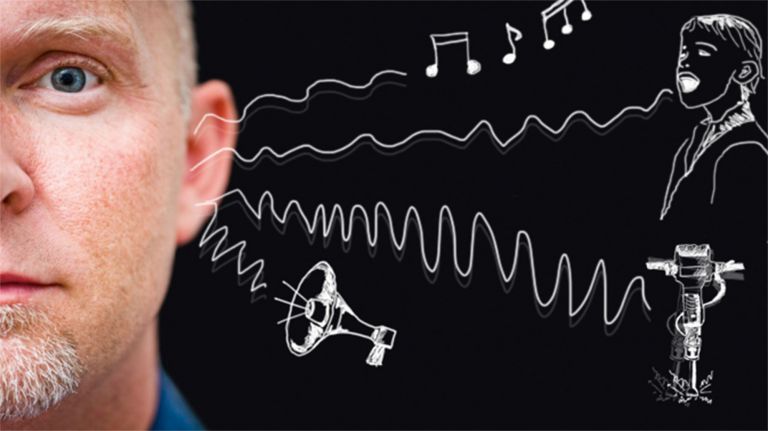
The Anatomy of Fragrance
Olfactory cells extend directly into the olfactory bulb of the brain, where the scent is assembled.
06.08.2018
-
- News from the Institutes
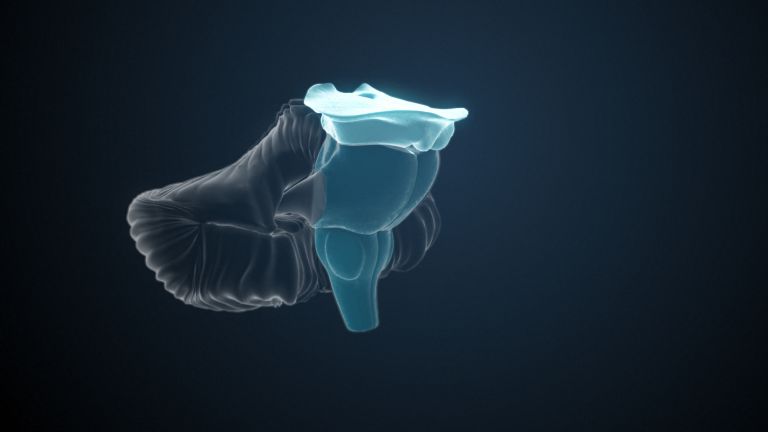
A switchboard with precision
How the brain licenses movements
28.05.2025
-
- Glossary
Broca's area
An area of the prefrontal cortex (cerebral cortex) that is usually located in the left hemisphere. Plays a key role in the motor production of speech. First described by French neurologist Paul Pierre Broca in 1861.
-
- Glossary
Medial temporal lobe
The medial part of the temporal lobe contains the hippocampus and a number of other anatomically related structures: the entorhinal, perirhinal, and parahippocampal cortex. Together, they enable us to consciously remember facts and events. This region of the brain is also important for the formation of long-term memory. Deep inside the medial temporal lobe is the amygdala, which is involved in emotion processing, emotional salience, and emotional reinforcement of memories.
-
- Glossary
Auditory pathway
The auditory pathway refers to the nerve fibers that transmit acoustic information from the inner ear to the primary auditory cortex. In humans, the auditory pathway consists of five switching points: the spiral ganglion, the auditory nuclei in the brainstem, the inferior colliculus, the medial geniculate body of the thalamus, and the primary auditory cortex.
-
- Glossary
Purkinje cell
Purkinje cells are the main output cells of the cerebellar cortex and central switching points of the cerebellum. They have a dense, tree-like dendritic apparatus through which they receive information from thousands of parallel fibers and climbing fibers. Their axons are the only ones that extend out of the cerebellar cortex and project onto the nuclei of the cerebellum, from where signals are transmitted to motor centers. Purkinje cells are among the largest cell types in the cerebellum.
-
- Glossary
Dorsolateral PFC
The dorsolateral prefrontal cortex is the upper (dorsal) and lateral part of the frontal lobe. It is involved in the planning and regulation of complex motor and intellectual actions. According to one experiment, this also seems to include lying. The dorsolateral PFC regulates these and other abilities in coordination with many other areas of the brain with which it is closely linked.
-
- Glossary
Cerebrum
The cerebrum comprises the cerebral cortex (gray matter), the nerve fibers (white matter), and the basal ganglia. It is the largest part of the brain. The cortex can be divided into four cortical areas: the temporal lobe, frontal lobe, occipital lobe, and parietal lobe.Its functions include the coordination of perception, motivation, learning, and thinking.