Search
-
- Glossary
Medial orbitofrontal cortex
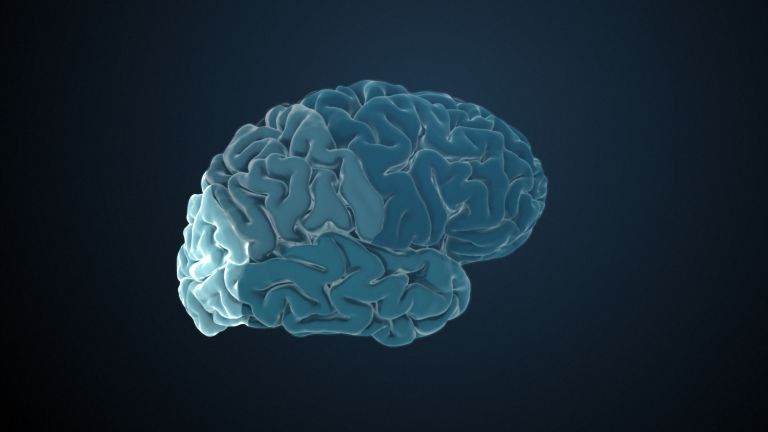
The ventral (in humans, "lower") middle part of the frontal lobe. This part of the cortex influences complex mental processes such as planning, reward evaluation, and decision-making. Patients with lesions in the frontal lobe show personality changes and are often no longer able to control their impulses.
-
- News from the Institutes
Preventing the Long-Term Scars of Childhood Trauma
Targeting stress protein reverses social deficits
07.07.2026
-
- Basics
- Anatomy
The Septum
The core areas of the septum are located at the interface between the hypothalamus and hippocampus.
09.10.2025
-
- Basics
- Anatomy
The Thalamus dorsalis
The structure is complex, the tasks are varied. It supports the senses, motor skills, and psyche.
28.11.2025
-
- Percieve
- Hearing
Ringing in the Ears
Tinnitus: The annoying whistling and buzzing does not originate in the ear, but in the brain.
28.10.2025
-
- Basics
- Anatomy
The Frontal Lobe
Motor skills and executive functions – the frontal lobe is the largest brain structure.
28.10.2024
-
- Basics
- Anatomy
The Occipital Lobe
The sophisticated interconnection of the occipital lobe demonstrates just how complex the visual process is.
28.08.2025
-
- News from the Institutes
Controlling prostheses with the power of thought
How research into movement planning in the brain is helping to advance the development of neuroprostheses
20.10.2025
-
- Glossary
Lateral geniculate nucleus
The lateral geniculate nucleus is the section of the thalamus (the largest part of the diencephalon) where around 90% of the optic nerve axons terminate. It has a characteristic stratification into six cell layers. The nerve cells of the lateral geniculate nucleus send their projections to the visual cortex. Together with the medial geniculate nucleus, it forms the metathalamus.
-
- Glossary
Auditory pathway
The auditory pathway refers to the nerve fibers that transmit acoustic information from the inner ear to the primary auditory cortex. In humans, the auditory pathway consists of five switching points: the spiral ganglion, the auditory nuclei in the brainstem, the inferior colliculus, the medial geniculate body of the thalamus, and the primary auditory cortex.