Search
-
- Glossary
Frontotemporal dementia
Frontotemporal dementia is a neurodegenerative disease. Unlike Alzheimer's dementia, Pick's disease usually begins before the age of 60 and initially manifests itself through changes in personality and social behavior. There are also variants that begin with speech disorders. In advanced stages, memory performance is also impaired. The physiological cause is degeneration of nerve cells in the frontal and temporal lobes of the brain. Similar to Alzheimer's disease, the aggregation of certain proteins appears to play a role in pathogenesis. However, doctors do not yet understand exactly what happens in this process and what other factors contribute to the development of Pick's disease. Today, classic Pick's disease is only a subtype of FTD in which characteristic Pick bodies can be detected in the brain.
-
- Act
- Sports
Sport: An all-around Happiness Package for Body and Mind
Exercise has positive effects at any age – so it's never too late to get started.
01.09.2021
-
- News
- Question to the brain
Do we only use a Fraction of our Brain?
I read that we only use 10 or 25 percent of our brain capacity. Is that true?
12.08.2025
-
- News from the Institutes
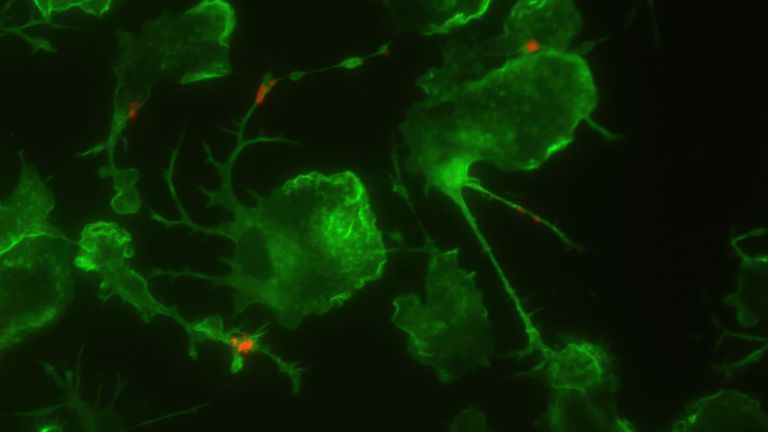
New insights into immune cells in the context of neurodegeneration
Lab Findings Support the Concept that Reducing Neuroinflammation Could Help Fight Alzheimer’s
04.02.2025
-
- Glossary
Lewy body dementia
A neurodegenerative disease that resembles Alzheimer's disease, but also Parkinson's disease in its symptoms. The Lewy bodies that give the disease its name are caused by protein deposits in the nerve cells of the cerebral cortex and brain stem, which impair the function of the corresponding neurons. In addition to cognitive impairment, Lewy body dementia often causes hallucinations or depression, as well as changes in mobility similar to those seen in Parkinson's disease.
-
- News from the Institutes
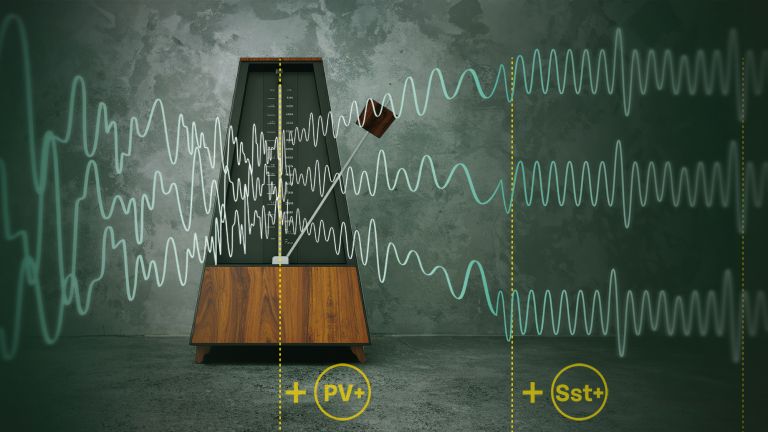
Interaction between interneurons stabilizes gamma oscillations in a brain
PV+ cells act as the “conductors” of visually induced gamma oscillatory rhythm
26.05.2025
-
- Diseases
- Alzheimer's disease
Alzheimer's from the Inside
How do people live with Alzheimer's disease? A conversation with someone affected by the condition.
20.10.2025
-
- Glossary
vascular
The term refers to vessels in the body in which fluids such as blood or lymph circulate. In a narrower sense, doctors refer to the network of veins, arteries, and capillaries as the "vascular system." If the vascular system is blocked, for example as a result of a stroke, less blood reaches the brain. This means that it receives less oxygen and other nutrients. This can lead to impaired cognitive functions and the development of "vascular dementia." After degenerative forms of dementia such as Alzheimer's, vascular dementia is the second most common form of this group of diseases.
-
- Page
The Topic Partners
27.02.2024
-
- News
- Question to the brain
What does Heat do to the Brain?
I have read that heat waves can affect mental health. How so? Can this also affect healthy people?
22.07.2024