Search
-
- News from the Institutes
Pigeons detect magnetic fields through their inner ear
While many animals rely on the Earth’s magnetic field for orientation, how they detect and perceive magnetic stimuli is unknown.
21.11.2025
-
- Basics
- Anatomy
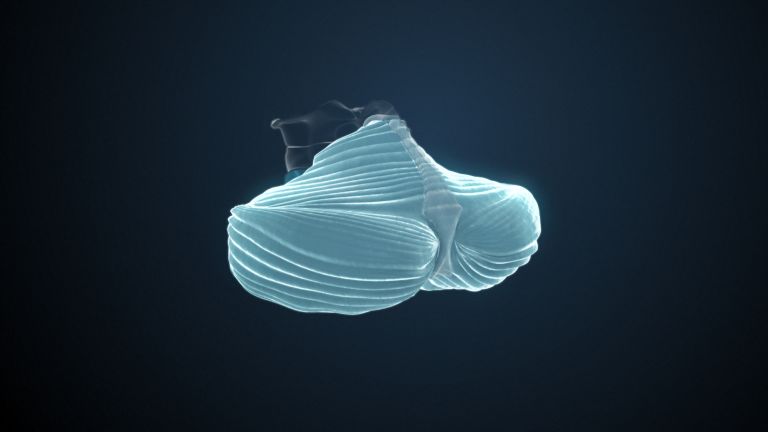
The Cerebellar Hemispheres
Enormous interconnection density in a small space ensures coordination of voluntary movements.
20.09.2025
-
- Act
- Motor Skills
Motor Fine Tuning: the Modulation of Movements
The cerebellum and basal ganglia are responsible for the precise execution of movements.
01.12.2025
-
- Glossary
Proprioception
Proprioception is the sense of oneself, or more precisely, the position of one's own limbs and the location of the body in space. It is made possible by certain receptors in muscles, joints, and tendons that constantly send information to the brain. Visual signals and those from the vestibular system are also processed. This enables coordination, balance, and targeted movements without constant visual control.
-
- Glossary
Vestibulo-ocular reflex
When we turn our head, our eyes automatically move in the opposite direction. This reflex ensures that a stable image is formed on the retina even when the head moves quickly. This is made possible by the connection between the semicircular canals of the vestibular system and the nerve nuclei of the eye muscles in the brain stem.
-
- Glossary
Macular organs
Together with the semicircular canals, the macular organs form the vestibular system in the inner ear of vertebrates. They consist of two structures positioned perpendicular to each other, the saccule and the utricle. This alignment enables the macular organs to perceive linear accelerations of the body in space along all three spatial axes: up-down, front-back, left and right.
-
- Percieve
- Hearing
Hearing – more than just Sound and Vibration
The brain creates a colorful world of sounds from minimal acoustic input.
17.10.2025
-
- News
- Question to the brain
How does a cochlear implant work?
How does sound reach the brain with a cochlear implant?
27.04.2025
-
- News from the Institutes
Teamwork in the inner ear
Our hearing is based on the organized grouping of proteins
06.11.2025
-
- Basics
- Anatomy
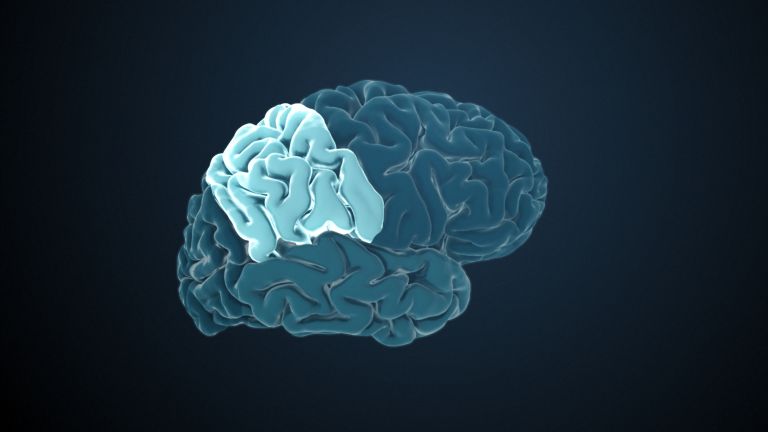
The Parietal Lobe
Sensory impressions are integrated in the parietal lobe. This is also where the body and mind meet.
18.09.2025