Search
-
- Glossary
Basal ganglia
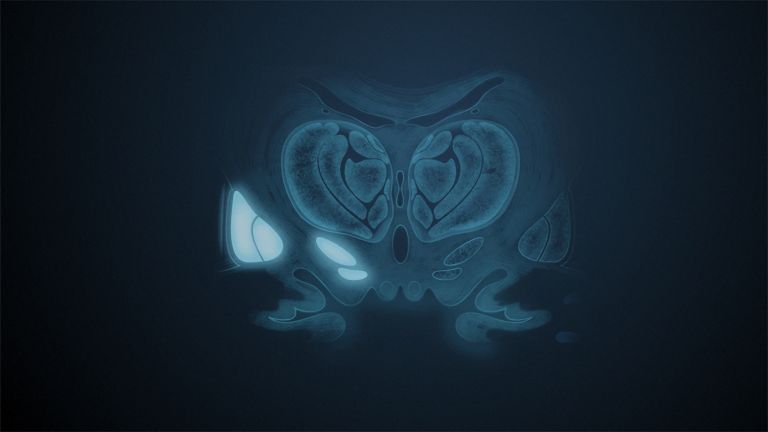
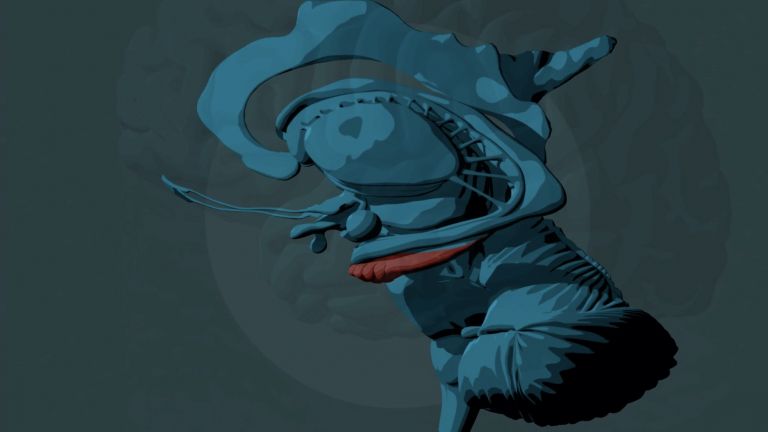
The basal ganglia are a group of subcortical nuclei (located beneath the cerebral cortex) in the telencephalon. The basal ganglia include the globus pallidus and the striatum, and, depending on the author, other structures such as the substantia nigra and the subthalamic nucleus. The basal ganglia are primarily associated with voluntary motor function, but they also influence motivation, learning, and emotion.
-
- Glossary
Huntington's disease
Huntington's disease is a progressive and fatal hereditary disease that manifests itself in the brain. It is characterized by dyskinesia, dementia, and behavioral and psychological changes. To date, there is no cure, although scientists have a relatively good understanding of its molecular causes. The Huntington's gene of those affected contains up to 200 copies of a specific base triplet (group of three bases). This causes the cells to produce a defective protein, which primarily forms deposits in the striatum of the brain. This leads to degeneration of the neurons in the basal ganglia and the cortex.
-
- Glossary
Extrapyramidal system
The extrapyramidal system refers to a series of structures in the brain that play a key role in influencing motor function but are not part of the pyramidal tract. It consists of multisynaptic neuron chains. The extrapyramidal system includes numerous nuclei such as the striatum, pallidum, nucleus ruber, and substantia nigra.
-
- Glossary
Parahippocampal cortex
The parahippocampal cortex is located next to the hippocampus and is part of the temporal lobe. It processes spatial-visual memory content and appears to be involved in the consolidation of memory content. It receives inputs from numerous polymodal cortical areas, and its outputs go to the hippocampus, amygdala, and striatum.
-
- Glossary
Putamen
A nucleus of the basal ganglia that, together with the caudate nucleus, forms the striatum. As part of the extrapyramidal motor system, it is involved in voluntary motor function (intentional movement).
-
- Topic
Structure and Function
Miraculous things happen deep within the brain
-
- Act
- Motor Skills
Forced Right-Handedness
When left-handed people were retrained to use their right hand, their brains were also retrained.
25.10.2025
-
- Think
- Consciousness
When Consciousness fails
A complex system of brain structures is necessary for the conscious perception of our surroundings.
13.06.2025
-
- Basics
- Anatomy
The Subthalamus
A pale nucleus and an excitatory lens, and the zone of uncertainty – that is the subthalamus.
01.10.2025
-
- Basics
- Structure and Function
Future Regeneration
The brain is amazing, but vulnerable – which makes effective treatments all the more important. In fact, there is hope: stem cell therapy works in mice.
30.04.2020