Search
-
- Discover
- The Fly
Miniature Brains
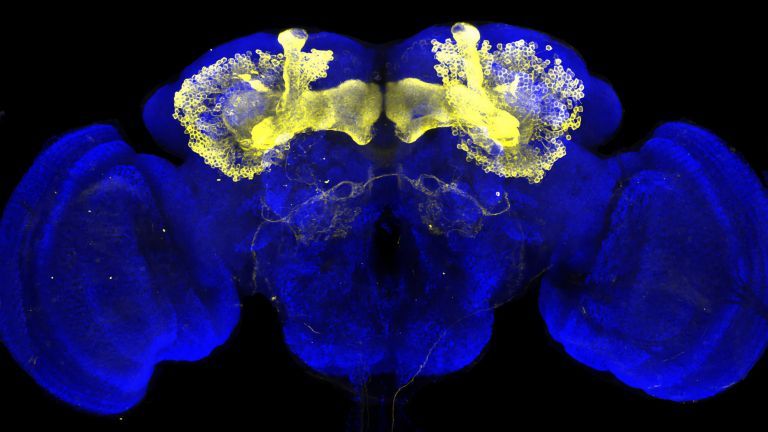
Fly brain, my foot! With just a few cells, Drosophila achieves amazing things.
24.01.2026
-
- Diseases
- Multiple sclerosis
Multiple Sclerosis – a Medical Challenge
Multiple sclerosis is incurable, but there are a variety of treatment options available.
20.02.2026
-
- Discover
- Milestones
Roger Sperry: The split Brains
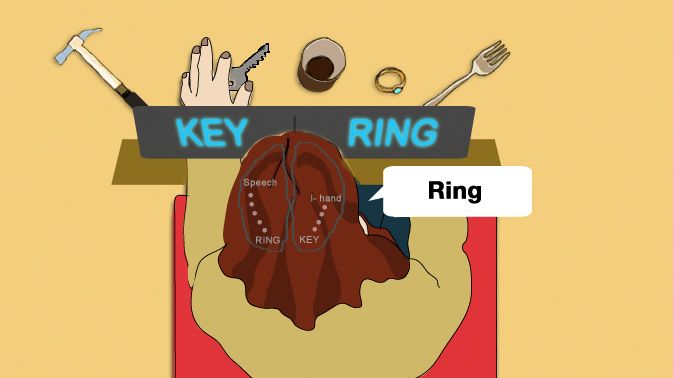
What the severed connection between the brain hemispheres reveals about the specialization of the brain.
27.09.2012
-
- Glossary
Papilla
The optic nerve leaves the eye at the papilla, the optic disc. Since there are no photoreceptors at this point on the retina, the optic disc creates a blind spot.
-
- Glossary
Visual system
The visual system is the part of the nervous system that processes visual information. It primarily comprises the eye, the optic nerve, the optic chiasm, the optic tract, the lateral geniculate nucleus, the optic radiation, the primary visual cortex, and the visual association cortices.
-
- Discover
- Milestones
Alcmaeon: Pioneer of experimental Brain Research
The ancient philosopher Alcmaeon of Croton founded scientific brain research.
28.01.2014
-
- Glossary
Cranial nerve
A group of 12 pairs of nerves that originate directly in the brain, mostly in the brain stem. They are numbered with Roman numerals (I–XII). Unlike the rest, the first and second cranial nerves (olfactory and optic nerves) are not part of the peripheral nervous system, but rather the central nervous system.
-
- Glossary
Visual pathway
The visual pathway refers to the network of nerve cells involved in visual perception. In mammals, it runs from the retinal ganglion cells in the eye – as the optic nerve to the optic chiasm, then as the visual tract – via the only switching point in the lateral geniculate nucleus to the primary visual cortex.
-
- Discover
- Milestones
Hubel and Wiesel: Cutting the Lawn with Nail Scissors
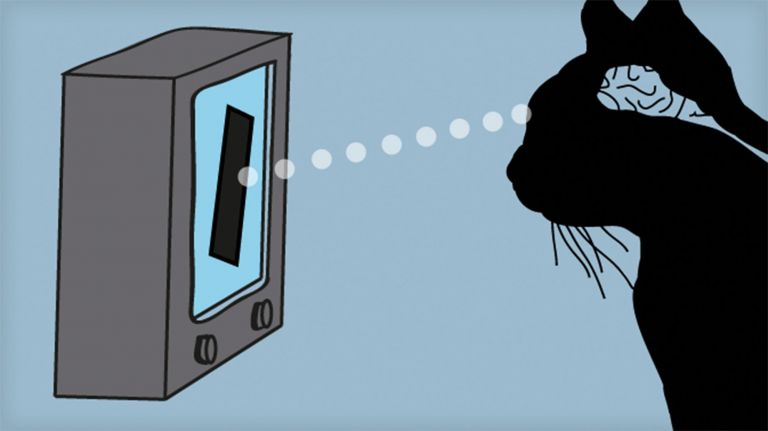
Hubel and Wiesel worked diligently to establish fundamental knowledge about visual information processing.
26.09.2012
-
- Glossary
Lateral geniculate nucleus
The lateral geniculate nucleus is the section of the thalamus (the largest part of the diencephalon) where around 90% of the optic nerve axons terminate. It has a characteristic stratification into six cell layers. The nerve cells of the lateral geniculate nucleus send their projections to the visual cortex. Together with the medial geniculate nucleus, it forms the metathalamus.