Search
-
- Basics
- Structure and Function
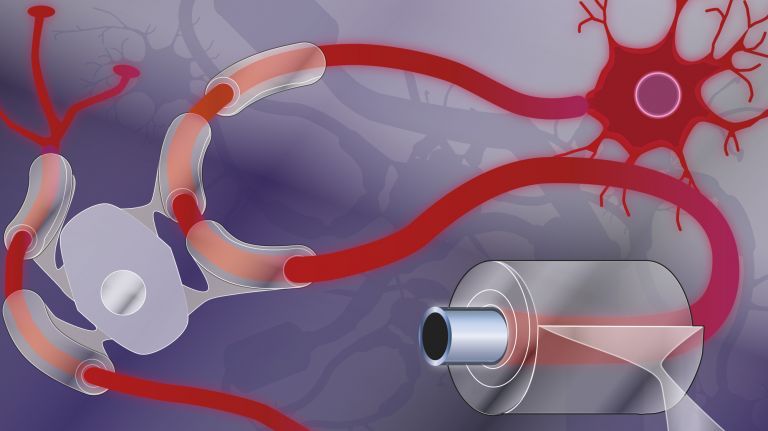
Myelin: High Speed
It is the white sheath that glial cells form around axons that makes high speed pathways in the brain possible.
01.12.2020
-
- Basics
- The Glymphatic System
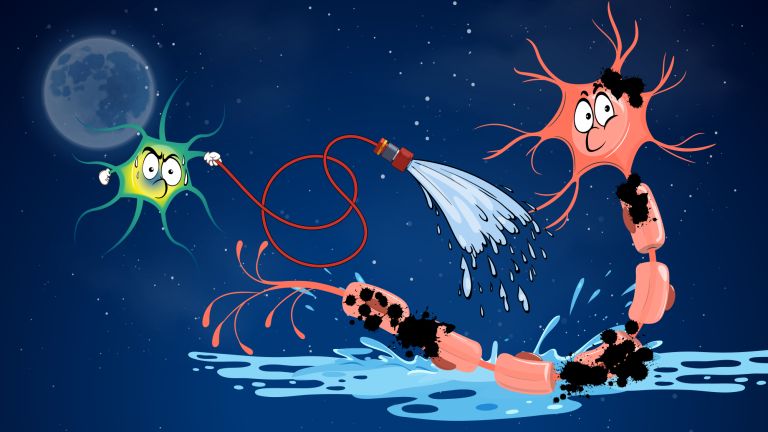
The Brain’s Cleanup Crew
The glymphatic system is the brain's cleanup crew, flushing away waste products.
06.11.2024
-
- Glossary
Glial cells
Glia cells are the second largest group of cells in the brain after neurons. For a long time, they were considered inactive elements of the brain, referred to as "nerve cement." Today, we know that the different types of glia cells (astrocytes, oligodendrocytes, and microglia in the CNS; Schwann cells in the PNS) perform clearly defined tasks in the nervous system. For example, they respond to pathogens, play an important role in nourishing nerve cells, and insulate nerve fibers. They account for slightly more than 50 percent of the brain's cells, compared to neurons.
-
- Basics
- Structure and Function
The Secret to Success: Communication
No other cell type is better at juggling signals: The neuron is both a data octopus and a supercomputer.
01.12.2020
-
- Diseases
- Multiple sclerosis
Many causes of Multiple Sclerosis
MS is considered a neurological disorder. However, the immune system's malfunction plays an important role.
07.10.2025
-
- News from the Institutes
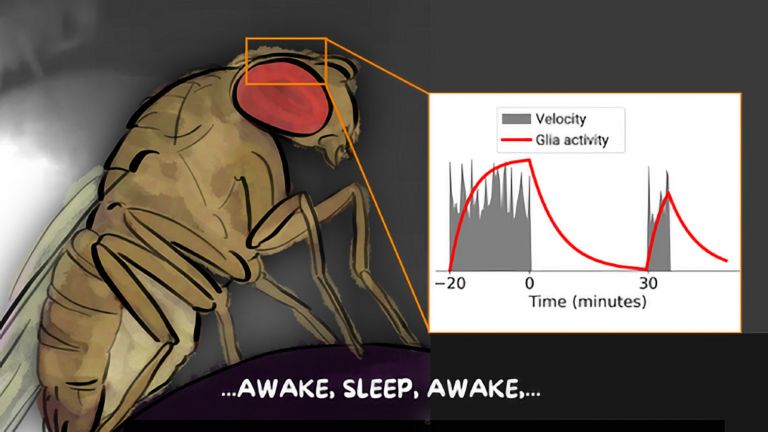
What makes a fly feel sleepy?
And how does the brain know when it's time to rest?
21.04.2025
-
- Page
The Project
24.02.2017
-
- News from the Institutes
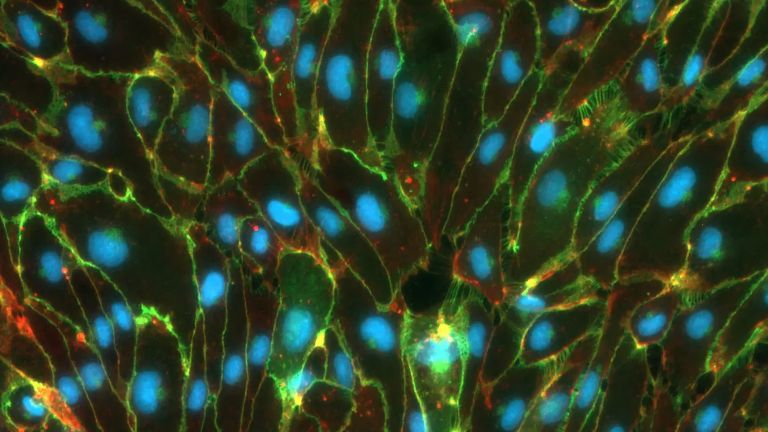
A human model of the blood-brain barrier
Disruptions to the protective barrier contribute to the development of serious brain diseases such as stroke and Alzheimer's.
16.12.2025
-
- Page
The Advisors
20.03.2017
-
- Diseases
- Successful aging
The Old, Healthy Brain
Some people seem to be unaffected by aging. Research is currently being conducted to find out why this is the case.
01.02.2026