Search
-
- Discover
- The Fly
Learning on a Pinhead
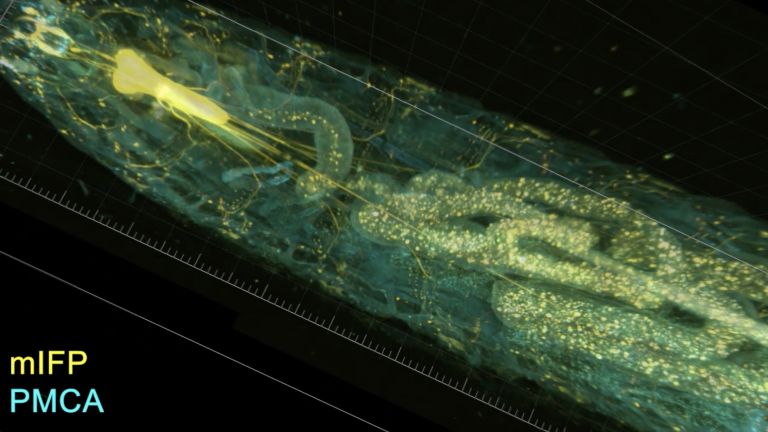
When it comes to learning, fruit flies are true masters of association.
19.01.2026
-
- Basics
- Anatomy
The Striatum
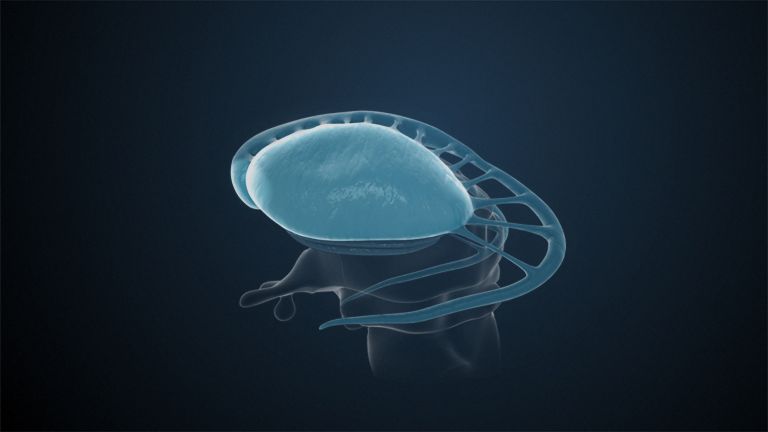
The striatum is not only about complex motor skills, but also about happiness.
28.11.2025
-
- Basics
- Anatomy
The Basal Ganglia
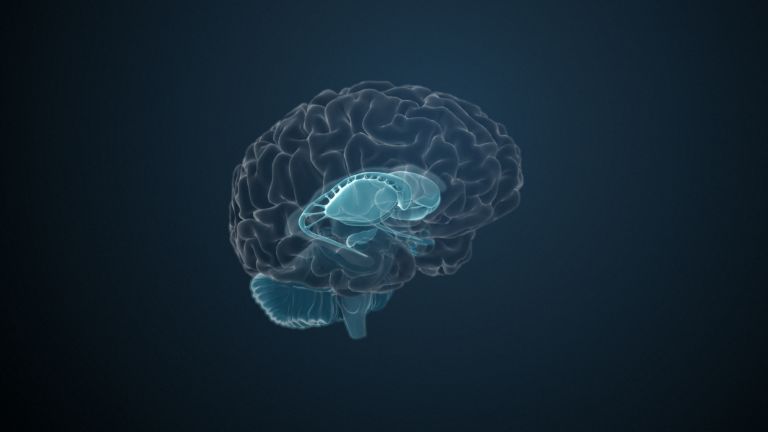
Whenever we perform a deliberate movement, core areas deep within the brain are involved.
23.08.2011
-
- Think
- Emotions
Addicted to Love
They say love is blind. Neurobiologists have discovered that this is true. What's more, it's also addictive.
20.12.2011
-
- Glossary
Adrenaline
Along with dopamine and norepinephrine, it belongs to the catecholamines. Adrenaline, also known as epinephrine, is the classic stress hormone. It is produced in the adrenal medulla and causes an increase in heart rate and heartbeat strength, thus preparing the body for increased stress. In the brain, adrenaline also acts as a neurotransmitter (messenger substance), where it binds to so-called adrenoreceptors.
-
- Glossary
Habenulae
The habenulae – literally translated as "the reins" – are part of the epithalamus (which is part of the diencephalon) and are primarily involved in the modulation of monoamine neurotransmitters (dopamine, serotonin).
-
- Glossary
Mesolimbic pathway
A system of neurons that use dopamine as a neurotransmitter and play a crucial role in emotion, reward, and substance abuse. The cell bodies are located in the subtegmental area and extend to the amygdala, the hippocampus, and – most importantly – the nucleus accumbens, where they have their terminal buttons.
-
- Glossary
Parkinson's disease
Parkinson's disease is one of the most common neurological disorders, caused by the death of dopamine-producing neurons in the substantia nigra, leading to a neurotransmitter imbalance in the basal ganglia. Symptoms usually begin late in life with mild tremors (resting tremor), increasing stiffness of the limbs, and slowed voluntary movements (bradykinesia). Later, postural instability, balance disorders, and difficulty walking occur. Other typical features include rigid facial expressions (hypomimia), a shuffling gait, and muscle stiffness (rigor). The disease is incurable, but its symptoms can be treated with medication (e.g., L-dopa, dopamine agonists) or surgery involving deep brain stimulation (brain pacemaker).
-
- Glossary
Norepinephrine
Along with dopamine and adrenaline, norepinephrine (NE) or sometimes noradrenaline (NA)belongs to the catecholamines. It is produced in cells of the locus coeruleus and in the adrenal medulla and usually has a stimulating effect. Noradrenaline is often associated with stress.
-
- Glossary
Ventral tegmental area
Located in the midbrain, the uppermost section of the brain stem, is the ventral tegmental area (VTA) – a central component of the reward system. The area itself is not particularly large, but its influence is immense: the neurons of the VTA send their axons to the nucleus accumbens and widely into the prefrontal cortex (PFC), where they release the neuromodulator dopamine. In this way, they enhance learning processes, but can also contribute to the development of addictions.