Search
-
- Basics
- Communication of Cells
The Neuron: Form and Function
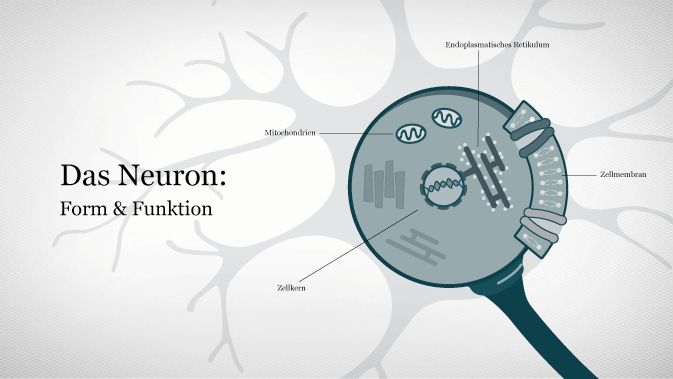
What types of neurons are there? What happens in dendrites, cell bodies, and axons? See for yourself in this clickable neuron.
02.05.2012
-
- Basics
- Communication of Cells
Communication under the Microscope
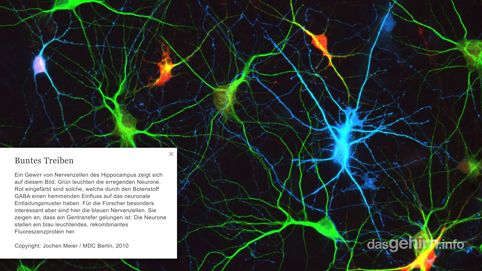
Tiny and beautiful: Researchers make visible the cells that determine how our brain works
19.04.2012
-
- Percieve
- Hearing
Animal hearing
Hearing with the lower jaw or in the ultrasonic range: animals' hearing is very diverse.
27.07.2012
-
- Glossary
Acetylcholine
Acetylcholine is one of the most important neurotransmitters in the nervous system. In the central nervous system, it is involved in attention, learning, and memory; in the peripheral nervous system, it transmits excitation from nerves to muscles at the neuromuscular end plates and controls processes of the autonomic nervous system, i.e., the sympathetic and parasympathetic parts. Areas in which acetylcholine acts as a messenger substance are called cholinergic. It was the first neurotransmitter to be discovered, identified in 1921 by Otto Loewi in the heart of a frog.
-
- Glossary
Acetylsalicylic acid
Pharmaceutical active ingredient for pain, fever, and inflammation – the best-known pain reliever containing this active ingredient is aspirin.
-
- Glossary
Adaptation
Adaptation refers to the process by which the sensory organs, the perceptual system, or the entire organism adjusts to the intensity and quality of stimuli and to changes in environmental conditions. In visual adaptation, for example, the pupil and the sensitivity of the photoreceptors regulate themselves according to the prevailing light conditions.
-
- Glossary
Anterior pituitary
The adenohypophysis is a gland and is also referred to as the "anterior pituitary gland." The adenohypophysis produces hormones such as prolactin and releases them directly into the blood, meaning it is endocrine. It is therefore involved in regulating numerous physiological processes. Together with the neurohypophysis, which is part of the brain, it forms the pituitary gland. The two systems are closely linked via a contact surface.
-
- Glossary
Adrenaline
Along with dopamine and norepinephrine, it belongs to the catecholamines. Adrenaline, also known as epinephrine, is the classic stress hormone. It is produced in the adrenal medulla and causes an increase in heart rate and heartbeat strength, thus preparing the body for increased stress. In the brain, adrenaline also acts as a neurotransmitter (messenger substance), where it binds to so-called adrenoreceptors.
-
- Glossary
Afferent nerve fiber
Afferent refers to nerve fibers that carry information to the central nervous system. Afferent nerve fibers transmit sensory information from the periphery, such as pain, temperature, touch, muscle tension, or organ activity, to the central nervous system. The opposite is efferent.
-
- Glossary
Agnosia
The term agnosia comes from Latin and means "not knowing." It is a disorder of recognition caused by damage or dysfunction of the brain, without deficits in sensory perception. Agnosia is usually very specific, such as prosopagnosia, the inability to recognize a person by their face.