
Dancing keeps you young
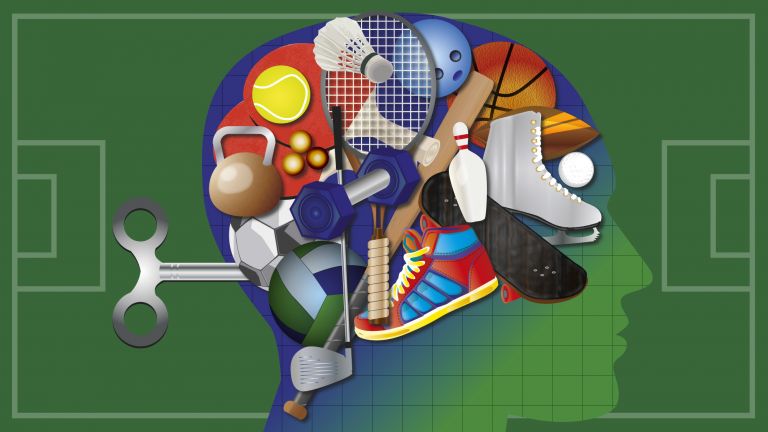
Exercise protects the brain in many ways – through neurotransmitters, hormones, and vascular and nerve cell growth. Even the heart and liver send positive messages to the brain during physical activity.
Scientific support: Prof. Dr. Melanie Krüger
Published: 01.09.2021
Difficulty: easy
- People who exercise have better cognitive performance and tend to have more brain volume
- Exercise increases levels of the Neurotransmitter BDNF, which acts like fertilizer on the brain
- The breakdown of Dopamine is delayed during exercise. This has a positive effect on Motivation and learning
- People who jog or dance don't plan. The time out regenerates the Prefrontal cortex It is then more efficient
- The heart and liver release brain-boosting substances during physical activity.
- Cognitively stimulating sports are varied, sociable, and fun
Neurotransmitter
A neurotransmitter is a chemical messenger, an intermediary substance. It is released by the sender neuron at the sites of cell-cell communication and has an excitatory or inhibitory effect on the receiver neuron.
Dopamine
Dopamine is an important neurotransmitter in the central nervous system that belongs to the catecholamine group. It plays a role in motor function, motivation, emotion, and cognitive processes. Disruptions in the function of this transmitter play a role in many brain disorders, such as schizophrenia, depression, Parkinson's disease, and substance dependence.
Motivation
A motive is a reason. When this motive takes effect, the living being feels motivation – it strives to satisfy its need. For example, for food, protection, or reproduction. Motivation can be intrinsic (from within, e.g., curiosity) or extrinsic (from outside, e.g., reward).
Prefrontal cortex
Prefrontal cortex
The prefrontal cortex (PFC) forms the front part of the frontal lobe and is one of the brain's most important integration and control centers. It receives highly processed information from many other areas of the cortex and is responsible for planning, controlling, and flexibly adapting one's own behavior. Its central tasks include executive functions, working memory, emotion regulation, and decision-making. In addition, the PFC plays an important role in the cognitive evaluation and modulation of pain.
Contact sports such as soccer, boxing, and ice hockey can cause long-term damage to the brain if the head is repeatedly hit. The mild traumatic brain injuries that occur as a result increase the risk of neurodegenerative diseases later in life. For example, in a survey of former American football players aged 50 and older, those who could remember more than three concussions were five times more likely to have mild Memory problems.
Endocrinologist Fahrettin Kelestimur from Yeditepe University in Istanbul has also observed that boxers and kickboxers sometimes suffer from hypopituitarism. They then feel exhausted, have difficulty concentrating, and need to take hormones. Kelestimur estimates that 15 to 47 percent of sports-related traumatic brain injuries result in damage to the pituitary gland.
Memory
Memory is a generic term for all types of information storage in the organism. In addition to pure retention, this also includes the absorption of information, its organization, and retrieval.
Researchers often have difficulty finding volunteers for their experiments. But seniors over the age of 65 literally knocked down the doors of Anita Hökelmann, a sports scientist at the University of Magdeburg, when she wanted to investigate the effects of dance and endurance training on their brains. "After exercising, they didn't want to go home. They protested: ‘We're really enjoying ourselves now!’" reports Hökelmann. And so the study, which was initially planned to last a few weeks, turned into a long-term experiment. The 30 seniors who were there from the start are still dancing after more than five years.
Sport is brain training
They are also motivated by the results of Hökelmann's team, which have been published in several doctoral theses. The dancers are cognitively much better off than the non-athletic members of a comparison group and even slightly better than endurance athletes.
The work of the Magdeburg sports scientist stands out from the landscape of studies on the topic of exercise for the brain. Researchers often study the effect of exercise in general terms – without discussing the type of training and the framework conditions. This goes so far that some, including brain researcher Stefan Schneider from the Institute for Movement and Neuroscience at the German Sport University Cologne, say: “It doesn't matter what kind of exercise you do, as long as you enjoy it.”
One thing is clear: sport has a positive effect on the brain and overall health in many different ways. In a sense, it is a potent combination drug.
More brainpower thanks to exercise
Exercise increases the level of the Neurotransmitter BDNF (brain-derived neurotrophic factor) in the blood of young and old alike in the long term. Hökelmann was able to prove this in both endurance athletes and dancers. BDNF ensures that new nerve cell connections are formed and existing synapses are protected. It prevents the breakdown of nerve cells. This effect is important even at a young age: after an hour of moderate to intense training, BDNF levels in adolescents climb significantly. And researchers at the University of Arizona have found more connections between nerve cells in the brains of young long-distance runners. However, the details of these connections are not yet understood. For example, there is no evidence that BDNF levels are higher in athletes than in non-athletes. This only seems to be the case immediately after exercise.
BDNF appears to act as a fertilizer for nerve cell growth. This could also be the reason why physical fitness is associated with a larger brain volume, as a study by the University of Greifswald found. The positive relationship also applied to important areas of the brain: for example, the Hippocampus tended to be larger in the athletic test subjects.
In addition to BDNF, there appear to be other mechanisms by which exercise can stimulate nerve growth. Researchers led by Magdalena Götz from Ludwig Maximilian University in Munich and Benedikt Grothe from the Helmholtz Center in Munich discovered that certain neural stem cells can apparently sense the sloshing of fluid in a central cavity (ventricle) of our brain – and then multiply. Jogging and other high-intensity sports could therefore stimulate the ventricular fluid and stimulate the nerve cells located there that are capable of multiplying.
Neurotransmitter
A neurotransmitter is a chemical messenger, an intermediary substance. It is released by the sender neuron at the sites of cell-cell communication and has an excitatory or inhibitory effect on the receiver neuron.
Hippocampus
The hippocampus is the largest part of the archicortex and an area in the temporal lobe. It is also an important part of the limbic system. Functionally, it is involved in memory processes, but also in spatial orientation and learning. It comprises the subiculum, the dentate gyrus, and the Ammon's horn with its four fields CA1-CA4.
Changes in the structure of the hippocampus due to stress are associated with chronic pain. The hippocampus also plays an important role in the amplification of pain through anxiety.
Exercise is a power nap for the logic center
“However, exercise also has an immediate, often overlooked effect on cognition. People can concentrate better and perform better immediately after exercise,” Schneider reports from his studies. This is because exercise gives the Prefrontal cortex a break. This part of the brain, which plays an important role in planning and logical thinking, is given a time-out, which could then make people more productive again.
In 2008, researchers in Ulm led by Ralf Reinhardt put forward another theory. They had nearly 80 adults either do endurance training three times a week or go about their usual daily routine. After seventeen weeks, the spatial awareness and concentration of the athletes was better than that of the inactive individuals. The Ulm researchers explained this with a delayed breakdown of the Hormone Dopamine during exercise. Dopamine is, in a sense, the fuel for learning and Motivation. When dopamine levels are too low, we feel sluggish, listless, and unmotivated. This connection would also explain the frequently made observation that intense exercise is as beneficial for people with phobias and Depression as medication, because both conditions are associated with a lack of the Neurotransmitter dopamine.
Prefrontal cortex
Prefrontal cortex
The prefrontal cortex (PFC) forms the front part of the frontal lobe and is one of the brain's most important integration and control centers. It receives highly processed information from many other areas of the cortex and is responsible for planning, controlling, and flexibly adapting one's own behavior. Its central tasks include executive functions, working memory, emotion regulation, and decision-making. In addition, the PFC plays an important role in the cognitive evaluation and modulation of pain.
Hormone
Hormones are chemical messengers in the body. They serve to transmit information between organs and cells, usually slowly, e.g., to regulate blood sugar levels. Many hormones are produced in glandular cells and released into the blood. At their destination, e.g., an organ, they dock at binding sites and trigger processes inside the cell. Hormones have a broader effect than neurotransmitters; they can influence various functions in many cells of the body.
Dopamine
Dopamine is an important neurotransmitter in the central nervous system that belongs to the catecholamine group. It plays a role in motor function, motivation, emotion, and cognitive processes. Disruptions in the function of this transmitter play a role in many brain disorders, such as schizophrenia, depression, Parkinson's disease, and substance dependence.
Motivation
A motive is a reason. When this motive takes effect, the living being feels motivation – it strives to satisfy its need. For example, for food, protection, or reproduction. Motivation can be intrinsic (from within, e.g., curiosity) or extrinsic (from outside, e.g., reward).
Depression
A mental illness whose main symptoms are sadness and a loss of joy, motivation, and interest. Current classification systems distinguish between different types of depression.
Neurotransmitter
A neurotransmitter is a chemical messenger, an intermediary substance. It is released by the sender neuron at the sites of cell-cell communication and has an excitatory or inhibitory effect on the receiver neuron.
Good news from heart and liver
However, the cognitive boost after exercise could also come from other organs. When people exercise, the heart muscle produces more of certain peptide hormones, known as natriuretic peptides. These are small protein fragments with hormonal effects. Their levels can triple or quadruple as a result of exercise. They lower blood pressure and alleviate feelings of anxiety. What's more, exercise stimulates the formation of new blood vessels, which improves blood flow and nutrient supply to all body tissues, including the brain.
Even the liver plays a role, as researchers led by anatomist Alana Horowitz from the University of California in San Francisco explained in the journal Science in July 2020. They had older mice exercise and then transferred their blood plasma to passive mice with aging brains. The blood donation allowed them to transfer the positive effects of exercise. Fresh nerve cells grew in the recipient mice, and they performed better in tests of Memory and reaction skills. Horowitz attributed this to various substances produced by the liver during the exercise program.
Memory
Memory is a generic term for all types of information storage in the organism. In addition to pure retention, this also includes the absorption of information, its organization, and retrieval.
Recommended articles

Potent therapy against mental decline
“The closer we look, the more mechanisms of action we find,” says Schneider. “The final publication on this question has certainly not yet been published.” In 2017, for example, a team of US and Brazilian authors pointed out in a review paper that exercise changes the way genes are read in the Hippocampus. The effect of exercise is, so to speak, written into the genetic makeup – as epigenetic modifications that help determine which genes are read and how often. This may also explain why the positive effects of exercise are passed on from generation to generation. If grandma was athletic, this is epigenetically inscribed in the germ cells of her children.
At present, it is clear that regular exercise is one of the most effective measures against the natural age-related loss of mental agility and is also associated with a low risk of dementia.
Hippocampus
The hippocampus is the largest part of the archicortex and an area in the temporal lobe. It is also an important part of the limbic system. Functionally, it is involved in memory processes, but also in spatial orientation and learning. It comprises the subiculum, the dentate gyrus, and the Ammon's horn with its four fields CA1-CA4.
Changes in the structure of the hippocampus due to stress are associated with chronic pain. The hippocampus also plays an important role in the amplification of pain through anxiety.
Dementia
Dementia
Dementia is an acquired deficit of cognitive, social, motor, and emotional abilities. The most well-known form is Alzheimer's disease. "De mentia" means "without mind" in English.
Fun, socializing, and variety of movement
Exercise also means social participation – people meet, talk, and go for coffee after training. “Social interaction is just as important. When people become lonely, it literally leads to neurodegeneration,” emphasizes Schneider. His credo is therefore: “Do sports together, not alone, and preferably something that you enjoy. If you torture yourself to train, it's not very effective and you'll hardly be able to keep it up for long.”
It does matter how you move, adds Hökelmann. It is better for the brain if the sport appeals to as many sensory channels as possible. In dance, this includes music, mutual consideration based on visual information, and coordination from head to torso to feet. “It is also important that movements are not just performed automatically, as on a bicycle or when swimming, but that new movement patterns are constantly being tried out and learned,” explains the sports scientist. That's why the dance lessons included jazz dance, swing, and other dance styles in increasingly difficult choreographies. This training was superior to endurance training. The White matter of the test subjects increased significantly more in MRI scans, as did the Neurotransmitter BDNF. The Memory and learning abilities of the dance group were better compared to the endurance athletes. “The participants even notice the changes themselves,” says Hökelmann. “They tell us that they can remember things better again.” No wonder, then, that the seniors in the Magdeburg experiment didn't want to stop dancing.
White matter
The white matter refers to the myelinated fibers of the nervous system that connect one neuron to another. The white color is caused by the myelin sheath surrounding the fibers.
Neurotransmitter
A neurotransmitter is a chemical messenger, an intermediary substance. It is released by the sender neuron at the sites of cell-cell communication and has an excitatory or inhibitory effect on the receiver neuron.
Memory
Memory is a generic term for all types of information storage in the organism. In addition to pure retention, this also includes the absorption of information, its organization, and retrieval.