View of the Cerebellum
Published: 10.05.2012
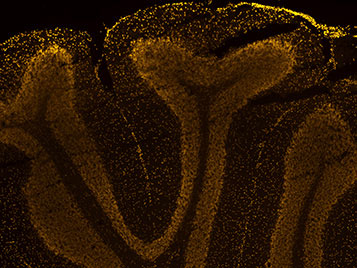
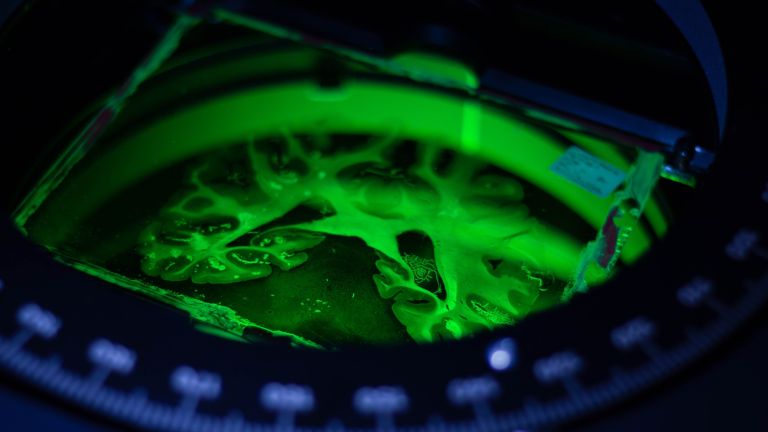
Here you can see a cross-section of the cerebellum, which plays an important role in controlling movement. The light-colored structures resemble pistils and contain Purkinje cells, named after their discoverer, and granule cells. Purkinje cells were first observed in 1837 and formed the basis of the Neuron doctrine They are located in a feedback loop between the brain's movement commands and the actual change in posture, which is communicated via the Spinal cord For more information and exciting images on this topic, see our slideshow ▸ Communication under the microscope.
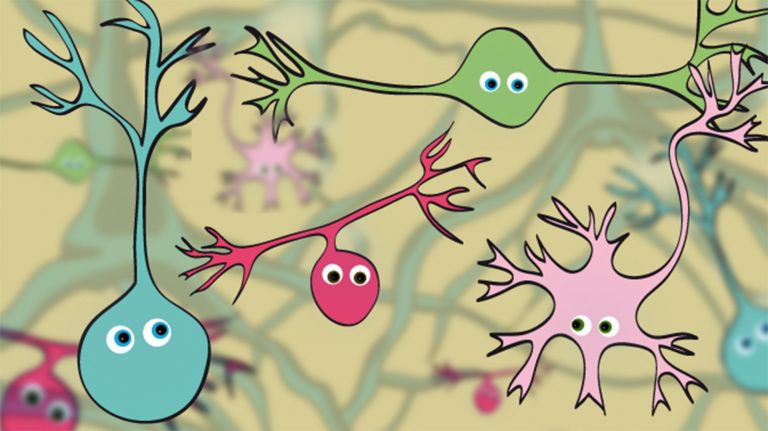
A neuron is a specialized cell in the nervous system that is responsible for processing and transmitting information. It receives signals via its dendrites and transmits them via its Axon. Transmission occurs electrically within the neuron and, between neurons, usually chemically via synapses.
Neuron doctrine
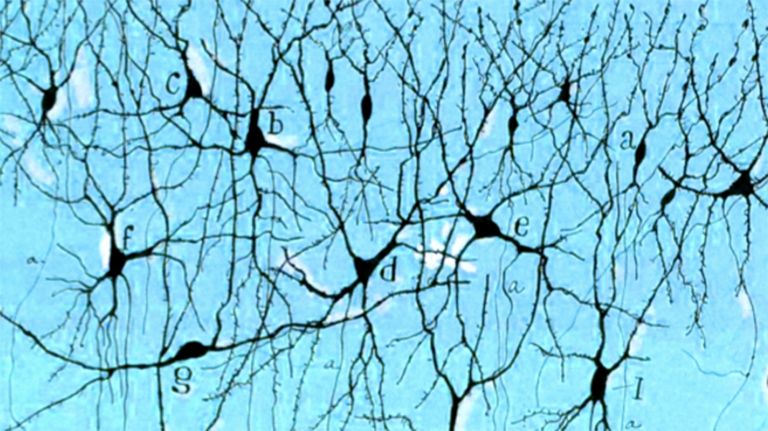
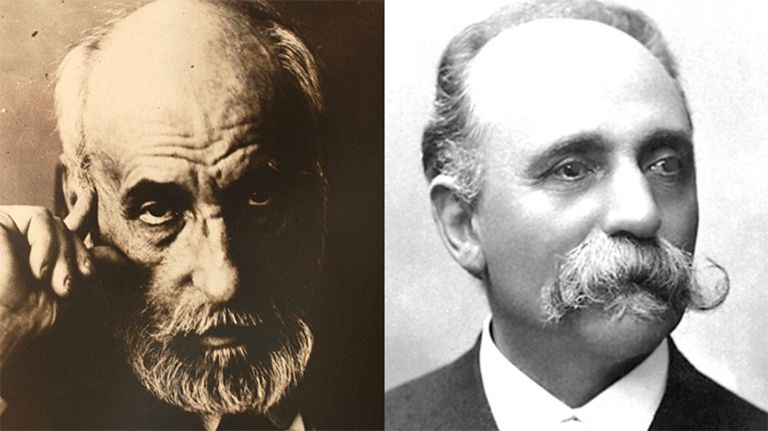
The Neuron doctrine forms the basis for our current understanding of the nervous system. According to this doctrine, the brain does not consist of a single, interconnected nerve network, but rather of individual nerve cells that communicate with each other via contact points. This was discovered by the Spanish Ramon y Cajal at the end of the 19th century when he stained nerve cell preparations from chickens and mammals. He used a staining technique developed by Camillo Golgi. For their achievement, the two researchers – who were unfortunately at odds with each other – were awarded the Nobel Prize in Medicine in 1906.
Spinal cord
medulla spinalis
The Spinal cord is the part of the central nervous system located in the spine. It contains both the White matter of the nerve fibers and the Gray matter of the cell nuclei. Simple reflexes such as the knee-jerk reflex are already processed here, as sensory and motor neurons are directly connected. The spinal cord is divided into the cervical, thoracic, lumbar, and sacral spinal cord.
Neuron
A neuron is a specialized cell in the nervous system that is responsible for processing and transmitting information. It receives signals via its dendrites and transmits them via its axon. Transmission occurs electrically within the neuron and, between neurons, usually chemically via synapses.
Axon
axon
The axon is the extension of the nerve cell that is responsible for conducting nerve impulses to the next cell. An axon can branch out many times, reaching a large number of downstream nerve cells. It can be more than a meter long. The axon ends in one or more synapses.
Neuron doctrine
The neuron doctrine forms the basis for our current understanding of the nervous system. According to this doctrine, the brain does not consist of a single, interconnected nerve network, but rather of individual nerve cells that communicate with each other via contact points. This was discovered by the Spanish Ramon y Cajal at the end of the 19th century when he stained nerve cell preparations from chickens and mammals. He used a staining technique developed by Camillo Golgi. For their achievement, the two researchers – who were unfortunately at odds with each other – were awarded the Nobel Prize in Medicine in 1906.
Spinal cord
medulla spinalis
The spinal cord is the part of the central nervous system located in the spine. It contains both the white matter of the nerve fibers and the gray matter of the cell nuclei. Simple reflexes such as the knee-jerk reflex are already processed here, as sensory and motor neurons are directly connected. The spinal cord is divided into the cervical, thoracic, lumbar, and sacral spinal cord.
White matter
The white matter refers to the myelinated fibers of the nervous system that connect one neuron to another. The white color is caused by the myelin sheath surrounding the fibers.
Gray matter
Grey matter refers to a collection of nerve cell bodies, such as those found in nuclei or in the cortex.